



რამდენად შორს ისმის კაცობრიობის ხმა კოსმოსში
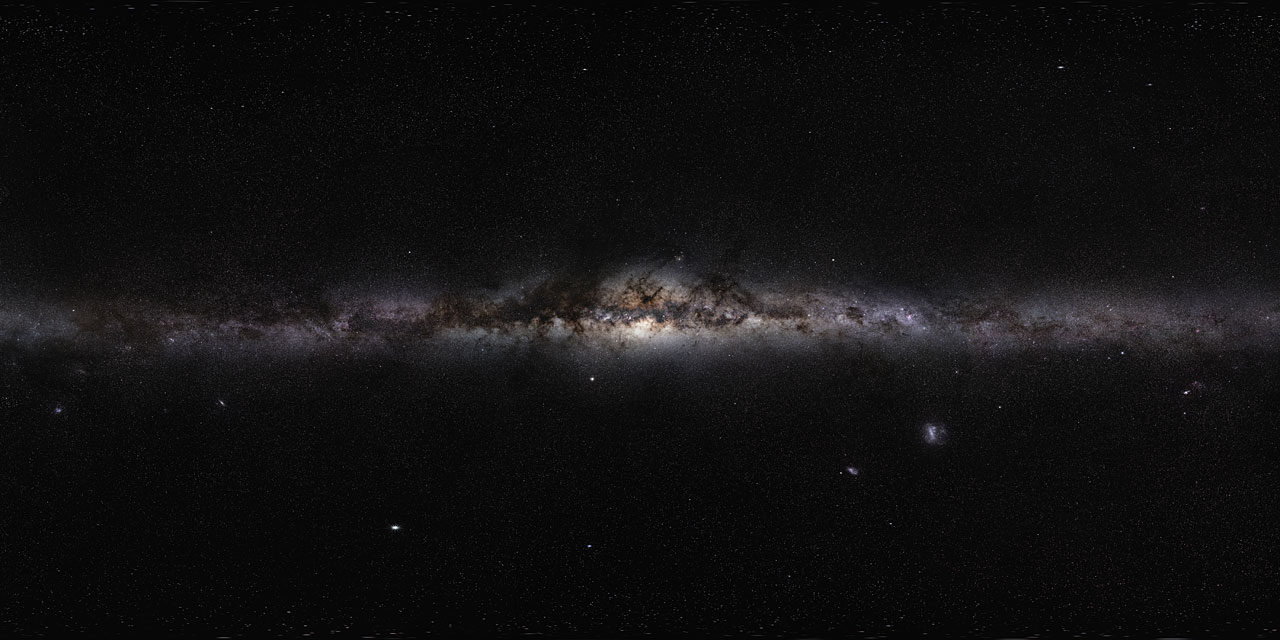
This magnificent 360-degree panoramic image, covering the entire southern and northern celestial sphere, reveals the cosmic landscape that surrounds our tiny blue planet. This gorgeous starscape serves as the first of three extremely high-resolution images featured in the GigaGalaxy Zoom project, launched by ESO within the framework of the International Year of Astronomy 2009 (IYA2009). The plane of our Milky Way Galaxy, which we see edge-on from our perspective on Earth, cuts a luminous swath across the image. The projection used in GigaGalaxy Zoom place the viewer in front of our Galaxy with the Galactic Plane running horizontally through the image — almost as if we were looking at the Milky Way from the outside. From this vantage point, the general components of our spiral galaxy come clearly into view, including its disc, marbled with both dark and glowing nebulae, which harbours bright, young stars, as well as the Galaxy’s central bulge and its satellite galaxies. As filming extended over several months, objects from the Solar System came and went through the star fields, with bright planets such as Venus and Jupiter. For copyright reasons, we cannot provide here the full 800-million-pixel original image, which can be requested from Serge Brunier. The high resolution image provided here contains 18 million pixels.
თუკი დედამიწის მიღმა სამყაროში გონიერი სიცოცხლე სადმე არსებობს, რატომ ვერ ვიპოვეთ მისი რაიმე მტკიცებულება ამ დრომდე? ამ შეკითხვას ფერმის პარადოქსს უწოდებენ და არსებობს რამდენიმე პოტენციური პასუხიც.
თუმცა, ქვემოთ მოცემული ერთი ფოტო ძალიან ბევრ რამეზე მეტყველებს. კოსმოსი წარმოუდგენლად დიდია და საინტერესოა, მის რა ნაწილს სწვდება კაცობრიობა ამჟამად? — წარმოუდგენლად მცირეს.
მოცემულ ფოტორეკოსნტრუქციაზე ასახულია ჩვენი გალაქტიკა ირმის ნახტომი 110 000 სინათლის წლის დიამეტრით (ბოლო კვლევების თანახმად, ის უფრო დიდია).
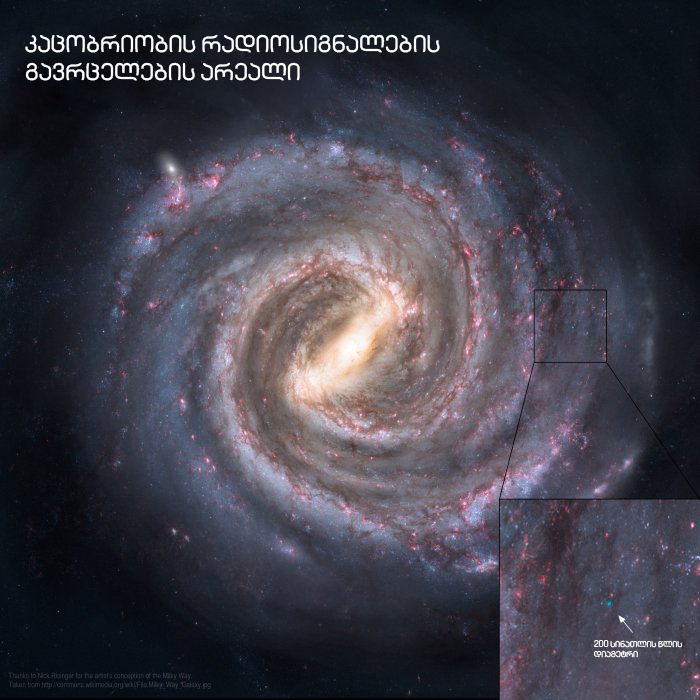
ქვედა მარჯვენა კუთხეში მოცემული ლურჯი წერტილი ასახავს, თუ სადამდეა გასული რადიოსიგნალები დედამიწიდან — დაახლოებით 200 სინათლის წლის დიამეტრზე.

რადიოს გამოგონებაზე მეცხრამეტე საუკუნეში მრავალი გენიოსი მუშაობდა, მაგრამ სიგნალის პირველი გადაცემა მხოლოდ 1895 წელს მოხერხდა. რამდენიმე წლის შემდეგ დაიწყო რადიომაუწყებლობაც.
პირველი სპეციალურად განზრახული რაიდიოსიგნალი, სახელად არესიბოს შეტყობინება კოსმოსში 1974 წელს გაუშვეს, მაგრამ დედამიწიდან კოსმოსში რადიოსიგნალები უკვე ას წელზე მეტია ჟონავს.
ბევრ მათგანს სავარაუდოდ ამახინჯებს იონსფერო. მაგრამ ამ ზღვარს გაცდენილი სიგნალებიც კი, რომლებიც ჩვენგან უკვე 100 სინათლის წლით უნდა იყოს დაშორებული, იმდენად სუსტი იქნება, რომ მათი დაფიქსირება ფაქტობრივად შეუძლებელია.

გამომდინარე აქედან, თუკი ამ რადიუსს მიღმა არსებობს გონიერი ცივილიზაცია და თუ მათ რადიოტექნოლოგია აქვთ, სავარაუდოდ, ჩვენი სიგნალების დაჭერას ისინი ვერ შეძლებენ.
იგივე შეიძლება ხდებოდეს პირიქითაც. იქნებ სადღაც, 100 სინათლის წლის მოშორებით არსებობს ცივილიზაცია, რომელმაც რადიოტექნოლოგია ზუსტად იმ დროს შექმნა, როცა ჩვენ, მაგრამ მათი სიგნალები იმდენად სუსტია, რომ ვერ ვაფიქსირებთ.
ნაკლებ სავარაუდოა, თვალუწვდენელ კოსმოსში გონიერი სიცოცხლე მხოლოდ ერთხელ, ერთ პლანეტაზე განვითარებულიყო, მაგრამ… რამდენადაც თვალუწვდენელია კოსმოსი, მით უფრო ნაკლებ სავარაუდოა, რომ ჩვენ ასეთ ცივილიზაციებს მალე ვიპოვით.