UNM's Sanikidze: Commission's true purpose is to reinterpret 2008 war, not to pursue justice
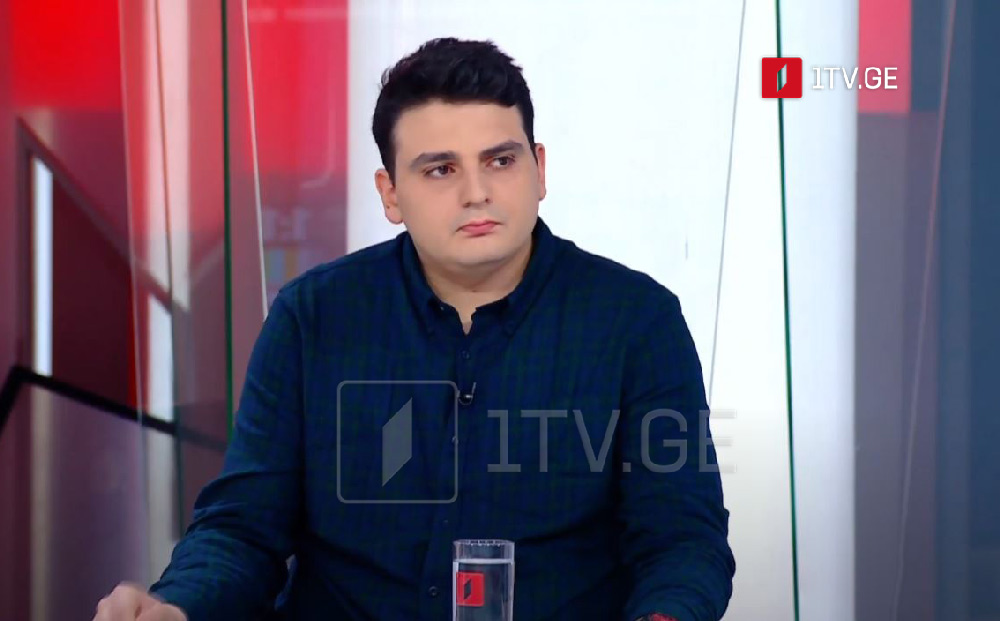
“The key point that has become evident is that all other matters addressed by this commission are secondary, with the sole exception of the 2008 war,” stated Levan Sanikidze, the United National Movement member, during the GPB First Channel’s program “Topic of the Day.”
“Our heroic military personnel, including the Supreme Commander-in-Chief during the 2008 conflict, Mikheil Saakashvili, have won crucial victories in the International Criminal Court in The Hague and the Strasbourg Human Rights Court. These rulings confirmed the integrity of our country and exposed Russia’s intentions in 2008, rendering the Russian Federation’s narrative thoroughly discredited. The crux of this commission is to revise the results of the 2008 war. This is not a commission established to deliver justice. Rather, it is designed to affirm Russia’s ‘truth,'” Sanikidze asserted.
In response to the host’s question regarding why it is not in the party’s interest to discuss their perspective and specific facts during commission sessions, particularly in light of serious statements made by former UNM representative Mikheil Kareli—where he claimed he had heard from Mikheil Saakashvili there was some sort of agreement regarding entry into Tskhinvali and that America was looking out for Russia—Levan Sanikidze emphasized that no member or representative of the United National Movement would attend the investigative commission. He stated that their absence would prevent any further basis for legitimizing a parliament that is, in their view, illegitimate and that established this commission.
“Statements made by Mikheil Kareli or other high-ranking officials are of little consequence; what Mikheil Kareli says, as well as what Tea Tsulukiani decides, is marginal,” Sanikidze declared.
When asked whether the harsh comments from the commission could harm the reputation of his political party—particularly in light of strong statements supported by concrete evidence from a businessman harmed during the previous government—Sanikidze argued that the Georgian Dream intends for this commission to review the 2008 war. He underscored that other individuals discussing various issues beyond the 2008 war do not hold the same importance.
“This merely reflects their attempt to portray this as a comprehensive investigation into the conflicts from 2003 to 2012, rather than focusing specifically on the 2008 war. Regarding these individuals—despite the discomfort of hearing their accounts—I firmly believe that Tea Tsulukiani cannot substantiate these claims. If these individuals wish to pursue something, it should be done in the context of a fair trial, and after 12 years, we are left with a sanctioned court. The Georgian Prosecutor’s Office, whose former prosecutor has been identified by the U.S. as a Russian Federal Security Service agent, should have been the one to investigate these matters. There is nothing that Tea Tsulukiani or Guram Macharashvili could investigate,” Sanikidze stated.
When asked by host Tamta Sanikidze about his interpretation of the messages from Austria urging the government to implement reforms and for responsible political figures to bridge polarization and initiate dialogue with civil society and the opposition, Levan Sanikidze described such statements as largely formal in nature.
“We have never refused to engage in dialogue with the Georgian Dream; however, they crossed every possible red line after October 26,” Sanikidze asserted.
When pressed whether he would dismiss any potential dialogue, even with international mediation, Sanikidze indicated he would keep all options open, stressing that the opposition must maintain a strategic advantage over the Georgian Dream, both internationally and at the grassroots level.
“The Georgian Dream should not attempt to coerce us into taking actions they desire; rather, they must reach a point where they are genuinely capable of engaging in conversation with us,” he concluded.