People's Power Macharashvili: Georgian Parliament must investigate UNM as criminal regime
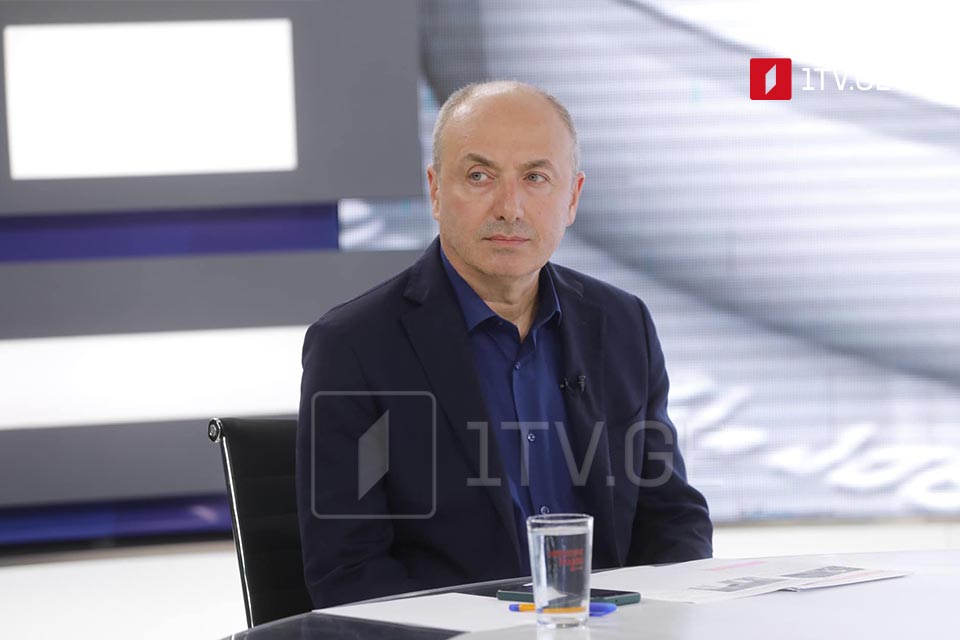
“As we pledged to the public, the United National Movement, characterized as a criminal regime, must undergo evaluation by the Investigative Commission in the Georgian Parliament,” stated Guram Macharashvili, Executive Secretary of the People’s Power, during his appearance on the GPB First Channel’s program “Topic of the Day.”
“In Georgia, the political party that established a criminal system faces scepticism not only from our domestic justice system but also from the international legal community. Notably, decisions from the Strasbourg International Court explicitly state that a criminal regime was formed while the United National Movement was in power. This unacceptable situation must end definitively—with the dissolution of this political force. An investigative commission is essential; without it, relevant agencies cannot properly assess whether the UNM should continue to operate within Georgian politics. I am confident, and the public grows increasingly reassured each day, that the evidence will be more than sufficient to warrant the dissolution of the United National Movement,” Macharashvili stated.
When the program’s host inquired why the investigation into the August War was given priority—particularly given claims from government opponents that Georgia had secured favourable rulings in the Hague and Strasbourg Courts—Macharashvili replied that the opposition’s tactics have lost their relevance.
“Such methods are ineffective now,” he said. “We are not revisiting what the Hague Court has already examined. It is clear that not everyone is equipped to understand the intricacies of law; however, it is important to acknowledge that the Hague Court investigates war crimes, while the Strasbourg Court evaluates human rights violations that occurred during the war. We successfully won cases in both international courts based on solid evidence.”
Macharashvili further explained that the investigative commission aims to gather evidence concerning the political leadership held accountable by society since the onset of the war. He underscored that many past officials, including the Deputy Minister of Foreign Affairs, who later ascended to the position of Foreign Minister, have acknowledged societal neglect in this context, especially regarding the lack of communication with civilians during the withdrawal of troops.
When host Tamta Sanikidze questioned him about the scepticism surrounding the investigation—especially concerning the government’s actions and inactions over the past 12 years—Macharashvili stressed the importance of expediting these processes. He acknowledged that while the trial of the United National Movement is significant, prior awareness of ongoing international proceedings in The Hague and Strasbourg had hindered the establishment of an investigative commission.
“We had to be cautious,” he explained. “Launching an investigative commission to assess the political leadership of that era could have complicated matters in an international court. In contrast to our opponents, we prioritize state interests.”
In response to inquiries about the challenges of investigating business seizures and holding judges accountable for illegal actions, Macharashvili pointed out that Ana Dolidze, unlike some of her opponents, has the legal expertise and a clear understanding of the commission’s responsibilities.
“Our role is not to act as prosecutors, judges, or investigators. The parliament has mandated us to study and evaluate the actions of the United National Movement from 2003 to 2012. We must collect factual evidence through witness testimonies and document requests, ultimately producing a report for the Parliament of Georgia. We are actively exploring various cases and have identified several key areas for evidence collection. This is not about targeting individuals directly; rather, we focus on assessing the regime as a whole. Should we identify any actionable evidence, we have the authority to refer it to the prosecutor’s office for further investigation. Our main focus remains on gathering evidence relevant to understanding the regime,” concluded Guram Macharashvili.