



როცა გალაქტიკები ერთმანეთს ეჯახებიან — ჰაბლმა გალაქტიკათა შერწყმის ექვსი მოვლენა გადაიღო #1tvმეცნიერება
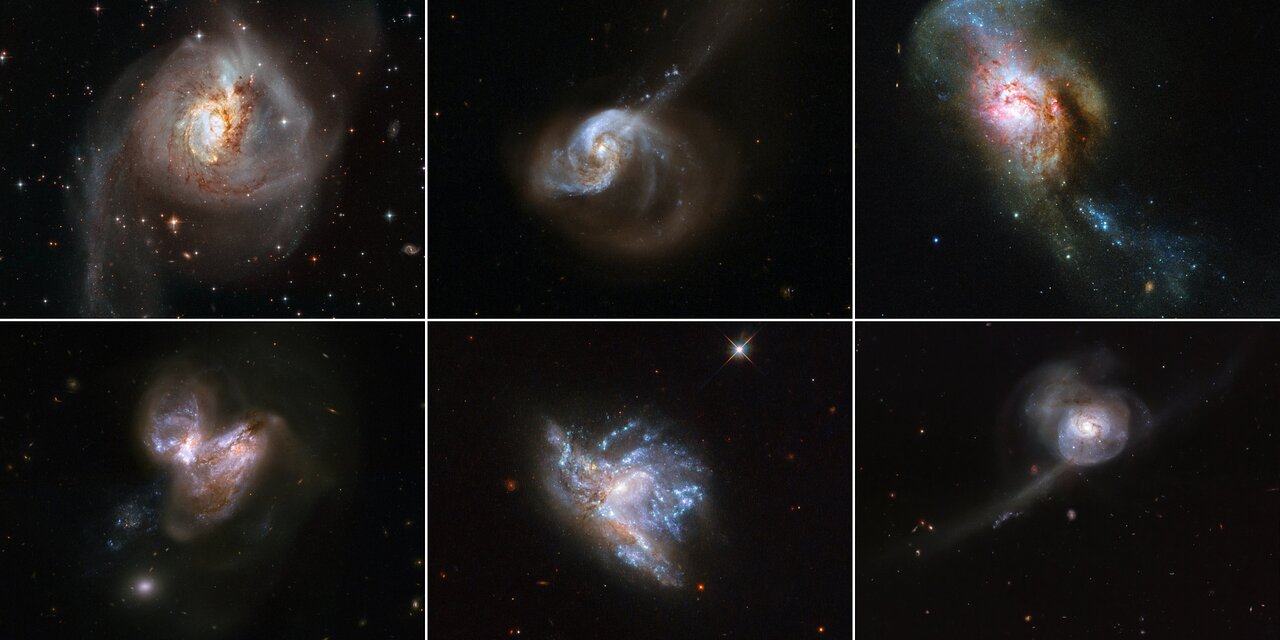
To celebrate a new year, the NASA/ESA Space Telescope has published a montage of six beautiful galaxy mergers. Each of these merging systems was studied as part of the recent HiPEEC survey to investigate the rate of new star formation within such systems. These interactions are a key aspect of galaxy evolution and are among the most spectacular events in the lifetime of a galaxy. Top left: NGC 3256This image of NGC 3256 was taken with the Wide Field Camera 3 (WFC3) and the Advanced Camera for Surveys (ACS), both installed on the NASA/ESA Hubble Space Telescope. The galaxy is about 100 million light-years from Earth and provides an ideal target in which to investigate starbursts that have been triggered by galaxy mergers. Credit: ESA/Hubble, NASA Top Middle: NGC 1614The galaxy system NGC 1614 has a bright optical centre and two clear inner spiral arms that are fairly symmetrical. It also has a spectacular outer structure that consists principally of a large one-sided curved extension of one of these arms to the lower right, and a long, almost straight tail that emerges from the nucleus and crosses the extended arm to the upper right. Credit: NASA, ESA, the Hubble Heritage Team (STScI/AURA)-ESA/Hubble Collaboration and A. Evans (University of Virginia, Charlottesville/NRAO/Stony Brook University) Top Right: NGC 4194NGC 4194 is also known as the Medusa merger. An early galaxy consumed a smaller gas-rich system, throwing out streams of stars and dust out into space. These streams, seen rising from the top of the merger galaxy, resemble the writhing snakes that Medusa, a monster in ancient Greek mythology, famously had on her head in place of hair, lending the object its intriguing name. The Medusa merger is located about 130 million light-years away in the constellation of Ursa Major (The Great Bear). Credit: ESA/Hubble & NASA, A. Adamo Bottom Left: NGC 3690This system consists of a pair of galaxies, dubbed IC 694 and NGC 3690, which made a close pass some 700 mil
ერთმანეთთან შეჯახების დროს, გალაქტიკები დრამატულად იცვლიან ფორმას და ვარსკვლავურ შემადგენლობას. ასეთი სისტემები ბრწყინვალე „ლაბორატორიებია“ ექსტრემალურ ფიზიკურ გარემოში ვარსკვლავთგროვების წარმოქმნაზე დაკვირვებისთვის.
ირმის ნახტომში ძირითადად წარმოიქმნება ვარსკვლავთგროვები, რომელთა მასაც ჩვენი მზისას 10 ათასჯერ აჭარბებს. მათი მასა ვერც კი შეედრება გალაქტიკების შეჯახების შედეგად წარმოქმნილი ვარსკვლავთგროვებისას, რომელთა მასაც ჩვენი მზისას შეიძლება მილიონობით აჭარბებდეს.
ეს მკვრივი ვარსკვლავური სისტემები ამავე დროს ძალიან კაშკაშაცაა. შეჯახების შემდეგაც კი, როდესაც ახლად წარმოქმნილი დიდი გალაქტიკური სისტემა უფრო წყნარ ფაზაში გადადის, ეს ძლიერ მასიური ვარსკვლავთრგოვები, როგორც წარსულ შეჯახებათა ხანგრძლივი მოწმეები, მთელ გალაქტიკას ანათებენ.
ჰაბლის კოსმოსური ტელესკოპი ფოტოზე მოცემულ გალაქტიკათა შერწყმის ექვს სხვადასხვა მოვლენას სწავლობს; მისი მიზანია გაარკვიოს, რა გავლენას ახდენს ვარსკვლავთგროვებზე შეჯახების დროს განვითარებული სწრაფი ცვლილებები, რომლებიც დრამატულად ზრდის გალაქტიკებში ახალი ვარსკვლავების წარმოქმნის მაჩვენებელს. ჰაბლის შესაძლებლობათა წყალობით, ახალგაზრდა, კომპაქტურ ვარსკვლავგროვებში ჩანს მსხვილი ვარსკვლავთწარმომქმნელი კვანძებიც. ამ სისტემებზე ჰაბლის ულტრაიისფერი და ახლო ინფრაწითელი დაკვირვებებით დგინდება გროვების ასაკი, მასა, განისაზღვრება ვარსკვლავთწარმოქმნის მაჩვენებლები.
ჰაბლის კოსმოსური ტელესკოპის დაკვირვებებით დადგინდა, რომ ვარსკვლავთგროვების პოპულაციები მახასიათებელთა სწრაფ და დიდ ცვლილებებს განიცდის, ყველაზე მასიური გროვები კი შერწყმის ფაზის დასასრულისკენ წარმოიქმნება.
მომზადებულია esahubble.org-ის მიხედვით.