



ჰაბლის მიერ აღმოჩენილი გალაქტიკათგროვა, რომელსაც სამი მილიონი მილიარდი მზის მასა აქვს
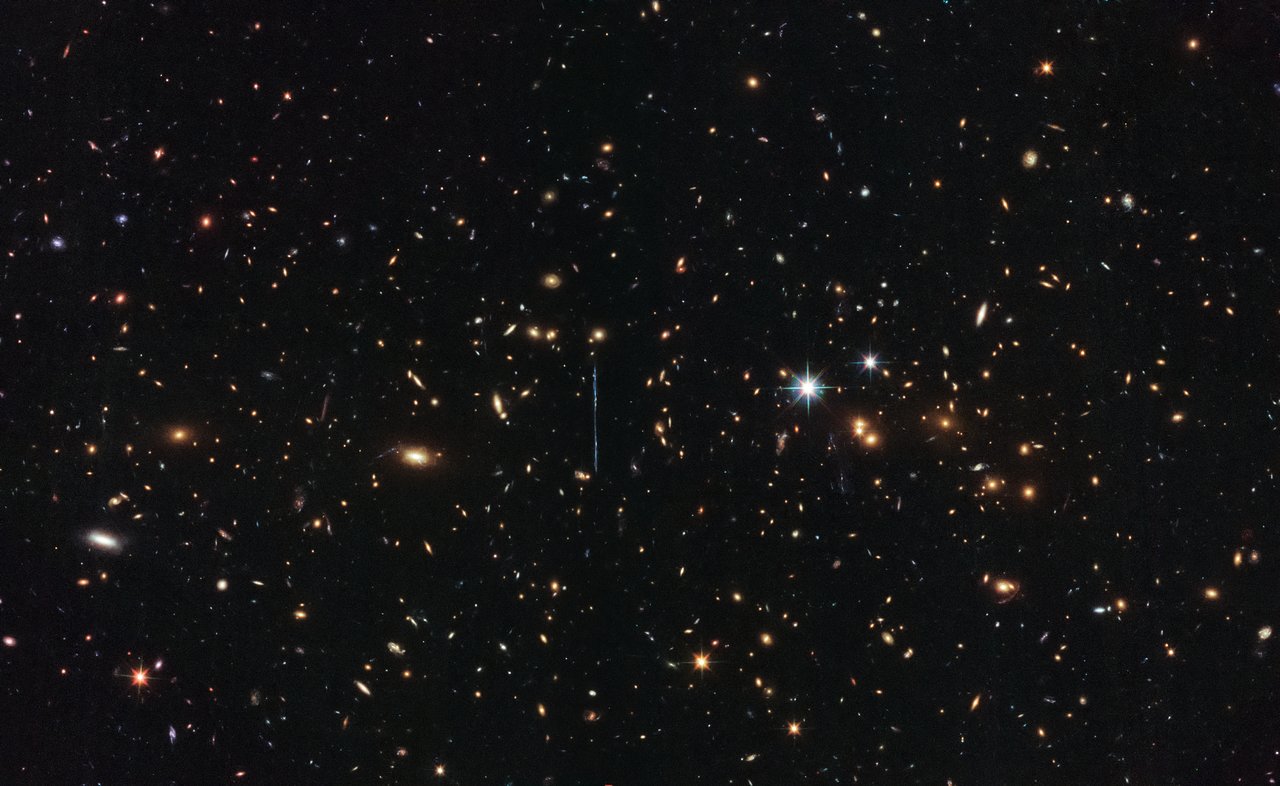
In 2014, astronomers using the NASA/ESA Hubble Space Telescope found that this enormous galaxy cluster contains the mass of a staggering three million billion Suns — so it’s little wonder that it has earned the nickname of “El Gordo” (“the Fat One” in Spanish)! Known officially as ACT-CLJ0102-4915, it is the largest, hottest, and X-ray brightest galaxy cluster ever discovered in the distant Universe. Galaxy clusters are the largest objects in the Universe that are bound together by gravity. They form over billions of years as smaller groups of galaxies slowly come together. In 2012, observations from ESO’s Very Large Telescope, NASA’s Chandra X-ray Observatory and the Atacama Cosmology Telescope showed that El Gordo is actually composed of two galaxy clusters colliding at millions of kilometres per hour. The formation of galaxy clusters depends heavily on dark matter and dark energy; studying such clusters can therefore help shed light on these elusive phenomena. In 2014, Hubble found that most of El Gordo’s mass is concealed in the form of dark matter. Evidence suggests that El Gordo’s “normal” matter — largely composed of hot gas that is bright in the X-ray wavelength domain — is being torn from the dark matter in the collision. The hot gas is slowing down, while the dark matter is not. This image was taken by Hubble’s Advanced Camera for Surveys and Wide-Field Camera 3 as part of an observing programme called RELICS (Reionization Lensing Cluster Survey). RELICS imaged 41 massive galaxy clusters with the aim of finding the brightest distant galaxies for the forthcoming NASA/ESA/CSA James Webb Space Telescope (JWST) to study.
2014 წელს, NASA/ESA-ს ჰაბლის კოსმოსური ტელესკოპის გამოყენებით, ასტრონომებმა ეს გალაქტიკათგროვა აღმოაჩნეს, რომლის მასაც სამი მილიონი მილიარდი მზის მასას უდრის. შესაბამისად, ზედმეტსახელად El Gordo უწოდეს (ესპანურად „მსუქანი“). მისი ოფიციალური სახელია ACT-CLJ0102-4915 და წარმოადგენს უდიდეს, ყველაზე ცხელ და კაშკაშა რენტგენული გამოსხივების გალაქტიკათგროვას სამყაროში ამ დრომდე აღმოჩენილთა შორის.
გალაქტიკათგროვები სამყაროს უდიდესი ობიექტებია, რომლებიც გრავიტაციითაა შეკრული. წარმოიქმნება მილიარდობით წლის განმავლობაში, როდესაც გალაქტიკათა პატარა ჯგუფები ერთად იყრიან თავს.
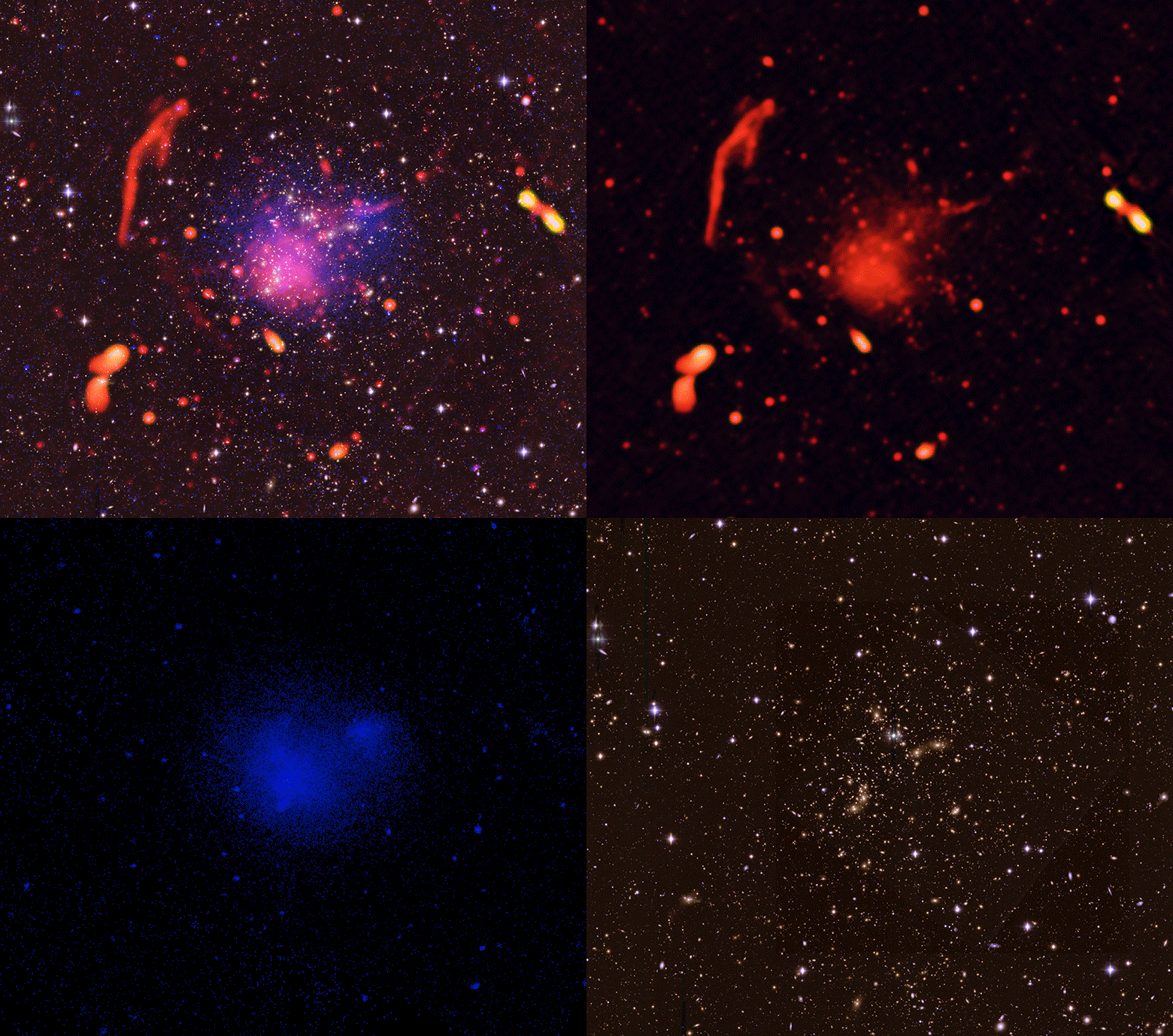
2012 წელს, ევროპის სამხრეთული ობსერვატორიის Very Large Telescope-ით, NASA-ს ჩანდრას რენტგენული გამოსხივების ობსერვატორიიდან და ატაკამის კოსმოლოგიური ტელესკოპით განხორციელებული დაკვირვებების შედეგად გაირკვა, რომ სინამდვილეში, ელ-გორდო შედგება ორი გალაქრტიკათგროვისგან, რომლებიც ერთმანეთთან შეჯახების პროცესში იმყოფებიან, მილიონობით კმ/სთ სიჩქარით.
გალაქტიკათგროვების ფორმაცია ძლიერ დაკავშირებულია ბნელ მატერიასთან და ბნელ ენერგიასთან; შესაბამისად, მსგავსი გროვების შესწავლას შეუძლია სინათლე მოჰფინოს ამ მოუხელთებელ ფენომენს (ბნელ მატერიასა და ბნელ ენერგიას).
2014 წელს, ჰაბლმა დაადგინა, რომ ელ-გორდოს მასის უმეტეს ნაწილს შეადგენს იდუმალი ბნელი მატერია. როგორც მტკიცებულები მიუთითებს, ელ-გორდოს „ნორმალური“ მატერია, რომელიც ძირითადად შედგება რენტგენული გამოსხივების ტალღის სიგრძეში მოკაშკაშე ცხელი გაზისგან — იფლითება ბნელ მატერიასთან შეჯახების შედეგად. ცხელი გაზების მოძრაობა ნელდება, ბნელი მატერიის კი არა.
მომზადებულია nasa.gov-ის მიხედვით