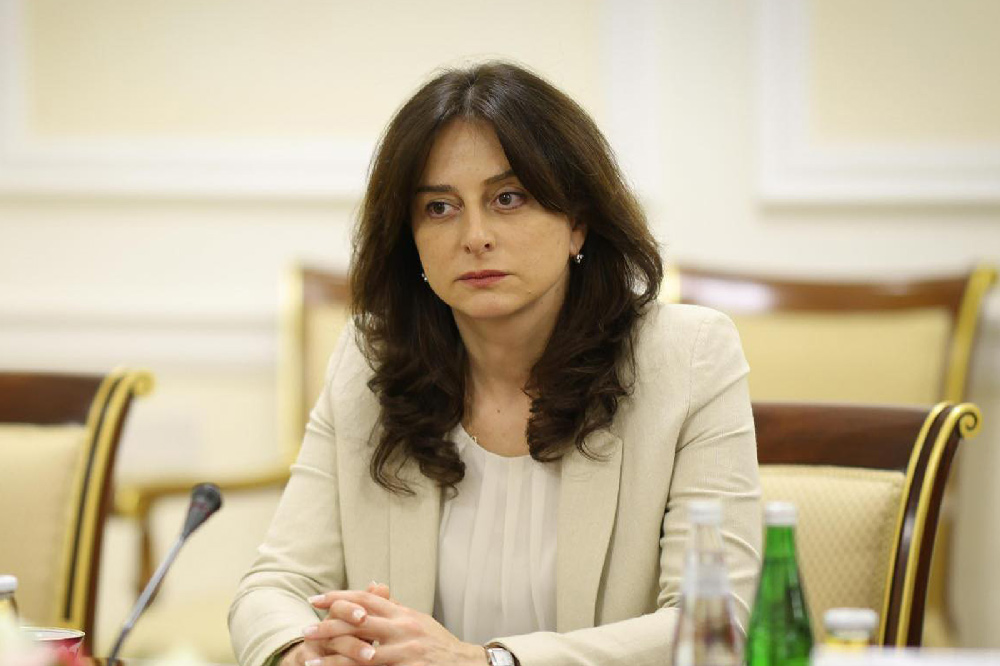
MPs Bitadze: Black Sea Submarine Cable and Green Energy Corridor are redefining our geopolitical landscape
Climate change is already affecting Georgia. It has caused more frequent and intense floods, landslides, and droughts across the country, stated Maia Bitadze, Chair of the Parliamentary Committee on Environment and Natural Resources of Georgia, during her address to the OSCE Parliamentary Assembly’s Committee on Democracy, Human Rights, and Humanitarian Affairs.
Bitadze highlighted that Georgia has already taken significant steps to strengthen climate change management and outlined both recent legislative changes and future plans in this area.
“It is an honor to speak with you today. The urgency of the climate crisis demands strong leadership and cooperation across borders and sectors as we are living through the hottest decade in human history.
Climate change is already affecting Georgia. It has caused more frequent and intense floods, landslides, and droughts across the country. These changes are threatening our communities, damaging infrastructure, and putting our long-term development at risk. Thus, Georgia is committed to mitigate climate change, develop our legislative framework, diversify our energy system, and invest in adaptation strategies to protect people and ecosystems.
Georgia has already strengthened climate governance. In 2024, Parliament adopted the National Energy and Climate Plan (NECP), setting clear targets for reducing emissions and increasing the use of renewable energy. We have also updated our Nationally Determined Contribution (NDC) under the Paris Agreement and set a 47% emissions’ reduction target by 2030.
To enhance climate resilience, Georgia is also drafting a National Adaptation Plan aimed at protecting people, safeguarding environment, and supporting sustainable development. In parallel, we are developing early warning systems and improving the capacity of state agencies to respond effectively to climate risks.
To support the implementation of our climate objectives, and as a member of the EU Energy Community, Georgia is adopting Monitoring, Reporting, and Verification (MRV) legislation and drafting Climate Law. This law will establish a national Emissions Trading System (ETS) and set the target of achieving climate neutrality by 2050. Together, these legislative measures will create a clear framework for both climate mitigation and adaptation.
Energy diversification is one of our main tools to achieve these goals. Our electricity system is already 80% renewable, due to hydropower. To build a more resilient energy system, we are also investing into solar and wind energy. Recently, we adopted the law to support the exploration of natural hydrogen, which can be another low-carbon energy source in Georgia’s energy portfolio.
On the regional level, projects such as the Black Sea Submarine Cable and the Green Energy Corridor are redefining our geopolitical landscape. These initiatives connect the South Caucasus to European and Central Asian partners, facilitate the export of clean electricity and green hydrogen, and strengthen cross-border energy security.
While the path ahead is not without challenges, we are ready to work with our partners across the OSCE region to strengthen our mitigation and adaptation action. Our efforts and commitments are in line with the recent OSCE Parliamentary Assembly resolution, especially its calls to enhance climate adaptation, accelerate clean energy diversification, strengthen cross-border cooperation, and promote long-term environmental and economic resilience,” Bitadze stated.