


Maka Botchorishvili: Georgia remains committed to strengthening connectivity, focusing on turning the Black Sea into a bridge rather than a barrier
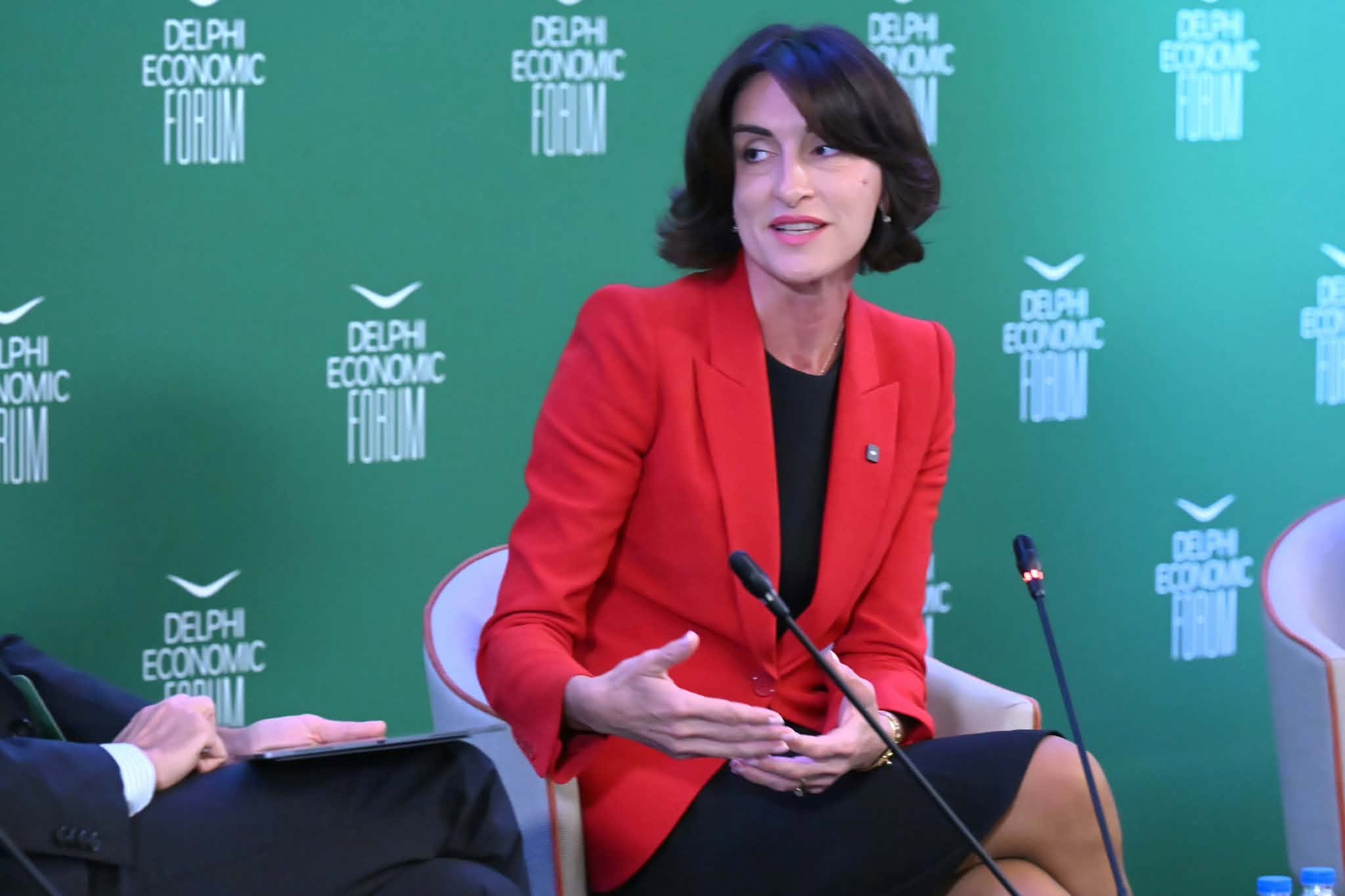
“For years, Georgia has actively supported strengthening connectivity and has explored how we can transform the Black Sea into a space that connects rather than divides. While the European Union lies on one side, the perspective on the other is different—we are not yet an EU member, but Georgia is actively striving for accession,” stated Georgian Foreign Minister Maka Botchorishvili during a panel discussion on connectivity in Bulgaria.
Botchorishvili explained that Georgia’s strategy has long sought to enhance connectivity across the Black Sea, explicitly linking these initiatives to the country’s relations with the EU.
“From Georgia’s perspective, over recent decades we have made a great effort to bring Georgia closer to the EU, to bring our standards closer to European standards, harmonise them and align our legislation more closely with EU law. We have strengthened our partnerships with Kazakhstan and Uzbekistan, raising them to the level of strategic relations. And we have a long-standing strategic partnership and excellent relations with our neighbour Azerbaijan.
That is how we are building this line of connectivity, and that is what we are discussing here in Sofia today. Connectivity matters for Europe, the South Caucasus, Asia and the whole world.
But creating physical routes and links is of the utmost importance. Along with Bulgaria, Romania and Turkey, Georgia too has important work to do to build these physical links.
For our part, we have developed excellent cooperation with Bulgaria on connectivity, and we are meeting our own commitments by developing port infrastructure. Georgia currently has two operating seaports, Batumi and Poti. Our focus also extends to the Anaklia Deep Sea Port project, an initiative designed to expand Black Sea capacity and fundamentally link these vast regions. At the same time, we are developing our road infrastructure and rail network. In short, we aim to create physical links that, taken together, increase the Black Sea’s connectivity potential,” Botchorishvili said.
She said the Middle Corridor has enormous potential for connecting different regions.
“If we want to make the Middle Corridor a competitive route, we need to assess its potential and its advantages. It is, of course, also a matter of procedures. We are dealing with many countries with different political and economic systems. Naturally, it is quite difficult to get them to act in concert and develop common rules.
In the case of the European Union, it is more straightforward; it is a single bloc operating under a unified set of rules. However, the moment you cross the border, the situation becomes far more challenging and complex. Therefore, as a country playing a key role in the development of the Middle Corridor, deepening our partnerships is our top priority, and that is where we are investing.
Political dialogue with partners is also crucial for developing the Middle Corridor. This is the foundation that enables us to tackle current challenges and navigate the obstacles ahead. After that, of course, we need to deepen cooperation at various levels.
This is a very complex issue, and it is not limited to infrastructure. We can build the physical infrastructure, but without the right political conditions, those roads cannot be used. We have many roads that we cannot use.
We can also draw up rules, but we may lack the infrastructure. So all of this has to be looked at as a whole. In my view, we need to look at the Middle Corridor’s development from different perspectives, but we should also see it as an opportunity. Projects like the Black Sea submarine cable exemplify the physical links that will bring our countries and regions closer together across the maritime border.
These projects must be implemented. It would, of course, be very hard for governments to deliver them alone without business involvement and investment. We view Georgia as a leading nation in terms of attracting investment.
Consequently, I want to underline how crucial it is to deepen collaboration with our international partners to deliver these initiatives. This matters for each of us: Romania, Bulgaria, Turkey, Georgia and our wider region as a whole. As countries, we must take on special responsibility here and create a favourable environment for delivering these projects,” Botchorishvili said.