


Leopard captured on camera in Georgia for third time in 20 years
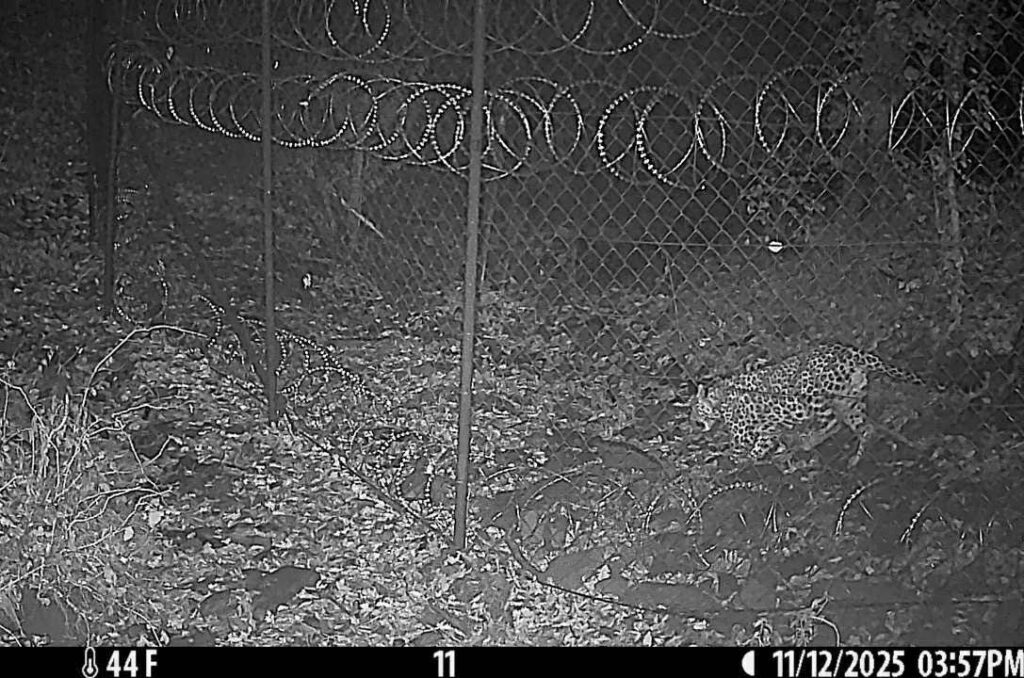
For the third time in two decades, a camera trap has captured a leopard, a species listed on Georgia’s Red List, within the Algeti National Park.
Two camera traps operated by the National Wildlife Agency’s noble deer breeding farm recorded the elusive predator on the outskirts of their fenced enclosure, the Ministry of Environmental Protection and Agriculture has announced.
This rare sighting underscores the leopard’s continued presence in Georgia, with the agency noting it is the third such capture in the past 20 years.
“The leopard has likely been present on the Trialeti Ridge for some time. It is extremely cautious and avoids humans, making sightings rare. Out of dozens of camera traps deployed along the four-kilometre fence surrounding the deer enclosure, only two captured the leopard. The animal was observed moving along the fence. Our enclosure, spanning 72 hectares and fully fenced, is designed to prevent predators from entering. It is equipped with 40 camera traps and 30 video cameras, and the deer are protected. Outside the enclosure, the surrounding protected area offers ample natural food sources. This discovery underscores the vital importance of protected areas and their role in safeguarding Georgia’s natural heritage,” explained Revaz Bezhashvili, head of the National Wildlife Agency.
Zoologist Professor Zurab Gurielidze emphasised Georgia’s significance within Eurasian biodiversity.
“The leopard, Panthera pardus, once widespread across medieval Georgia, was considered extinct in the region since the mid-20th century due to poaching. Historically, Georgians referred to the leopard as a ‘tiger’,” he explained.
The creation and maintenance of protected areas are central to Georgia’s efforts to safeguard its unique ecosystems, flora, and fauna. Currently, there are 100 protected areas spanning six categories, covering a total of nearly 930,000 hectares. The government plans to establish four new protected zones in Samegrelo, Svaneti, Kakheti, and Guria, and to expand existing Racha reserves, the Ministry stated.