


Justice Minister: Strasbourg Court decision ends claims of political persecution against Gakharia
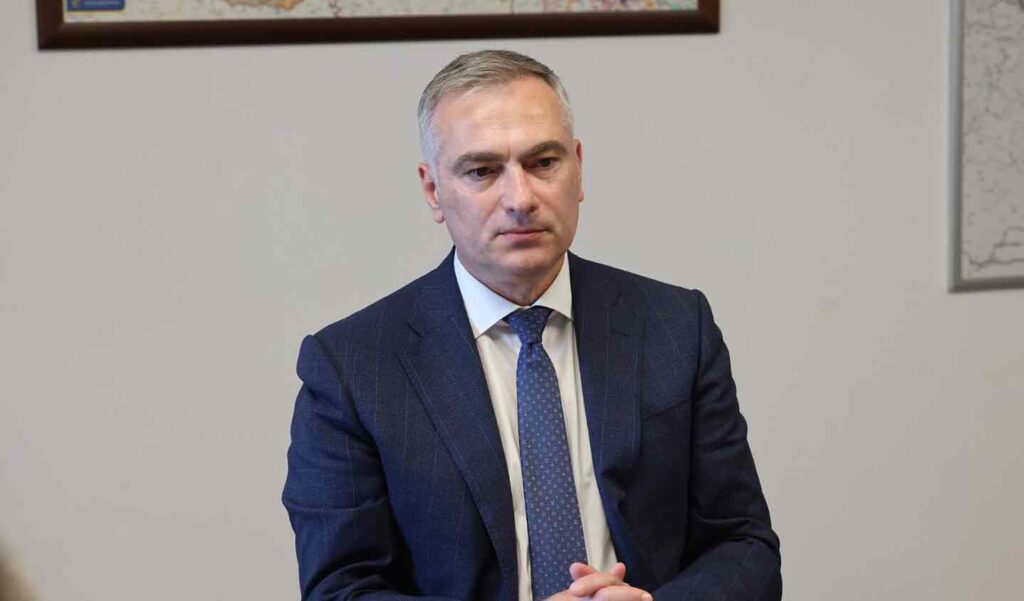
“The Grand Chamber of the Strasbourg Court has delivered its decision in the case Tsaava and Others v. Georgia, reaffirming the state’s legitimate right to use special means when law enforcement officers and state bodies are under attack,” Paata Salia, Minister of Justice of Georgia, stated.
According to the Minister, the Court also identified certain shortcomings in the investigation of the events of June 20–21, 2019.
“It is true that the Prosecutor’s Office immediately launched an investigation; however, violations were found in the process of handling the criminal case itself. The responsibility of senior officials of the Ministry of Internal Affairs and the proportionality of force used against demonstrators were not fully examined. In this regard, the Grand Chamber found that, in certain cases, disproportionate force was used during the dispersal of the rally. At the same time, it was emphasized that the Georgian authorities actively cooperated with the Court to establish the facts,” Salia explained.
He noted that the Prosecutor’s Office, following the Chamber’s decision on June 7, 2024, intensified its investigation. As a result, criminal proceedings were initiated against former Prime Minister and then Interior Minister Giorgi Gakharia on November 12, 2025.
“The circumstances highlighted by the Strasbourg Court have already been addressed by our Prosecutor’s Office and will continue to be considered in the ongoing investigation. This should put an end to claims that Giorgi Gakharia is being politically persecuted by the government,” Salia said.
Regarding the use of force, Minister Salia clarified: “When I mentioned that disproportionate force was used in certain cases, I referred to instances where rubber bullets were fired, and people who may not have actively attacked the police were injured.”
Salia emphasized the importance of studying the Court’s reasoning in detail, particularly concerning compliance with European standards.
“To make a thorough and meaningful judgment, we need to familiarize ourselves with the reasoned decision. As always, the Georgian government shares and implements Strasbourg Court decisions, and we will take into account the recommendations contained in this ruling,” he declared.
The Minister also addressed claims portraying Gakharia as a political refugee.
“Certain violations did occur during the dispersal of the demonstration, and we do not deny this. Our investigation revealed these violations, which is why criminal prosecution was initiated against the former Prime Minister. This investigation aims to hold those responsible legally accountable and assess whether the harm and violations could have been avoided,” Salia concluded.
The Grand Chamber of the European Court of Human Rights announced its decision in the case of Tsaava and Others v. Georgia on December 11. A total of 26 applicants were involved in the case. The Strasbourg Court found that Article 3 of the European Convention on Human Rights — covering both inhuman or degrading treatment and the lack of an effective investigation — had been violated in respect of 24 applicants. The Court also ruled that Article 10 (freedom of expression) had been violated in the cases of 14 applicants, while Article 11 (freedom of assembly) had been violated in respect of 11 applicants.
For reference, the Georgian Prosecutor’s Office initiated two criminal cases against former Prime Minister and then Interior Minister Giorgi Gakharia. One of these cases concerns the events of June 20–21, 2019. Gakharia was ordered held in pre-trial detention in absentia.