


ECHR finds Article 3 violations in Tsaava and Others v. Georgia case
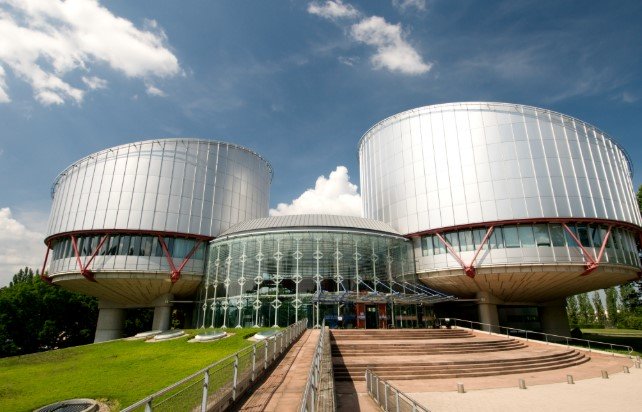
The Grand Chamber of the European Court of Human Rights has announced its decision in the case of Tsaava and Others v. Georgia, which concerns the dispersal by the police of a major anti-government protest on the night of 20-21 June 2019 from the front of the Parliament building in Tbilisi.
A total of 26 applicants were involved in the case. The Strasbourg Court found that Article 3 of the European Convention on Human Rights — covering both inhuman or degrading treatment and the lack of an effective investigation — had been violated in respect of 24 applicants. The Court also ruled that Article 10 (freedom of expression) had been violated in the cases of 14 applicants, while Article 11 (freedom of assembly) had been violated in respect of 11 applicants.
In addition, the Court found that there had been no violation of Article 38 of the Convention (obligation to furnish all necessary facilities during the examination of the case).
According to a press release issued by the Strasbourg court, the applicants (with one exception) were either participants in the protest or journalists covering it. Most of them sustained injuries from the authorities’ use of rubber bullets (“kinetic impact projectiles”). The others were allegedly assaulted by police officers.
The Court found that about 800 rounds of rubber bullets (“kinetic impact projectiles”) were fired by the police over three to four hours and often towards people’s heads and upper bodies, as in the case of 17 applicants.
The Court found that, although the ensuing investigation had already lasted for more than five and a half years, it had still not resulted in a thorough assessment of all the circumstances; nor had it led to any findings concerning the ill-treatment of the applicants or the identities of the State agents who had used – or ordered the use of – excessive force.
The Court also found that there was simply no evidence that the applicants’ injuries had been the inevitable consequence of their own conduct.
“The police appeared to have used rubber bullets as a general crowd-control weapon. In particular, there were a number of shortcomings in the Georgian legal framework as far as the police use of rubber bullets during demonstrations was concerned and in the way in which the demonstration had been dispersed. Moreover, preventing the applicant journalists from covering the events safely and freely had not been justified or proportionate.
Although there might have been some justification for wanting to disperse the demonstration, especially since it was taking place just outside the Parliament building and some protestors wanted to storm the building, the Court considered that the way in which the dispersal had taken place was not justified. In particular, no order to disperse had been given, nor a clear audible warning about the impending use of rubber bullets. Above all, an unjustified degree of force had been used, causing the applicants, and others, physical injury,” the press release noted.
As a result of its findings, the Grand Chamber indicated measures to be taken by the Georgian authorities, notably in relation to the regulation of use of rubber bullets and the implementation of rules and adequate safeguards as to their proper use.
The Court held that Georgia was to pay two of the applicants 75,000 euros (EUR) each, and two of the applicants EUR 85,000 each in respect of pecuniary damage. It held that Georgia was to pay all of the applicants various amounts set out in the judgment in respect of non-pecuniary damage, and EUR 38,414.99 jointly to 22 applicants in respect of costs and expenses.