


Deputy Justice Minister: Freedom of expression on social networks should not come at expense of violating rights of others
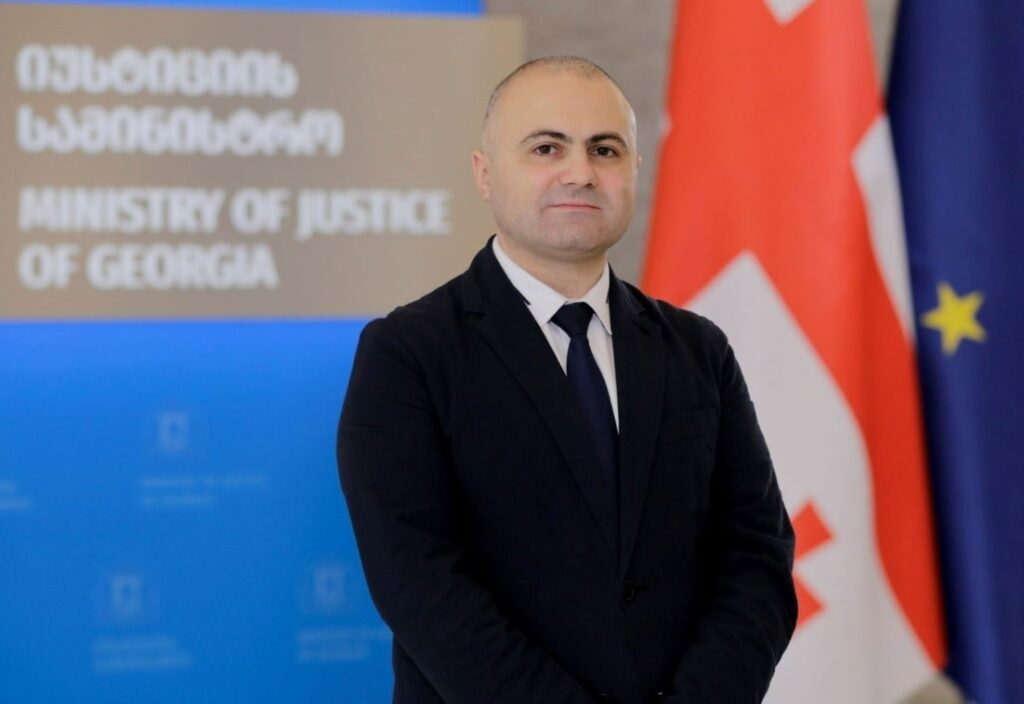
First Deputy Justice Minister Beka Dzamashvili commented on the European Court of Human Rights decision in the case “Miladze v. Georgia,” stating that the ruling confirms the state’s legitimate right to protect public officials, including political office holders, from insults and attacks.
According to Dzamashvili, the decision establishes a balance between freedom of expression and the protection of other fundamental rights.
“Freedom of expression cannot be absolute for specific people – public servants, even political officials – so that anyone can insult, threaten, use hate speech, or humiliate them in public,” he said. “Such forms of expression are inadmissible according to the practice of the European Court.”
He also noted that the Court has repeatedly held that freedom of expression does not extend to speech that aims to insult or intimidate individuals.
Dzamashvili further stated that the Court recognizes specific risks associated with online communication, arguing that expression in the digital space can have broader impact and therefore may be subject to regulation.
He said the Court did not accept the applicant’s argument that conduct classified as petty hooliganism under administrative law should be treated differently when it occurs online.
According to him, the ruling reinforces the principle that insulting or aggressive conduct in virtual space carries the same legal implications as similar actions in physical space.
“At the same time, critical expression remains protected,” Dzamashvili noted. “However, when criticism turns into humiliation, insult, or intimidation of specific individuals, the state is obliged to respond.”
He also described as “an interesting coincidence” that the ruling coincided with an initiative to establish a new department within the Ministry of Internal Affairs aimed at addressing hate speech, offensive campaigns, and aggressive communication in public space.
Dzamashvili added that the Court found the relevant legal framework consistent with the European Convention on Human Rights.
“The freedom of expression on social networks should not come at the expense of violating the rights of others. The wide reach of online platforms increases the potential impact of harmful speech. The European Court has clearly stated this in today’s decision,” he said.
The Ministry of Justice of Georgia stated that the Strasbourg Court upheld its position in the “Miladze v. Georgia” case, confirming that publicly expressed insulting, humiliating, and obscene statements against officials fall outside the scope of protection of freedom of expression.