


Deputy Justice Minister: ECHR questions whether applicants can be considered victims; FARA suit may be declared inadmissible
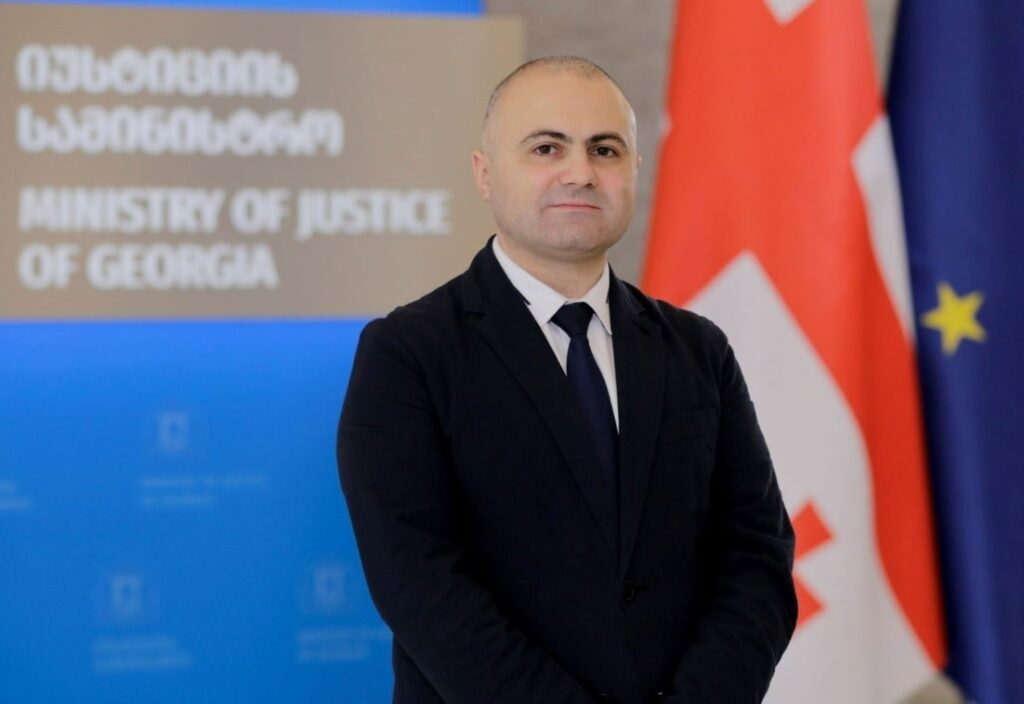
The First Deputy Minister of Justice, Beka Dzamashvili, announced that the European Court of Human Rights will review the complaints filed by three organisations and three individuals concerning the Foreign Agents Registration Act (FARA) through the standard procedure, without any expedited process.
He also indicated that no ruling on the matter is expected before next year.
“The Georgian Government has received, from the European Court of Human Rights, the complaints of three organisations and three individuals who allege that the Foreign Agents Registration Act violates their rights as guaranteed under the European Convention. Significantly, these complaints were lodged in August of last year, and the European Court has taken almost nine months to communicate them to the State for a response.
This means that the European Court is examining these complaints through standard procedure, without any acceleration whatsoever. It is explicitly stated that the State will be afforded standard time frames. Specifically, the State will respond to the questions by the end of July. The applicants will then respond in turn, and the State will have the opportunity to submit its final observations by the end of the year. This means that no decision on the matter is to be expected before next year,” Dzamashvili stated.
He further noted that the Government has received no communication from the Strasbourg Court concerning any suspension of the law’s operation. In his assessment, this means either that the applicants did not request a suspension or that they did request one and it was refused.
“Even though the applicants sought interim measures at the domestic level, before the Constitutional Court, requesting suspension of the law, no such communication has been received from the Strasbourg Court. This means that suspension of the law’s operation was either not sought before the European Court, or was sought and refused. Accordingly, their claims that their rights are being restricted immediately and urgently do not bear scrutiny. Had that genuinely been the case, they would have been obliged to seek interim measures,” Dzamashvili stated.
He also clarified that in connection with the case, the European Court has posed questions to both parties, the applicants and the State.
“It is important to note that the case is being examined at both the admissibility stage and on the merits. That is to say, the European Court has, amongst other things, raised the question of whether the applicants can be regarded as victims at all. It is possible that, following this examination, the application could be declared inadmissible altogether.
The applicants noted that the case has been assigned significant-impact status, and the matter was presented in such a way as to suggest this confers some special privilege upon the application. The case is indeed precedent-setting, given that the law itself is modelled on legislation in force in the United States. As the public is aware, several European states have already adopted similar laws or are currently in the process of doing so. Accordingly, the European Court’s judgment will be of precedential value and will bear not only on Georgia’s situation, but will have implications for regulations in force in other European states as well,” Dzamashvili noted.
The Georgian Young Lawyers’ Association announced today that the Strasbourg Court has opened substantive examination of the case concerning the Foreign Agents Registration Act (FARA).