


Vice-Speaker Volski: Disagreements between Brussels and Tbilisi do not justify threats of ‘dark future’ for public
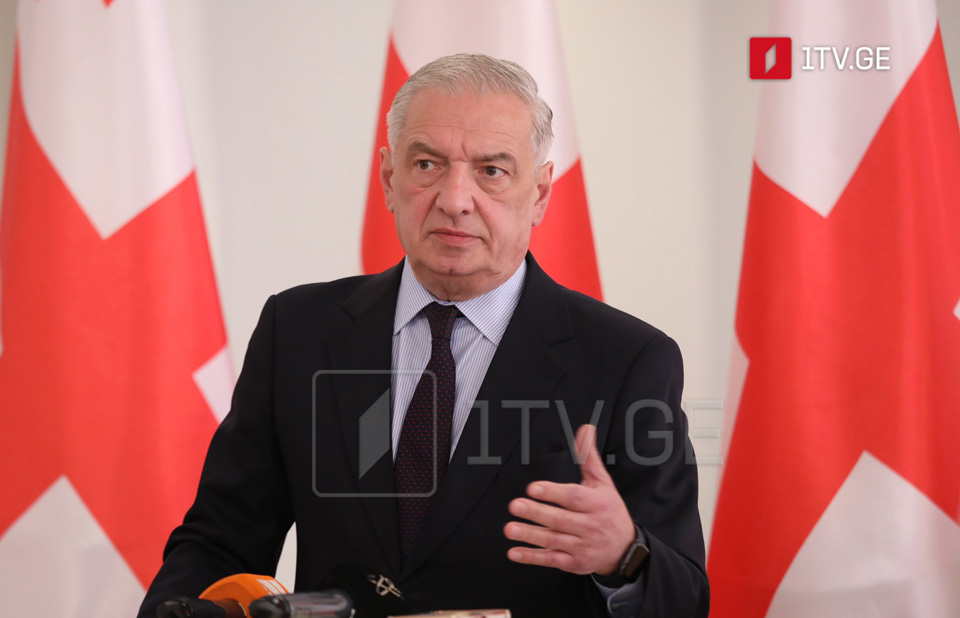
“If there are differences of opinion between Brussels and Tbilisi, this does not justify threatening the public with claims that bloodshed, economic collapse, darkness, or a lack of development prospects are inevitable. Such statements are perceived as a threat,” First Vice-Speaker of the Parliament Gia Volski commented on statements made by the EU Ambassador to Georgia.
Volski argued that such statements should be formally clarified and suggested that the Ambassador be summoned to the Ministry of Foreign Affairs for explanations.
“Of course, this is a political demarche, but it cannot be followed by a vague or unsubstantiated response; the reasons must be clearly stated. The question is what exactly the statement refers to, if it implies to the entire population of Georgia that the country may face a “dark period” and a return to the 1990s in even more severe forms. It is also unclear whether this refers to the 1990s or the period before 2012, when, as claimed, cases of torture and death were reportedly frequent, and no statements on these issues were made by Ambassador Herczyński or his predecessor.
From this perspective, it is argued that the confrontation does not reflect the current situation in the country, which, according to the most authoritative rating agencies, shows Georgia among leading countries with no indications of an impending “dark period” or internal violence.
It is further stated that, regardless of how the message is phrased, it represents a threat, in connection with which Ambassador Herczyński was summoned to the Ministry of Foreign Affairs. However, no detailed explanation was subsequently provided. Questions are raised as to whether concerns should instead focus on issues such as preventing illicit financial flows, so-called “LGBT propaganda,” or addressing individuals who commit violent acts in public spaces and attack state institutions, as has allegedly occurred on multiple occasions.
It is further questioned whether, if such expectations are indeed being placed on Georgia by the EU, additional clarification is required. The statement also asks what is considered problematic about transparency, about the state’s position on medical gender transition procedures or same-sex marriage, and about the state’s response to what is described as externally financed revolutionary activity.
The conclusion presented is that clarification is needed regarding why such developments would justify punitive consequences or instability in Georgia. It is also suggested that Ambassador Herczyński should respond to these questions, and that appropriate inquiries should be directed along these lines,” Volski said.
For context: several days ago, Georgian media circulated remarks made by EU Ambassador to Georgia Pawel Herczyński at an event held in Brussels at the European External Action Service, in which he stated: “Georgia stands at a crossroads. Georgia’s future has not yet been written, but what is decided in the coming weeks and months will determine whether Georgia belongs to the family of European nations founded on democracy, the rule of law and human rights — or whether, regrettably, it returns to its dark past.” Herczyński also said: “We must not allow Georgia and its wonderful, warm, hospitable people to return to that dark era of violence, civil war, poverty, hardship and corruption.”
On April 23, Prime Minister Irakli Kobakhidze stated that it was appropriate to summon the Ambassador to the Ministry of Foreign Affairs.
Foreign Minister Maka Botchorishvili indicated on April 24 that the diplomatic service would employ available channels of response.
On April 27, Foreign Minister Maka Botchorishvili met with EU Ambassador Pawel Herczyński at the Avlabari Residence.
Following the meeting, the Georgian Ministry of Foreign Affairs issued a statement in which Botchorishvili underscored that Brussels’ current policy was undermining trust and damaging the Georgia–EU partnership.
The European Union Delegation to Georgia also issued an official statement regarding the meeting with the Georgian Foreign Minister.