


State relations and ethnic attitudes must be separated when discussing Russophobia, says Georgian PM
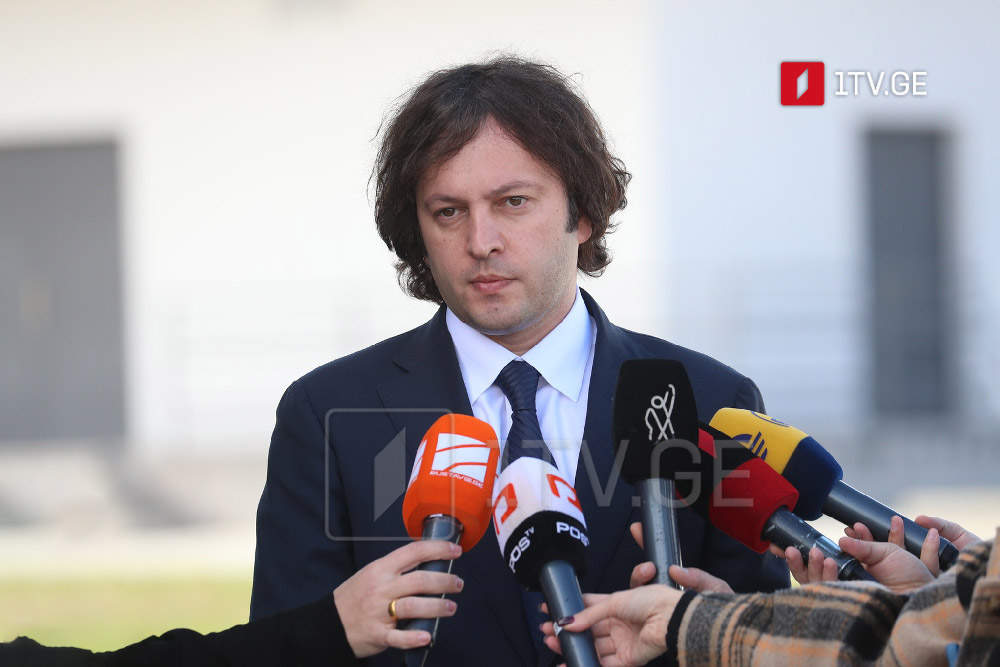
“The theme of Russophobia is simultaneously topical and absurd; when we are forced to discuss together in earnest that hatred of a specific nation is a wrong phenomenon, this in itself speaks to the absurdity of the discourse being artificially imposed upon us,” stated Georgian Prime Minister Irakli Kobakhidze during a debate broadcast on Rustavi 2 TV.
According to the head of government, there is no such thing as a bad nation or a good nation, and this fundamental premise should serve as the norm for any healthy society.
“For any healthy society, this ought to be the simplest norm. No nation is bad or good, and no nation should be hated. This is a fundamental premise that should be the norm for any healthy society. However, we are forced to deliberate on this issue together because the discussion was artificially imposed on our society from the outside. First and foremost, when speaking of Russophobia, one must separate political issues, which concern relations between states, and that is a separate matter, from relations between nations, meaning the attitudes of one nation towards another. These are two distinct matters,” noted the Prime Minister.
Furthermore, he emphasised that the Georgian government truly represents its people when it comes to relations with the Russian Federation, maintaining a clear stance, explicit red lines, and a deeply principled approach.
“When it comes to political attitudes towards a specific state, in this case, the Russian Federation, we, the government representing the Georgian people, have a clear stance, explicit red lines, and a very principled attitude linked to our primary national grievance: the occupation of 20 per cent of our territories. Our position on this issue is unyielding. We have expressed our principled position in various forms and across various platforms, including numerous international platforms where we have set red lines. The same applies to international political and legal matters, such as our position on the war in Ukraine. Here too, as you know, there were around 1,000 acts, more than 600 after which we stopped counting, comprising various types of acts, documents, resolutions, and declarations that our country joined, which not only support Ukraine’s territorial integrity and sovereignty but directly condemn Russia’s aggression against Ukraine. Among other things, we also joined the legal complaint at The Hague, which, for instance, Moldova did not join. Thus, our clear position regarding state-to-state relations, our stance on occupation, on all principled issues concerning our national interests, the war in Ukraine, and other international topics, has been articulated by our state and government.
The second issue concerns the relationship between our nations. After all, we are talking about a neighbouring country that is not going anywhere, and a neighbouring people who will always be here. Politics may fluctuate one way or another, but the people will always remain where they are; we will always remain neighbours, unless there are global climatic cataclysms, to speak half-joking, that is simply the reality. As for attitudes towards a nation, to be forced to discuss seriously that some nation might be “bad” and another “good”; I do not know what could be more absurd when we speak of a healthy society. Yet even such an absurd discourse has been artificially foisted upon our public. It is a very simple matter: on the one hand, there is politics, where we require a principled stance and red lines; on the other, there is the attitude towards a specific nation,” noted the Prime Minister.