


Bulgarian Foreign Minister: War in Ukraine demands alternative routes, placing Georgia at the heart of global transit corridors
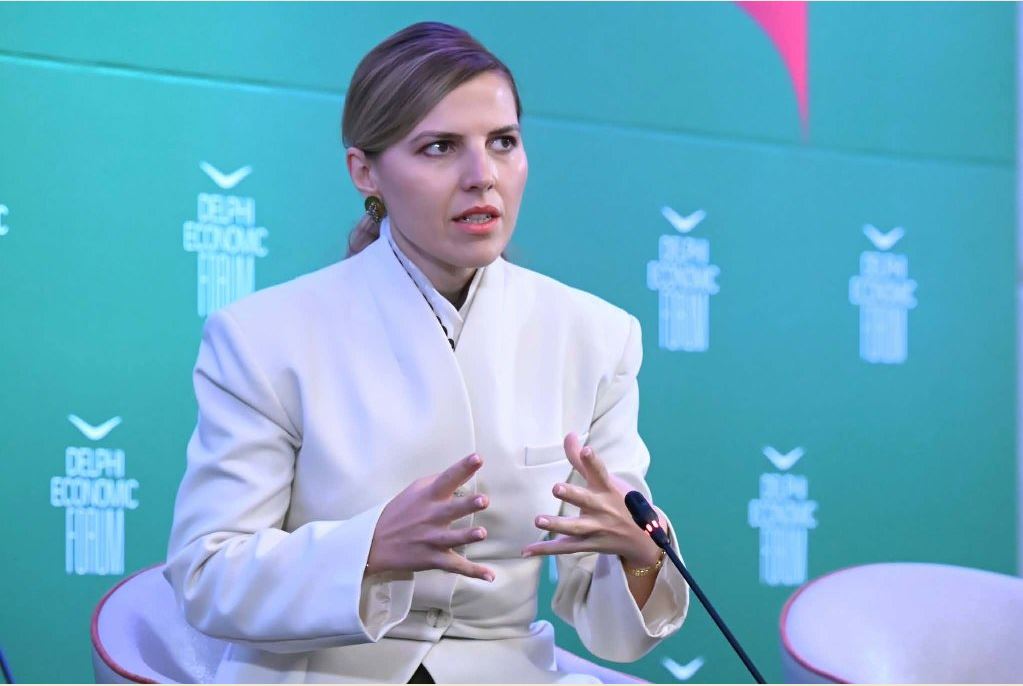
“I would concentrate on strategic focus. Today we need to define our national goals, especially in foreign policy. In terms of alliance memberships, we are already significantly integrated. But in today’s situation, we need to know not only where we are, but also what our added value is,” Bulgarian Foreign Minister Velislava Petrova-Chamova told a panel discussion in Bulgaria.
She said bridging the gap between geographical position and reality is not a simple, straightforward process.
“It requires not only the right timing but also concrete actions, including choosing specific periods. Corridors are not just lines drawn on a map, but political priorities and subjects of political debate for years. Today, given the war in Ukraine and the need to find alternatives to routes running through Russian territory, this issue has become even more pressing.
We must seek alternatives and capitalise on the added value of our geographical location, namely that Georgia serves as a crucial crossroads for international transit corridors. We can offer Europe alternative routes; we have all the prerequisites to turn our strategic location into an opportunity for Bulgaria.
Crucially, this will benefit not only our own country, but the wider region and Europe as a whole. A strategic focus involves more than simply reflecting on a foreign policy model. Connectivity is a good initiative, but it is a very expensive, long-term process. It needs vision and concrete investment. Instead of leaving rail links and ports as isolated sections, we must integrate them into a single, cohesive corridor. That requires investment. Our goal is to design an economically robust investment model that will successfully attract investor interest. This means moving our investment interests from the national level to the regional and European level,” the Bulgarian Foreign Minister said.
She said connectivity is one of the issues on which a national political consensus must be built.
“We must create added value and make the most of the opportunities on the map that help us find our bearings in a difficult geopolitical situation, when questions of alliances and analytical assessments are becoming ever more complex. We must be prepared to incur a political cost to pursue long-term priorities and, in the interests of both the country and the wider region, draw upon the necessary expertise and experience.
Populists usually criticise but offer no real solutions. That is why I believe it is important to offer solutions rather than criticism, and that is what Bulgaria is trying to do. That is why I remain convinced that fostering dialogue with countries in the region is the right approach, serving to strengthen the EU’s standing. In this way, we can show all EU countries that the EU is a project that will continue to exist in the future. I am optimistic about the EU’s existence and its common role. I think that to bind our countries even more closely to the EU and strengthen cooperation across the EU, we need to show clearly and pragmatically what opportunities the EU creates,” Petrova-Chamova said.