


Speaker views German Ambassador’s statement as sensibility steeped in German history, where disappearance of past is portrayed as blurring with a larger identity
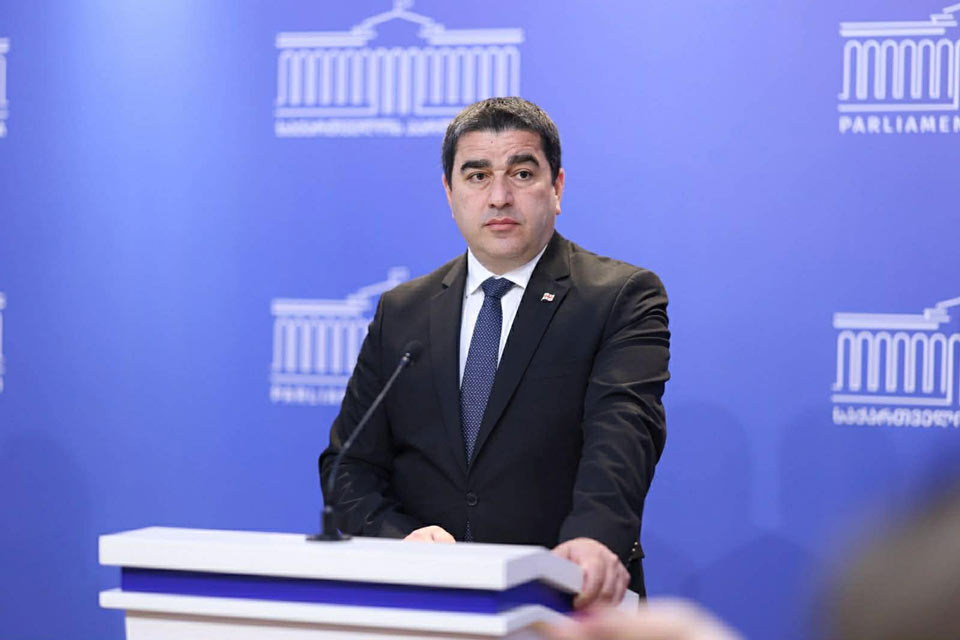
“It is obvious from Fischer’s statement that he considers it insufficient to be Georgian, and a Georgian needs to possess a second identity. I wonder if he thinks the same about being German?” wrote Parliament Speaker Shalva Papuashvili in his social network post.
The Speaker views the statement as a sensibility steeped in German history, where the disappearance of the past is portrayed as a blurring with a larger identity.
“Mr Fischer’s statement demonstrates that he considers it insufficient to be Georgian, and a Georgian needs to possess a second identity. I wonder if he thinks the same about being German? In fact, this is a sensibility steeped in German history where the disappearance of the past is portrayed as a blurring with a larger identity. This is obvious from his recent interview, saying: ‘We had a devastated country divided as a result of World War II. The European Union was a ticket to return to the civilized states’ circle.’
Georgia, in this sense, has neither the past to vanish nor a ticket to return to civilization. The EU is a commonwealth of independent and sovereign states, at least the European Union, which Georgians aspire to. The union of a blended identity is called the Soviet Union. The outgoing ambassador would better think about what kind of country he had arrived in and how much he did not understand about it,” he said.
German Ambassador to Georgia Peter Fischer said in an interview with Radio Free Europe: “Some Georgians know what joining the European Union means; others say, I have no better alternative, I don’t want to be Russian or Turkish, Iranian or Azerbaijani; just being with Armenia may not be enough.”