


Speaker: Collapse of rules-based order sparks battle for nations’ souls, driven by money and influence
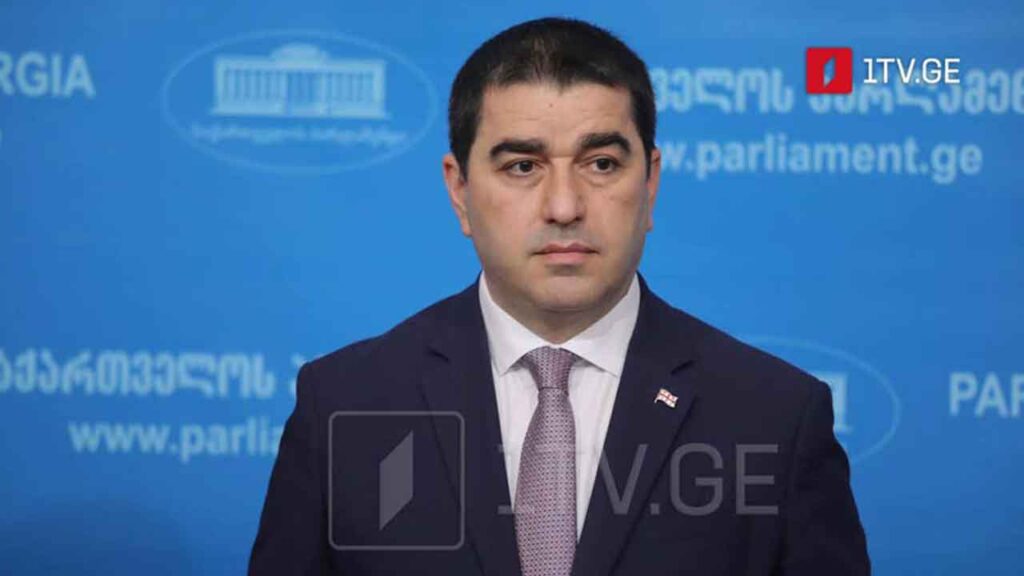
“What do we see today? The rules-based international order has collapsed. A direct battle is underway for the very soul of this or that state, that is, for its governance, and money and influence have become the means of gaining control over countries’ governance systems,” stated the Speaker of Parliament, Shalva Papuashvili, on Rustavi 2 TV Debates programme.
According to Papuashvili, “the issue of transparency is not so much a matter of accounting or NGO concerns, but rather a geopolitical question”.
“Let me quote: ‘The lack of transparency in foreign influence undermines democratic processes; foreign interference causes polarisation, distorts elections and calls democracy into question.’ These aren’t my words; they are excerpts from the European Union’s Democracy Act, the directive’s assessment document, and a European Parliament resolution. I agree with one observation, and Mr Iago [Khvichia, Girchi party] also asked what the aim is. We need to look at this not through a narrow lens, but to see the broader picture.
In reality, this law and the body of legislation, the transparency agenda generally, is not so much a question of accounting or NGO matters, but rather a geopolitical issue. This law, in its essence, anticipated the geopolitical processes we’re witnessing today.
What do we see today? The rules-based international order has collapsed. A direct battle is underway for the very soul of this or that state, that is, for its governance, and money and influence are the means of gaining control over a country’s governance.
This is precisely the function of the state: to protect its own state and people from the influence of other countries in the geopolitical situation in which we find ourselves. We’ve seen that this entire body of legislation is a response to what had been happening in Georgia for years, whether it be various foreign diplomatic missions or organisations involved at different levels, effectively in governance processes. We observed, roughly from around 2020 onwards, that the falsification of parallel vote tabulation results was the first clear indication that a network of groups had been established with foreign funding, which were loyal not to their own state but to their benefactors,” declares Shalva Papuashvili.