


Speaker: All things Saakashvili regime relied on for keeping power were happening before Western partners’ eyes
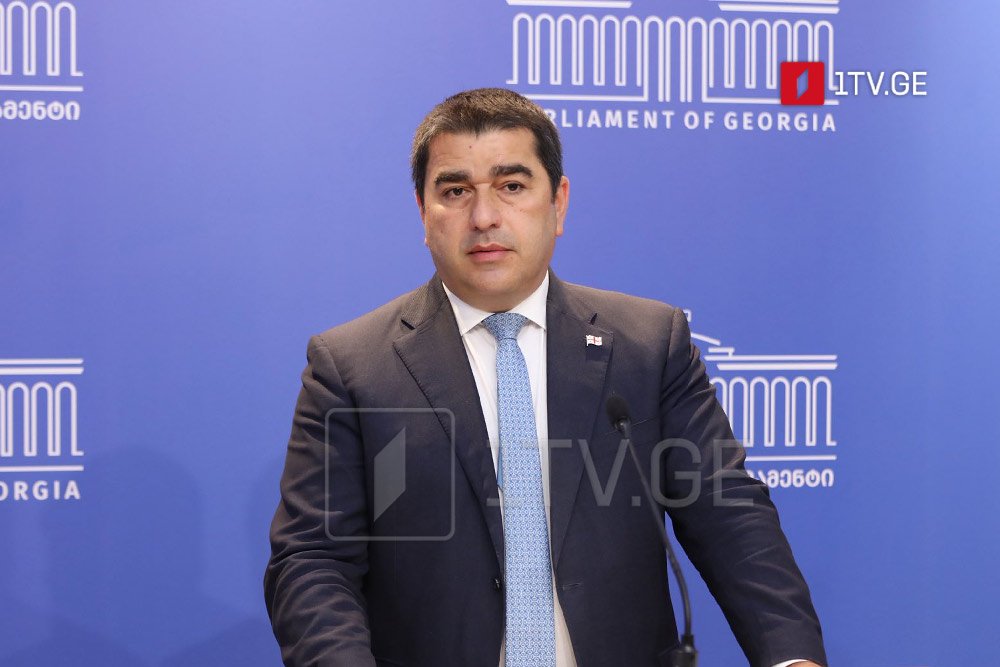
“All the things that the Saakashvili regime relied on for seizing and keeping power, including torture, corruption, business racketeering, media capture, were happening before the eyes of some of our Western partners that chose to turn a blind eye on the regime’s crimes,” the Georgian Parliament Speaker Shalva Papuashvili wrote on social media.
“Georgia is finally taking a decisive step towards consolidating the legal assessment of our country’s painful past, pertaining to the dramatic nine years of Georgia’s autocratic rule from 2003 to 2012, which was orchestrated and led by ex-president Mikheil Saakashvili and his criminal cohort, known as the United National Movement (UNM). Their destructive efforts went beyond 2012, when they formally lost power and metastasized to our present-day political struggles.
All the things that the Saakashvili regime relied on for seizing and keeping power, including torture, corruption, business racketeering, media capture, were happening before the eyes of some of our Western partners that chose to turn a blind eye on the regime’s crimes. Suffice to say, the European People’s Party (EPP), to this day, not only honors dictator Saakashvili as their hero but also has the UNM as a member party of their political family,” he wrote.
Papuashvili argued that Saakashvili’s encouragement by Western figures who now seek his release from prison proves that, for some, “human rights and the rule of law are only a pretext for political pressure” rather than genuine values.
“The fact that Saakashvili was encouraged by these people who are now trying to save him from his legal detention indicates that the talk about human rights and the rule of law is only a pretext for some in the West for exerting political pressure but has little value of its own.
Ukraine’s current authorities keep the architects of Saakashvili’s dictatorship in key positions – Zurab Adeishvili in the Prosecutor-General’s office, Gia Lordkipanidze in counter-intelligence service, Eka Tkeshelashvili and Levan Duchidze in leading donor organizations. One of the leading members of the regime – Nona Tsotsoria – is, to this day, vetting judges in Moldova. Only this last fact is enough to understand the purposes of the judicial vetting system: creation of not genuinely free legal system but rather a construct resembling Saakashvili’s subservient judiciary,” the Speaker stated.
Highlighting the work of the parliamentary investigative commission, Papuashvili said it was not “just a desk research,” as 44 public hearings were held, 139 witnesses testified, and 778 applications were submitted.
“The work of the Parliamentary Investigative Commission was not a desk research. 44 public hearings were held, 139 witnesses gave their testimonies, and 778 applications were made to the Commission. At the public hearings, the entire Georgian society listened to the tragic stories about the murders, torture, business racketeering that were proceeding with the tacit consent from the West.
The other issue is the period after 2012, when the United National Movement, led by Saakashvili, made continuous attempts at deposing the government, which turned the UNM into an extremist entity in Georgian politics.
The Decree below, is a significant step towards closing the tragic chapter of Georgian history and moving on to a consolidated democracy with genuine popular support, based on national interest and the principles of state sovereignty and equality,” the Speaker added.