


Parliament proposes new legislation to strengthen anti-corruption measures
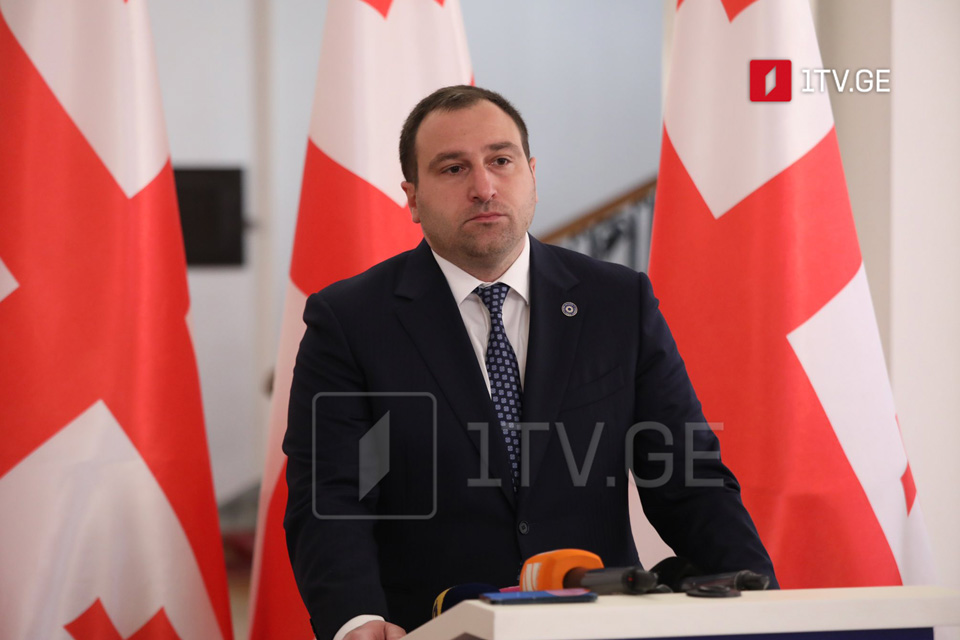
The Parliament of Georgia has introduced a new legislative proposal to amend the Law of Georgia on Combating Corruption.
Irakli Kirtskhalia, leader of the parliamentary majority, stated that the proposed amendments will require public officials, political figures, individuals employed in administrative agencies, LEPLs, and state enterprises to submit an asset declaration to the Anti-Corruption Bureau annually. This obligation will persist for thirty years in cases where a conviction for official or financial crimes under the Criminal Code of Georgia is legally established against them.
“Since the Georgian Dream, our political team, came into power, one of our primary priorities has been the fight against corruption. Over the past 13 years, we have achieved significant progress in this area, as confirmed by numerous international studies conducted throughout this period, particularly recent ones, and the published ratings. Georgia now stands as a regional leader in the fight against corruption and anti-corruption reforms, surpassing several European countries. Despite these tangible results, we are far from satisfied and remain committed to our ambitious goal that Georgia should be among the top three countries worldwide with the lowest levels of corruption.
Therefore, the Georgian Parliament fully supports and aligns with the declared stance of the Prime Minister, which is to pursue an unwavering and relentless battle against corruption. Naturally, the role of the State Security Service is crucial in this endeavour, with one of its main priorities being the prevention, detection, and suppression of official crimes, conflicts of interest in public service, and corruption, including ‘elite corruption’. The effective measures recently implemented by the State Security Service, along with the crimes uncovered, stand as further proof of the state’s uncompromising stance towards this scourge.
To further enhance legislative mechanisms in the fight against corruption, a new initiative has been prepared in Parliament to amend the Law of Georgia on Combating Corruption. Under these amendments, public officials, political figures, individuals employed in administrative agencies, LEPLs, and state-owned enterprises will be required to submit an asset declaration to the Anti-Corruption Bureau annually, for thirty years, should a conviction for official or financial crimes under the Criminal Code of Georgia be legally established against them.
These changes send a clear message to those intent on illicit gains, to those who seek to benefit from corrupt transactions, legalise their income, and pursue personal interests over the long term,” said Irakli Kirtskhalia.
According to Kirtskhalia, once the amendments come into force, it will be possible to actively observe and monitor the property status of individuals convicted of specific official crimes for a period of 30 years.
“This effectively prevents the legalisation of any misappropriated property by them and its use for personal interests, even after they have served their sentence. We will undoubtedly continue our unwavering fight against corruption. I firmly believe that, by standing with society, we will achieve our goal of making Georgia one of the top three countries in the world with the lowest levels of corruption,” said Irakli Kirtskhalia.
Furthermore, the press release issued by the Parliament of Georgia specifies in its articles that active monitoring of the property status of individuals convicted of official crimes will be carried out:
Under the Criminal Code, Article 180, Section 3, Subparagraphs “a” and “b” pertain to offences of fraud committed through the abuse of official position or when involving a substantial amount. Article 181, Section 2, Subparagraph “c” addresses extortion aimed at obtaining a significant quantity of property. Article 182, Section 2, Subparagraph “d” and Section 3, Subparagraph “b” relate to embezzlement or misappropriation carried out either via the abuse of official position or involving a large sum.
Similarly, Article 186, Section 2, Subparagraphs “d” and Section 3, Subparagraph “b” concern the acquisition or disposal of property acquired through criminal means, with prior knowledge, when committed either in a substantial amount or through the abuse of official capacity. The offence of money laundering or the legalisation of illicit income is covered under Article 194. The related offence of using property obtained through such legalisation, including its possession or disposal, is addressed under Article 1941.
Further, Article 1951 deals with breaches of regulations governing participation in state procurements. Under Article 2051, Part 3, Subparagraph “b”, offences include the concealment of property through fictitious or hypocritical transactions, committed via the abuse of official position. Articles 214, Parts 2 and 5, Subparagraph “b”, criminalise violations of customs regulations, particularly when committed in an especially large amount or by an official or an individual equated with an official using their position.
Tax evasion is outlined in Article 218, while Article 237, Part 3, Subparagraph “c” addresses offences related to the appropriation, embezzlement, or fraudulent acquisition of objects specified within this article, including unlawful procurement of weapons, ammunition, explosives, or explosive devices for purposes of appropriation or extortion, such acts being committed through the abuse of official capacity.
Subparagraph “a” of Part 3 of Article 264 pertains to the unlawful appropriation, embezzlement, or fraudulent acquisition of narcotic drugs, their analogues, precursors, new psychoactive substances, psychotropic substances, or potent substances, again committed through the abuse of official position. Subparagraphs “a” and “b” of Part 3 of Article 2861 relate to the tampering with computer data and/or systems for financial gain, particularly when such acts are carried out through the abuse of official capacity or result in substantial financial damage.
Chapter XXXIX, titled ‘Official Crimes’, encompasses various offences. Article 332 addresses abuse of official authority, while Article 333 pertains to exceeding such authority. Article 334 criminalises intentional illegal exemptions from criminal liability, and Article 335 involves coercing individuals to provide explanations, testimonies, or statements.
Further, Article 337 deals with unlawful participation in entrepreneurial activities; Article 338 pertains to accepting bribes; and Article 339 concerns the giving of bribes. The offence of trading under the influence is covered under Article 3391. Article 340 prohibits accepting unlawful gifts, and Article 341 addresses offences of official forgery.
Negligence in official duties is criminalised under Article 342, and Article 3421 pertains to violations of prescribed rules within service, especially among employees of the Special Penitentiary Service or persons in equivalent positions.