


Parent of child with Duchenne disease: PM asked substantive questions; we are cautiously optimistic and agreed to form working group
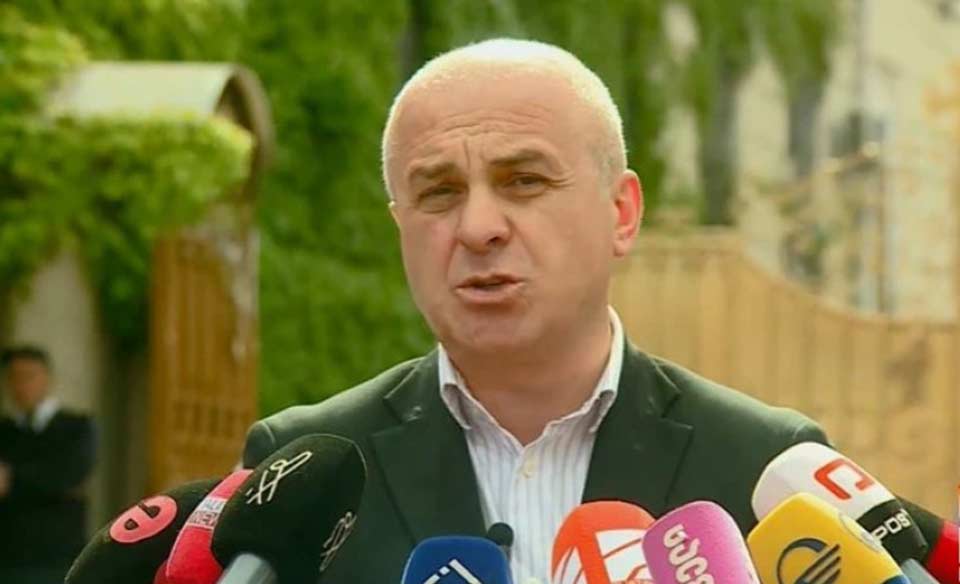
“The Prime Minister asked very necessary and substantive questions. We are leaving cautiously optimistic. We have agreed that a working group will be established,” said Zakro Gvishiani, the parent of a child with Duchenne muscular dystrophy, speaking to journalists after meeting with Prime Minister Irakli Kobakhidze at the Government Administration.
He added that the Prime Minister has committed to meeting with the parents again in the very near future.
“The meeting with Prime Minister Irakli Kobakhidze lasted approximately two hours. We provided him with detailed information about the medications, about the ongoing processes, and about why it became necessary to hold a continuous protest outside the Government Administration. We are feeling positive because the Prime Minister asked genuinely necessary and substantive questions throughout. We exchanged information, and it’s clear that he is already showing a willingness to engage fully. We agreed that a working group will be created as a formal format for ongoing dialogue. We will meet again the day after tomorrow at the latest to go through the individual issues that could not be covered today.
We also made clear that our campaign is not politically driven. Our core demand is access to the medicines our children need. The public has shown solidarity with us, and no one is directing this process; it is motivated solely by the needs of these children. We have had no communication whatsoever with pharmaceutical companies. It was deeply upsetting to hear insinuations that a pharmaceutical lobby manipulated any parent or organisation. Those questions were addressed directly. It goes without saying that some of these medications are recognised both in Europe and in America. Most recently, the United Kingdom has also approved several of them.
Information on this was exchanged, and the Prime Minister received everything he needed from our side. We went through all the key points, but a great many issues and core decisions remain, and those will be addressed at subsequent meetings. The working group will operate in a meeting format.
There was no longer any discussion of safety concerns. The conversation focused more on the effectiveness of these medications and on the fact that the strictest regulatory body doesn’t need to have approved every individual drug. The Prime Minister did not ask a single question about why Vamorolone or Givinostat, for instance, have not been approved by the EMA or by other countries. We came away convinced that every question he asked was directed towards taking meaningful action on our behalf.
The discussion centred on the methods the state could use to conduct negotiations, as well as the effectiveness of all four medications. I am referring to Elevidys, Exondys, Vamorolone, and Givinostat. The talks focused on the efficacy of these treatments and the avenues through which an agreement can be reached as quickly as possible,” Zakro Gvishiani stated.
Gvishiani also added that he is confident a decision beneficial to parents will be reached in the near future.
“No decision could have been made at today’s meeting, but the process has begun. Every parent and organisation welcomes the launch of this process. We were listened to completely. Communication is the only way to resolve this problem, and consequently, that communication has taken place. The working format will continue. I am confident that a decision beneficial to us will be reached in the near future,” Zakro Gvishiani stated.