


National Environment Agency releases report on heavy rainfall in Tbilisi on July 20–21
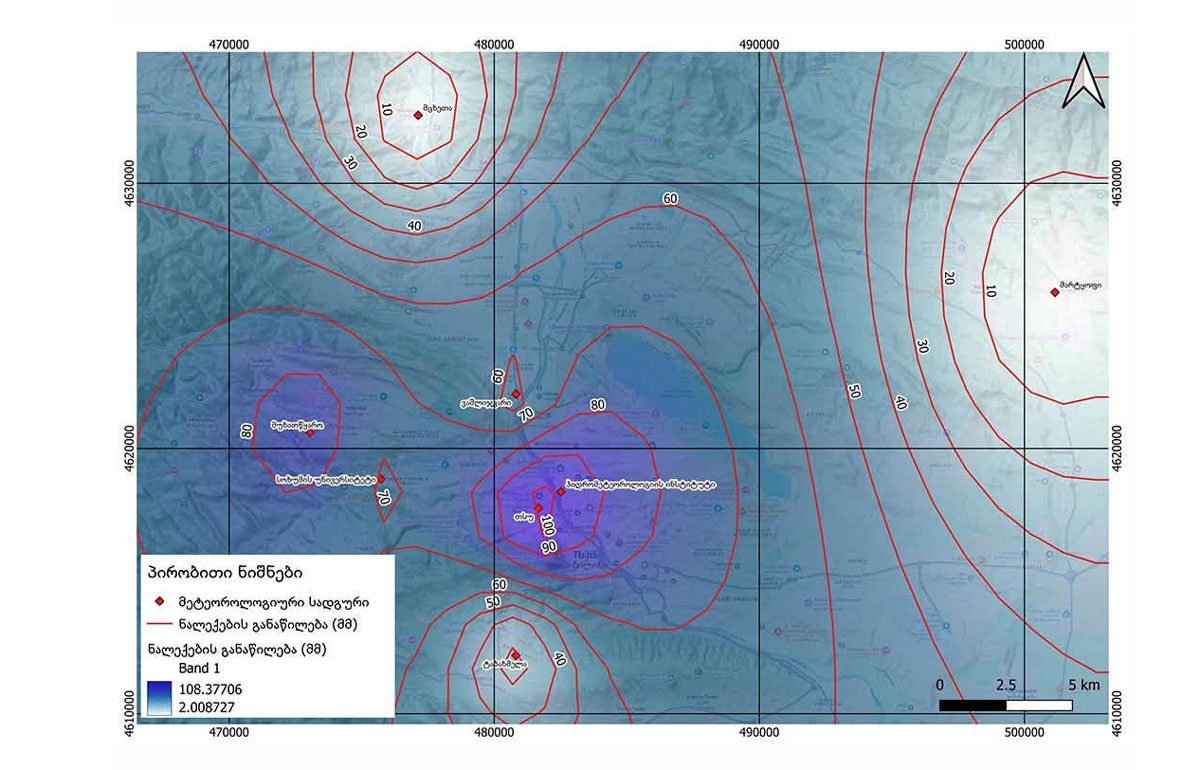
Georgia’s National Environment Agency (NEA) said that hazardous heavy rainfall affected most of Tbilisi between the night of July 20 and the morning of July 21, flooding streets in several districts and temporarily overwhelming parts of the city’s urban infrastructure.
According to the agency, the highest rainfall was recorded near the first building of Tbilisi State University, where 110 millimeters of rain fell over approximately eight hours—the highest July total ever recorded for the capital.
The NEA said that 54.5 millimeters of rain fell within a single hour (between 11:00 p.m. on July 20 and midnight on July 21), exceeding Tbilisi’s average rainfall for the entire month of July by 30 percent.
Rainfall measurements from the agency’s meteorological stations included:
- Tabakhmela – 25.07 mm
- Vashlijvari – 55.8 mm
- Baghebi – 75.2 mm
- Sokhumi University area – 69.1 mm
- Mukhattskaro – 87.3 mm
- Mtskheta – 1.5 mm
- Aghmashenebeli Avenue – 95.1 mm
The agency noted that rainfall was unevenly distributed across the city—a characteristic feature of convective weather systems—with the heaviest precipitation concentrated in parts of western and central Tbilisi.
According to the NEA, the storm developed due to a combination of intense daytime surface heating, high moisture levels in the lower atmosphere, and the intrusion of relatively cold air into the upper atmosphere, creating highly unstable conditions that rapidly generated powerful convective clouds.
The agency said that during the seven-to-eight-hour period, rainfall across the capital reached 1.5 times the monthly average, while some districts received 2.5 times the normal monthly July precipitation. Such intense rainfall, it noted, was the primary cause of flash flooding, inundated streets, and overloaded urban infrastructure.
The National Environment Agency also warned that climate change is increasing both the frequency and intensity of extreme rainfall events, making short-duration, high-volume precipitation and the associated risks of flash flooding and other hydrometeorological hazards more common.
The agency said it continues to monitor hydrometeorological conditions around the clock and will keep the public informed about potentially hazardous weather events.