


MP Gorduladze: Hate speech enablers must read Strasbourg ruling; law draws clear line between freedom of expression and rights of others
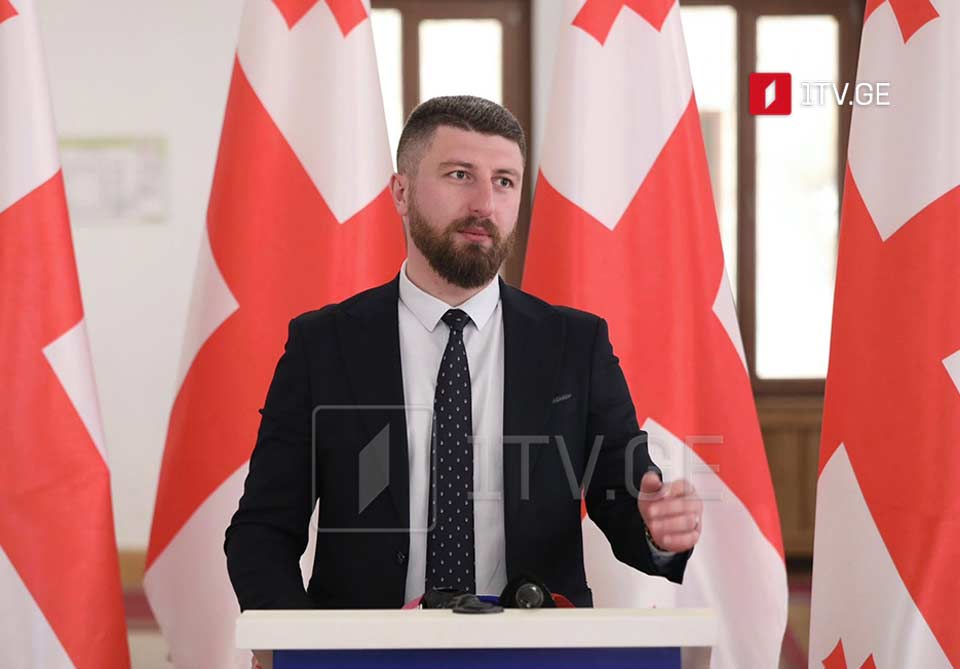
“Those who encourage hate speech would do well to read the latest ruling from the Strasbourg Court. The newly established department within the Ministry of Internal Affairs must operate effectively to combat hate speech,” the Chair of the Parliamentary Legal Issues Committee, MP Archil Gorduladze, has declared.
Gorduladze was asked to comment on a recent judgment by the European Court of Human Rights (ECHR), which ruled that imposing a prison sentence for publishing defamatory and insulting statements on a personal blog does not constitute a violation of the right to freedom of expression.
“The Strasbourg Court is consistently adhering to its own established jurisprudence. For instance, in the recent case concerning Georgia, Miladze v. Georgia, which specifically addressed defamation and insult, the court found no violation of Article 10. The Slovenian case is precisely the same; criminal liability was upheld against an individual who continuously insulted specific persons online. The Strasbourg Court ruled that Article 10, freedom of speech and expression, can be legitimately restricted to protect the rights of others. This requires a reasoned judicial assessment, looking closely at the factual circumstances, the severity of the insult, and so forth.
Georgian legislation also penalises defamation and insult under administrative law in certain instances, and under criminal law in others, such as insulting a judge in a courtroom during proceedings. This fully aligns with the Strasbourg case law. The department set up within the Ministry of Internal Affairs must act decisively against hate speech, the purpose of which is not to express an opinion, but to denigrate state institutions and specific individuals.
This behaviour is actively encouraged by external actors. However, both the Constitution of Georgia and the European Convention draw a distinct boundary between freedom of speech and expression and the rights of others. A clear red line has been established. Ultimately, it is the prerogative of the courts to determine what falls under free expression and what constitutes a legitimate, lawful restriction when protecting the rights of others. This approach is shared by both the Strasbourg Court and the Constitutional Court of Georgia, and it is the established practice of Georgian courts. Those who have sided with hate speech, including the United National Movement, have once again been defeated by the law. Those who fuel hate speech should read the Strasbourg ruling,” Archil Gorduladze stated.