


Investigation Commission reveals systemic torture and inhumane treatment of convicts between 2004 and 2012
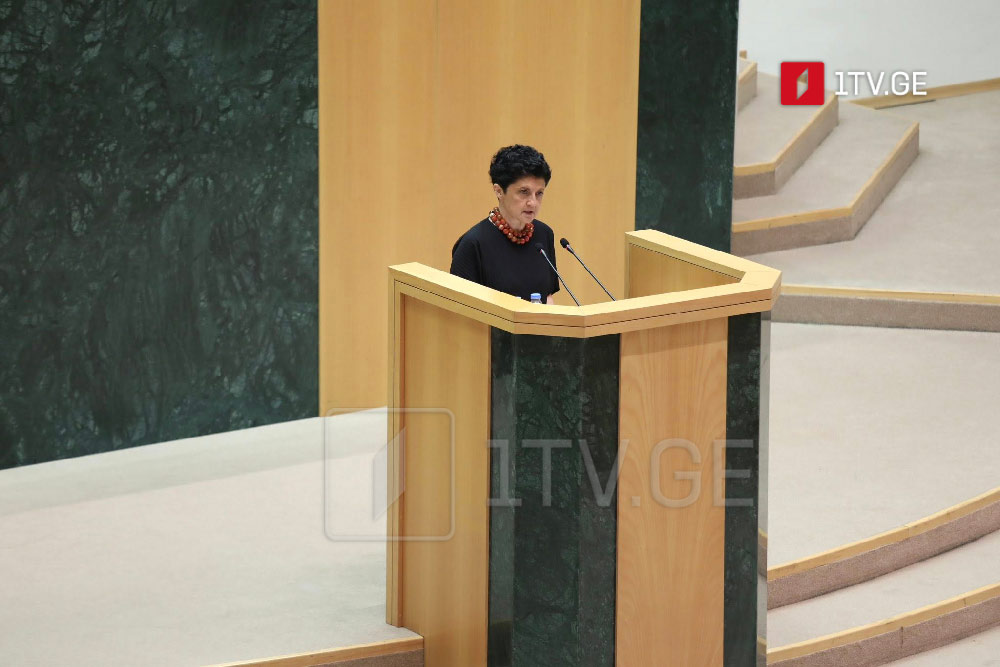
Tea Tsulukiani, head of the Temporary Investigation Commission examining the activities of the regime ruling from 2003 to 2012 and its political officials, presented the commission’s findings at today’s plenary session in Parliament.
Tsulukiani drew attention to the assessments contained in the conclusions.
According to Tsulukiani, the investigation commission, within the scope of its defined mandate, examined and evaluated the information at its disposal. As a result of this assessment and analysis, the commission established that, as a consequence of the United National Movement’s (UNM) implementation of a “zero tolerance” criminal policy, torture and inhumane treatment of detainees, prisoners, defendants and convicts within the structures of Georgia’s Ministry of Internal Affairs and the penitentiary system was systematic and systemic between 2004-2012.
“This has been stated in numerous decisions of the European Court [ECHR] as well. Torture and inhumane treatment of detainees and prisoners bore a universal character, the actions established by political officials, primarily Mikheil Saakashvili, that have been elevated to the rank of state policy. These crimes were not the transgressions of individual persons, but rather well-organised terror based on complicity, in which high-ranking officials of various levels participated, which made them a violent regime. Our conclusion describes the surname and name of each participant and each organiser. The conditions of imprisonment existing in the penitentiary system, living conditions, the absence of adequate nutrition and medical care, violations of personal and family life, violations of the right to defence, prohibition of contact with the outside world, prohibition of publicising facts of violence, and many others, taken separately, amounted to torture or inhumane treatment,” Tea Tsulukiani declared.
According to Tsulukiani’s explanation, the investigation commission also established that the use of various cruel methods of torture and inhumane treatment against prisoners had an almost daily character.
“Torture and inhumane treatment of detainees and prisoners, meaning treatment in the Ministry of Internal Affairs (MIA) and penitentiary systems, which was used separately or in combination with the plea bargain institute, pursued various aims, including achieving desired results in specific criminal cases, illegal seizure of property, political score-settling, revenge, and others. There was disguised and targeted destruction of prisoners in jail, as evidenced, on one hand, by the fact that up to 2,000 new cases of tuberculosis were recorded annually in prisons, with healthy prisoners and those with infectious diseases housed in the same cells. This established practice of co-housing was sometimes purposefully implemented to break down a healthy prisoner or take revenge on them.
On the other hand, artificially hindering the treatment of Hepatitis C, moreover, prohibiting screening for this disease so that the widespread prevalence of this disease in prisons would remain hidden from society, became practice. The Prosecutor’s Office, as the leading law enforcement body, not only failed to fulfil its legally assigned obligations and did not conduct complete and objective investigations into facts of torture and inhumane treatment, but was directly involved in human rights violations against prisoners.
As a result of examining the many cases presented in the conclusion before you, the investigation commission also established that a syndrome of impunity reigned, and law enforcement structures had high political support when carrying out violence. Therefore, violence was the main driving force. This is also evidenced by the fact that, despite the facts presented in this conclusion, Mikheil Saakashvili awarded presidential orders to numerous individuals who themselves engaged in torture or inhumane treatment or headed violent systems.
The names and surnames of these individuals and lists of awards given to them are provided in the conclusion presented to you. The investigation commission considers that Georgia’s President should be asked, with the assistance of other relevant bodies, to ensure a review of awards issued between 2004 and 2013, particularly in cases of individuals who have committed crimes against humanity.
The judicial branch did not respond to facts of torture and inhumane treatment, thereby grossly violating Georgian legislation and international norms, including the European Convention. Mass media controlled by the authorities refused to cover the facts of torture and inhumane treatment.
Among much other evidence, the spirit and content of the parliamentary speech of Pavle Kublashvili, Chairman of the Legal Affairs Committee of Georgia’s Parliament, on June 19, 2012, is clear proof that the ‘zero tolerance’ criminal policy declared by Mikheil Saakashvili in 2006 remained unwavering in 2012, even before the elections. The United National Movement had no desire or intention to change the inhumane penitentiary system it had established in Georgia, to correct and humanise the distorted criminal justice system, either then or in the future.
It is significant that prisoners who underwent psychological examination, according to conclusions issued by the Levan Samkharauli National Forensics Bureau, retained practically unchanged traces of moral damage and pain inflicted on them during the United National Movement regime’s rule, even many years later.
Between 2004 and 2009, the Public Defender’s Office was the only state structure that rapidly responded to complaints, identified facts of torture and inhumane treatment, and systematically demanded appropriate responses to them. The investigation commission held virtually no sessions in which it was not clearly confirmed that, among state institutions, victims had only this body to rely on. An institution that was significantly weakened during Mr Giorgi Tugushi’s tenure from 2010 to 2012. Examples of this are also provided in the conclusion,” Tea Tsulukiani declared.