

Grand Chamber rules state has right to use force against institutional attacks, but MIA used disproportionate force
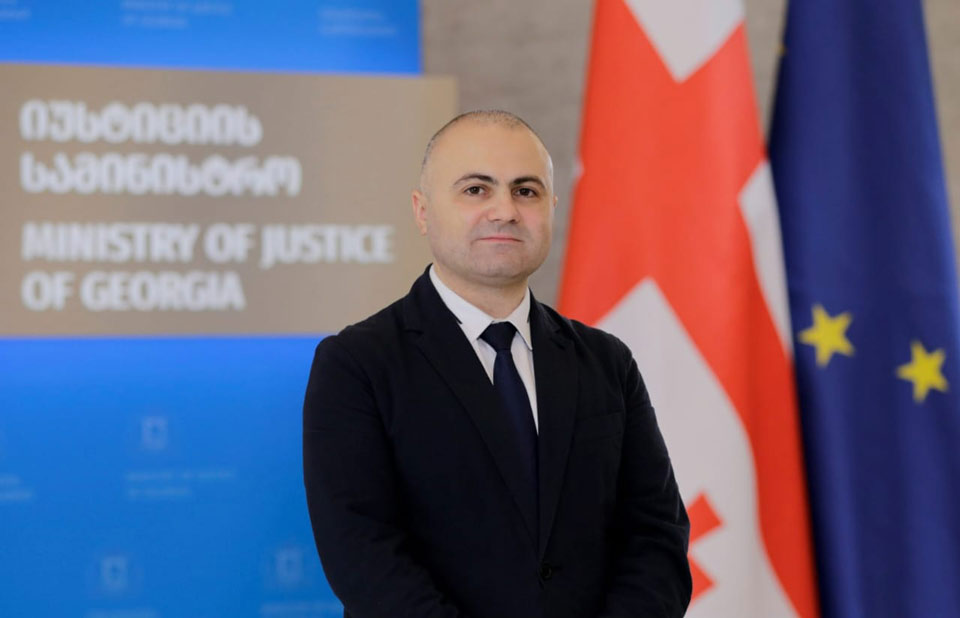
“The Strasbourg Grand Chamber’s ruling today confirmed what became known to the public through the Prosecutor’s Office briefing in November: that instructions given by the then-Minister of Internal Affairs, Giorgi Gakharia, regarding how to respond during such a violent demonstration were incorrect,” stated Beka Dzamashvili, Deputy Minister of Justice of Georgia, when assessing the Strasbourg Court Grand Chamber’s decision on GYLA’s lawsuit.
According to him, the Strasbourg Court’s decision is, on the one hand, precedent-setting, as it generally establishes that the state has a legitimate right to use force when attempting to storm institutions, whilst on the other hand, it specifically indicates the disproportionate use of force by the then-leadership of the Ministry of Internal Affairs (MIA) regarding the June 20 events.
“One crucial aspect must be highlighted from today’s decision. The Grand Chamber established that when there is an attack on state institutions, in this case Parliament, as well as attacks on law enforcement officers and an attempted storming, the state has a legitimate right to use force. This is a very significant decision that will apply to all other cases.
Additionally, the Grand Chamber made an assessment specifically regarding the June 20 case, stating that this attack on a state institution was encouraged by individual politicians, and the force used by the state against all those participating in these violent actions could have been legitimate in that context. At the same time, the Grand Chamber assessed how the state should respond in such situations when an assembly or demonstration takes on a violent character and becomes unlawful. Regarding the June 20 case, it essentially found a violation insofar as the then-leadership of the Ministry of Internal Affairs used force disproportionately against the demonstrators.
Specifically, the Grand Chamber’s decision establishes that injuries were sustained by people who may not have been directly confirmed to have participated in these violent actions, and this is an important indication.
Essentially, today’s decision by the Grand Chamber confirmed what was publicly revealed through the Prosecutor’s Office briefing in November: that the instructions from the then-Minister of Internal Affairs, Giorgi Gakharia, regarding how to respond to such a violent demonstration were flawed. Proportionate force was not used, and it can be said that the Grand Chamber’s decision is, to some extent, in complete alignment with what the Prosecutor’s Office has already outlined in the charges,” stated Beka Dzamashvili.
According to him, another important factor from today’s decision is that the Grand Chamber emphasised that the state fully cooperated with the court in this case.
“No violation of Article 38 was found, which essentially confirms that the state is absolutely open and transparent in cooperating with international institutions, including, of course, first and foremost, the Strasbourg Court, and it is known to the public that the investigation into this case continues.
The indications made in today’s Grand Chamber decision will also be important circumstances of note within the investigation. When a hearing was held back in February, and questions arose on this issue, the state worked very effectively to ensure the timely conduct of investigative actions, and the result that came in November has been essentially confirmed by the Grand Chamber today,” noted Dzamashvili.
According to him, today’s decision differs significantly from the previous one, which concentrated on deficiencies in the investigation.
“Today, the investigation has already identified specific responsible individuals, you know about this, and the Grand Chamber also had a greater opportunity to delve into the substance. The Grand Chamber established that Convention articles were violated in substantial part, that certain applicants, demonstrators, were subjected to ill-treatment, and their freedom of expression in the context of assembly or demonstration may have been violated in the case of those applicants who were not directly involved in violent activities.
In other words, the key point is that if a protester engages in violent actions, the state has the right to use force. However, this force must be used proportionately, and appropriate means must be employed that are minimally necessary to stop these unlawful actions.
The Grand Chamber’s decision establishes that there were certain individuals whose direct involvement may not have been established, yet the then-leadership of the Ministry of Internal Affairs used force against these individuals as well, and accordingly, Convention articles are violated in this respect,” stated Dzamashvili.