


Ex-President Saakashvili: Beyond violence, prisons face dire conditions: inedible food, decaying sanitation, and absurd new bans
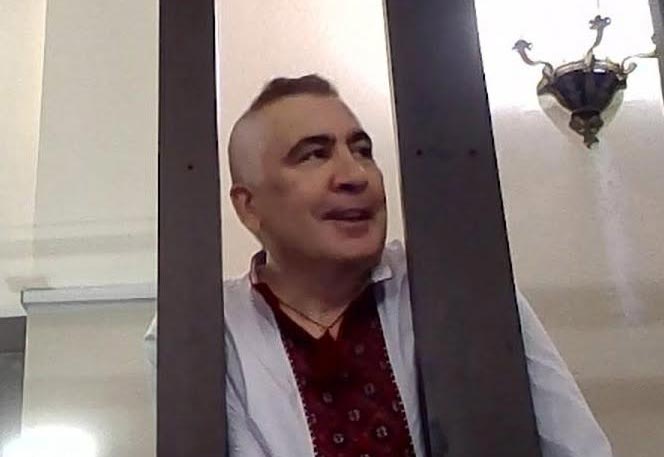
“After much reflection, I have come to the conclusion that Georgia’s prison population must be cut at least in half, with the strict caveat that dangerous criminals remain incarcerated and the resurged ‘thieves-in-law’ subculture is neutralised once again,” former Georgian President Mikheil Saakashvili wrote on social media.
Saakashvili criticised the Georgian Dream government for abandoning plans to build modern correctional facilities, choosing instead to tack slapdash annexes onto existing structures.
“Beyond the violence, prisons face a mountain of other crises. Having spent over five years in captivity, I can share my direct observations and experiences. Over the years, the modern prison blocks built under the United National Movement have severely decayed through sheer neglect. Sanitary conditions have plummeted, particularly over the last two to three years. Fueled by rampant corruption, food quality has plummeted to catastrophic levels over the last two years, leaving most meals completely inedible. To make matters worse, family parcels have been drastically cut: once permitted daily, deliveries are now capped at just twice a month. Most recently, they even banned flash drives with movies, the primary way inmates killed time,” Saakashvili stated.
Recalling his early career, the former president drew parallels between the present state of the penal system and the post-Soviet era:
“I was Minister of Justice under Shevardnadze, and I remember the horror of those prisons. We tore them down and built new ones. Before 2012, we had begun constructing large, Norwegian-standard facilities. The GD regime halted those projects. Instead, they slapped crude extensions onto existing structures. Take the Rustavi prison where I am held: they built an annex, and just a month ago, the building split. A massive fissure opened right between the old facility and the regime’s new extension—one I have to step over every single time I walk down the corridor. How symbolic!
Lately, they have imposed a battery of absurd restrictions. I refuse to obey them, and I urge others to do the same. Do not let them bully you into submission. Raise your voices louder! It cannot possibly get any worse than this. I, for one, am protesting loudly against every bit of it.”
Citing the erosion of independent oversight, Saakashvili called for urgent civil monitoring:
“Since the Public Defender’s office has practically ceased to function, it is imperative to demand regular access for an independent commission composed of civil society organisations and inmates’ family members. They must be allowed to speak with prisoners, review the motives behind these restrictions, appeal arbitrary bans, demand fair parole procedures, directly inspect food quality and hygiene, and hold prison administrations accountable for corruption.
I speak from firsthand experience; I have witnessed things here I could never have grasped from the outside. Of course, while many are incarcerated unjustly, the majority are actual criminals from whom society must be protected. But that protection must exist within civilised, humane boundaries.
After much reflection, I have concluded that Georgia’s prison population must be cut at least in half, with the strict caveat that dangerous criminals remain incarcerated and the resurged ‘thieves-in-law’ subculture is neutralised once again. It is unbearable to see crime once again directed from behind bars under Georgian Dream. They will break their own necks over this.”
In a follow-up post, Saakashvili addressed long-standing political controversies surrounding the 2012 prison video scandals, alleging they were staged intelligence operations:
“Stop running from the truth. The broom footage and the ‘quarantine’ footage were staged—undeniably so. It was a special operation. Yes, there were problems in prisons during our time. But remember where we started: under Shevardnadze, they kept a bear in a pretrial detention cell to terrify inmates, and organised crime ruled the country from behind bars. We took decisive, at times excessive, measures to neutralise the mobsters. However, there were certainly no rapes, no unleashing of inmates to beat other prisoners, and no assassinations of prison wardens. The food and sanitary conditions were infinitely better.
Compare my reaction to the 2012 prison footage—I immediately opened up the prisons, allowing journalists, families, and clergy inside en masse, and fired the minister—to their reaction today, facing genuine footage: total lockdown, repression, harsher regimes, and public praise for abusive staff. Ivanishvili assumed I was weak for acting humanely while he doubles down on brutality. Mark my words, they will break their necks.”