


Environment Minister reviews progress of Tbilisi Urban Forest Project
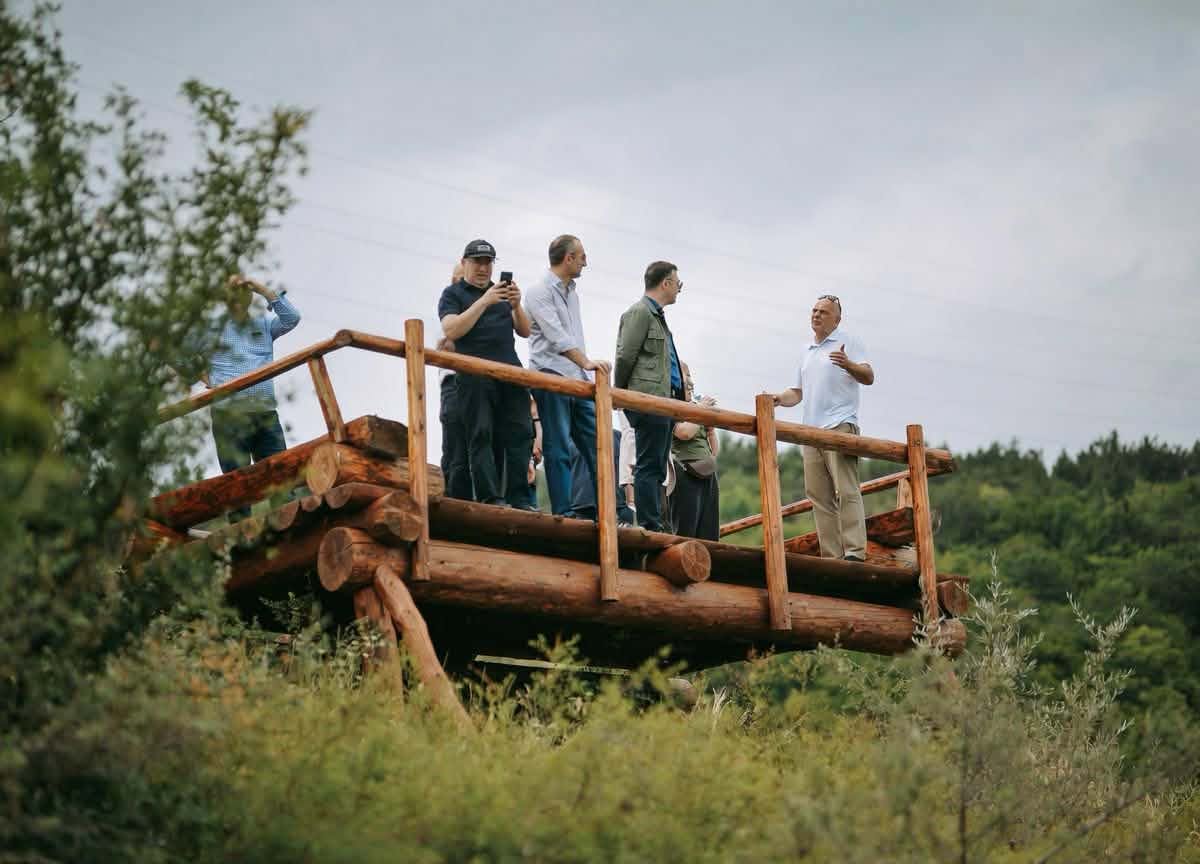
Georgian Minister of Environmental Protection and Agriculture Davit Songulashvili inspected the progress of the Tbilisi Urban Forest project, highlighting its role in improving the capital’s ecological environment, protecting biodiversity, and mitigating the effects of climate change.
According to the Ministry of Environmental Protection and Agriculture, Songulashvili said projects of this scale create new opportunities for environmental restoration while contributing to Georgia’s sustainable development goals.
“We attach particular importance to projects that combine forest restoration, biodiversity conservation, and the development of modern urban green spaces. The Tbilisi Urban Forest is a successful example of how cooperation between the state and the private sector can deliver long-term environmental benefits,” the minister said.
Songulashvili noted that nearly 700 hectares of land have already been rehabilitated under the project, with approximately 700,000 tree seedlings planted. He also thanked the Cartu Foundation for initiating and financing the project.
The ministry said the project, funded entirely by the Cartu Foundation with a budget of 24 million GEL, is nearing completion. Its objective is to restore green areas across Tbilisi, strengthen urban ecosystems, and improve recreational spaces for residents.
Project achievements include the rehabilitation of nearly 700 hectares of land, the planting of around 700,000 seedlings, and the renovation of almost 45 kilometers of walking and cycling trails, including the construction of about 20 kilometers of new paths. Around 52,000 dead trees have been removed, while four new wells have been installed to provide irrigation for approximately 200 hectares of land.
The project has also introduced recreational infrastructure, including benches, viewing platforms, gazebos, shelters, and a birdwatching hide, all designed to blend into the natural landscape.
According to the ministry, biodiversity conservation is a central component of the initiative. Measures have been introduced to support bird breeding and the return of bird populations to their natural habitats, enabling visitors to observe wildlife along the restored trails.
Deputy ministers and heads of agencies under the Ministry of Environmental Protection and Agriculture joined Songulashvili during the inspection of the project.