


Education Minister outlines planned higher education reform in Parliament
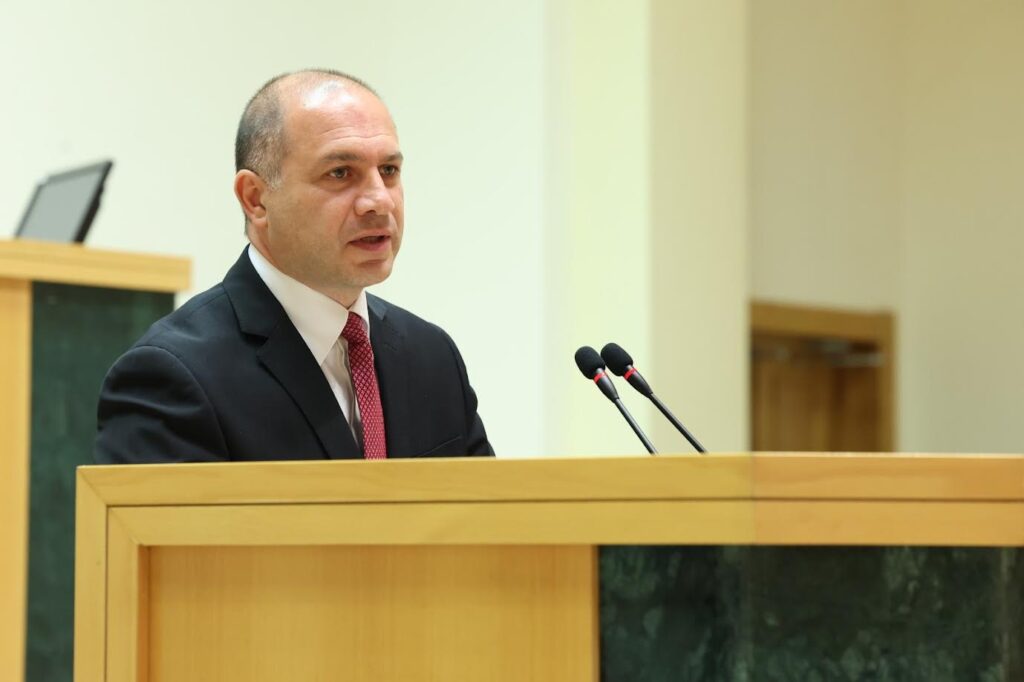
The Minister of Education, Science and Youth of Georgia, Givi Mikanadze, has outlined details of a planned higher education reform while speaking in Parliament during an interpellation session.
Mikanadze focused on a new university funding model developed with the involvement of both local and international experts. He said the methodology for pricing academic programs was prepared after studying practices from leading universities, including the University of Washington, the University of Michigan, and the University of Colorado.
According to the minister, the new funding system is based on a two-component structure: base funding and performance-based funding. He explained that base funding will ensure institutional stability and financial autonomy for universities, while performance-based funding will gradually depend on outcomes such as improved education quality, research and innovation development, internationalization, and regional engagement.
Mikanadze also announced that from the 2026–2027 academic year, higher education at state universities will be fully funded for Georgian citizens. He described the decision as unprecedented, stating that tuition fees for bachelor’s and master’s programs at public institutions will be fully covered by the state, while specific funding rules will be defined by government regulation.
The minister further addressed planned enrollment quotas, saying they were developed based on labor market analysis conducted by the Ministry of Economy and Sustainable Development. He noted that the study identified a significant mismatch between university output and labor market demand.
He stated that, based on projections, around 14,400 students should enter universities annually, but final admission quotas were adjusted to a transitional figure of 21,600 students after considering current conditions and a five-year outlook. He also cited law studies as an example, where demand and supply discrepancies led to a reduction in intake targets, though not to the full extent suggested by market estimates.
Mikanadze added that the reform draws on European Higher Education Area (EHEA) approaches and international best practices where states play an active role in strategic planning, quality assurance, and alignment with labor market needs, while emphasizing that national priorities remain central.