


Deputy Economy Minister Genadi Arveladze: Growing strategic importance of Middle Corridor unlocks fresh opportunities for broader regional growth
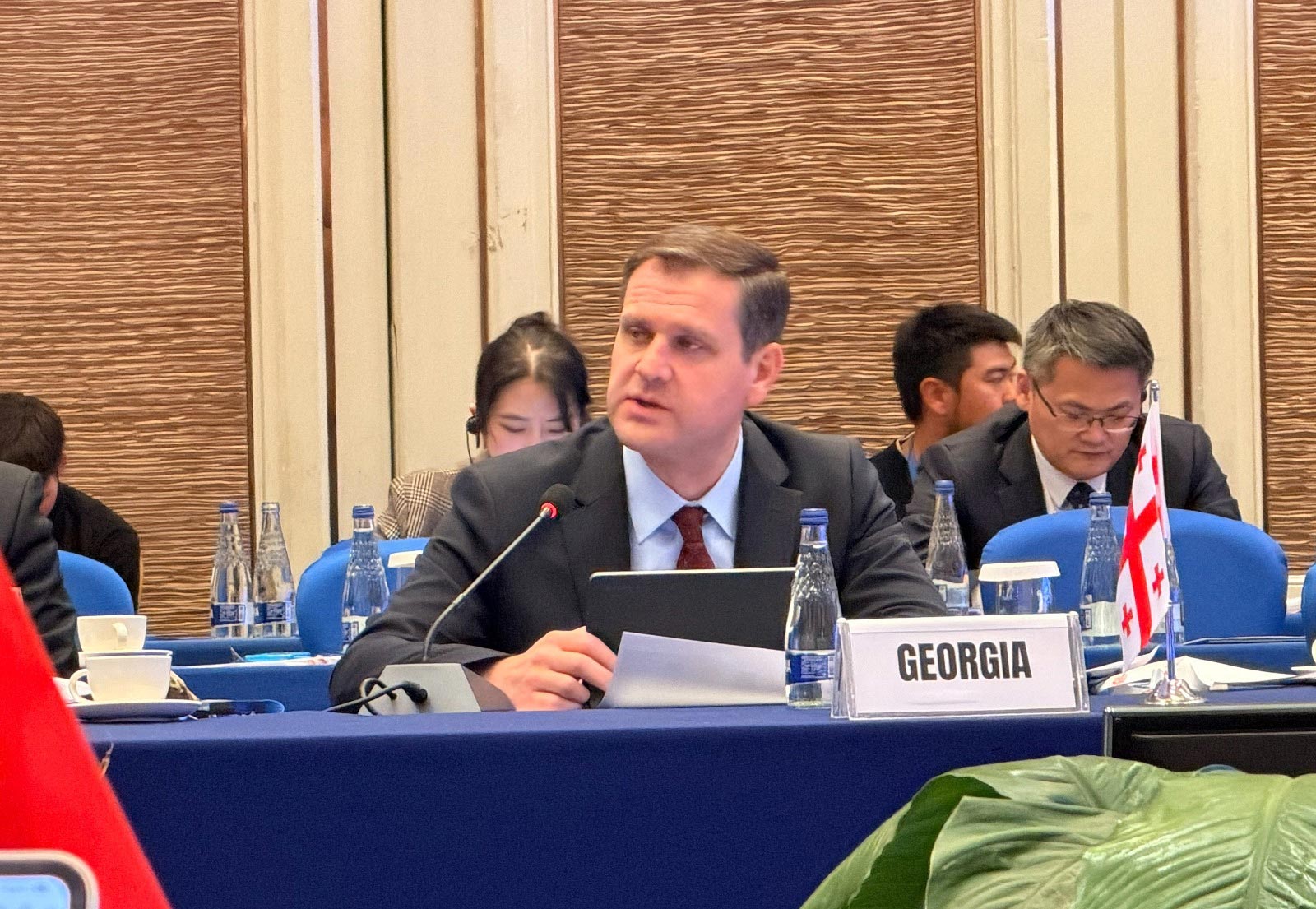
“The growing strategic importance of the Middle Corridor is unlocking fresh opportunities for broader regional economic growth,” stated Deputy Minister of Economy and Sustainable Development Genadi Arveladze. Speaking at the 25th CAREC (Central Asia Regional Economic Cooperation) Ministerial Conference in Ulaanbaatar, Mongolia, Arveladze highlighted Georgia’s pivotal role in Eurasian transit.
He noted that, leveraging its strategic geographic location and multimodal transport network, Georgia is aggressively expanding its transport and logistics infrastructure to reinforce its position as a vital bridge between Europe and Asia.
The deputy minister highlighted the accelerating momentum within the transport and logistics sector, underscoring its pivotal contribution to headline GDP growth. Between 2019 and 2025, transport and storage consistently accounted for over 6 per cent of gross domestic product, posting an average annual growth rate of 15.9 per cent.
“Building on this strong momentum, the government plans to mobilise USD 7 billion by 2032 for flagship transport infrastructure projects,” Arveladze stated. “These include the Anaklia Deep Sea Port, rolling stock fleet modernisation, extensive road network upgrades, and the development of the new Tbilisi International Airport. These investments will significantly expand the overall capacity and throughput of the Middle Corridor.”
The minister also highlighted wider CAREC initiatives that promise to streamline and digitise transit protocols, slash red tape, enhance transparency, and bolster the Middle Corridor’s competitive edge.
Arveladze singled out the recent conclusion of negotiations on the CAREC Trade and Investment Facilitation (CARTIF) deal, stressing that a swift, effective rollout is vital. He noted that wrapping up negotiations promptly will allow the CARTIF framework to deliver tangible dividends for regional trade, investment, connectivity, and cross-border economic cooperation.
Turning to emerging technologies, the deputy minister highlighted artificial intelligence as an increasingly vital engine for innovation, labour productivity, and overall economic competitiveness.
Furthermore, Arveladze showcased Georgia’s marquee regional energy initiatives, including the Black Sea Subsea Electricity Cable and the Green Energy Corridor project.