


Speaker: Georgia is not a ‘peripheral colony’ to be sacrificed for metropolis interests
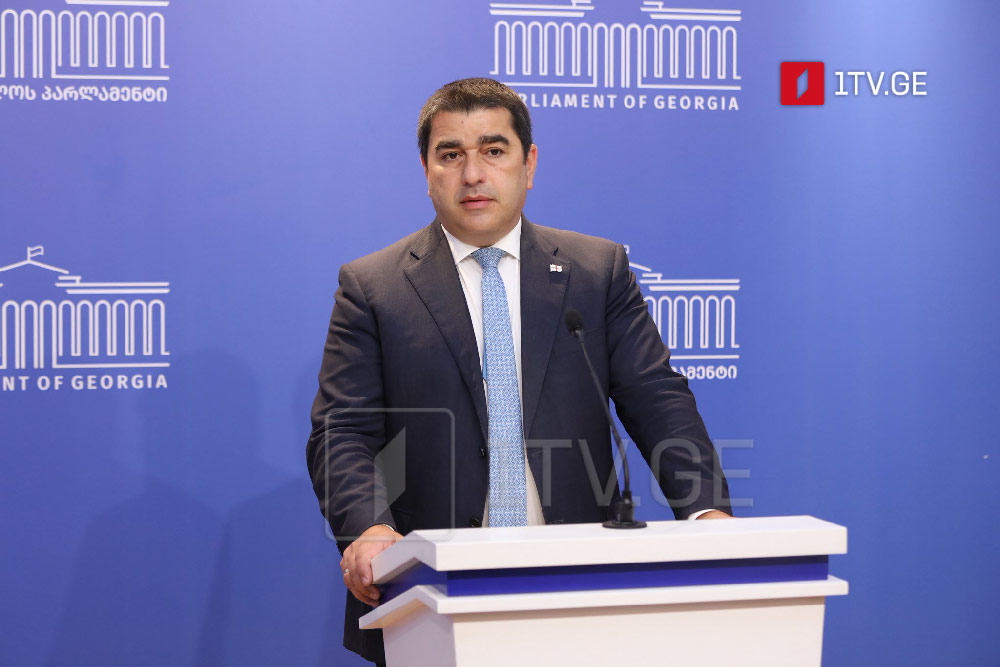
“The true face of the Georgian people became clearly visible in 2024. These are people who determine their own destiny, defend their own values, and do not abandon their chosen path. The people, as a unity, are defined by such moments, not by anyone’s subjective preferences,” wrote the Georgian Parliament Speaker Shalva Papuashvili on social media.
According to Papuashvili, the EU Ambassador Pawel Herczynski speaking about “the people” is not only incorrect but also “a classic example of political cynicism.”
“It is true that for Mr. Herczynski the past of the Georgian people is described as dark, but if there was anything truly dark in our history, it was the constant attempts by external actors to interfere in our sovereignty. This was true in the past and remains true today.
We are told about violence by those who supported the events of October 4; we are warned about civil war by those who, in our view, support groups that attack the church, the state, and human dignity; we are told about poverty by those who, according to this interpretation, push sanctions policies that harm the economy; and we are lectured about a ‘dark past’ by those who attempt to justify a system in which human rights violations, corruption, and torture became state practice.
As for the Georgian people, their true character became evident in 2024. These are people who decide their own fate, defend their values, and remain committed to their path. The people as a unity are reflected in such moments, not in individual interpretations.
We saw the people in the 2024 elections. We saw the people during the farewell days of the Patriarch. We will see the people again on May 17—united and determined, grounded in faith and identity.
Against this background, the Ambassador’s rhetoric about ‘the people’ is not only incorrect but also a clear example of political cynicism. It is particularly cynical that such accusations come from an environment where violence is, in his view, often justified or romanticized.
Georgia remains open to constructive dialogue, and Brussels is well aware of the conditions necessary for this: aggressive rhetoric toward Georgia must stop; attacks on the elected government must cease; and hostile resolutions against the Georgian people must be withdrawn.
A relationship that is not based on respect cannot be a partnership. Genuine partnership begins when both sides treat each other as equals. Georgia must be respected as a country, a state, and a nation. It is not a peripheral colony to be sacrificed to metropolis interests. The Georgian people have long passed the era of ‘governors’ and ‘second secretaries,’” Papuashvili wrote.
Several Georgian media outlets reported a statement made by the EU Ambassador to Georgia, Pawel Herczynski, at an event held at the European External Action Service in Brussels.
According to those reports, Herczynski stated that “Georgia is at a crossroads,” adding that the country’s future is not yet determined and that upcoming developments would show whether Georgia continues on the path of European democratic values or risks moving away from them.
He also noted: “We must not allow Georgia and the wonderful, warm, hospitable Georgian people to return to the dark times of violence, civil war, poverty, hardship, and corruption.”