


US Department of State publishes 2024 Country Reports on Human Rights Practices, mentioning Georgia
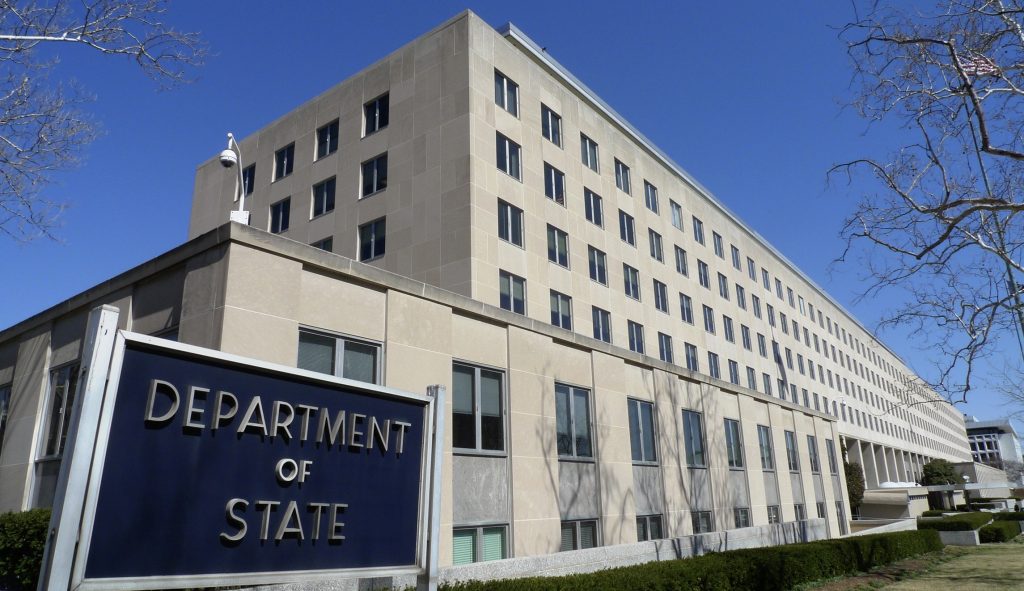
The US Department of State published the 2024 Country Reports on Human Rights Practices.
Speaking of Georgia, the report noted that “notable negative human rights developments in Georgia during the year included the entry into force of the so-called law On Transparency of Foreign Influence that credible nongovernmental organizations stated restricted freedom of expression and of association, and the so-called law On Family Values and Protection of Minors that criminalized certain types of expression, and a campaign of intimidation and coercion and abuse of administrative resources that restricted freedom of expression, particularly in connection with the October parliamentary election.”
“Significant human rights issues included credible reports of: torture or cruel, inhuman, or degrading treatment or punishment; arbitrary arrest and detention; and serious restrictions on freedom of expression and media freedom, including violence and threats of violence against citizens and journalists, unjustified arrests and prosecution of journalists, and the chilling impact of the so-called laws on transparency and on family values. The government took steps to investigate and punish some officials who committed human rights abuses, but impunity remained a problem.
Russian-occupied regions of Abkhazia and South Ossetia remained outside central-government control, and de facto authorities were supported by Russian forces. Significant human rights issues in the occupied regions included credible reports of arbitrary arrest and detention. Russian and de facto authorities in both regions committed abuses with impunity, ” reads the report.
The report also mentioned that journalists and activists reported receiving harassing and threatening telephone calls and instances of vandalism against their homes and offices, including offensive posters and damage to vehicles.
“The government investigated unauthorized access to citizens’ telephone numbers linked to these events. The media ombudsman identified 15 cases of rights violations and restrictions involving 15 journalists covering protests against the FIL in front of and surrounding parliament in April and May. Several international media watchdogs, along with the media ombudsman and the Council of Europe’s Platform for the Safety of Journalists, reported at least 30 violations of media freedom during October 26 elections, including damage to equipment, verbal or physical attacks, and intimidation. The government had not investigated these reports by year’s end.
There were continued reports of physical attacks, intimidation and threats of violence, coercion, and harassment against citizens, journalists and others throughout the year. There was also a lack of accountability in such cases.
While covering the large-scale protests in Tbilisi against the FIL from April to June and pro-EU demonstrations from November 28 through December, several journalists reported being attacked, harassed, hit with pepper spray, or having their equipment damaged by police. On December 7, more than 30 titushki (unidentified assailants typically dressed in all black with their faces covered) physically assaulted protesters and then turned to attack TV Pirveli journalist Maka Chikhladze and camera operator Georgi Shetsiruli, who were filming them.
The constitution and law prohibited arbitrary arrest and detention and provided for the right of any person to challenge the lawfulness of arrest or detention in court. The government’s observance of these prohibitions was uneven, and there were significant reports of selective or arbitrary arrests, including cases that led to prolonged detention without clear charges.
In late November and throughout December, authorities or unidentified assailants believed to be acting on behalf of the ruling Georgian Dream party violently targeted dozens of media professionals covering protests. The attacks included beatings and exposure to pepper spray, tear gas, and water cannons. Reported severe injuries included fractured vertebrae, facial fractures, and chemical burns; several journalists required hospitalization.
According to NGOs, the system was usually utilized during protests as an easy solution for silencing opposing opinion without the constraints of due process afforded by the criminal justice system. During the pro-EU demonstrations, up to 450 protesters were detained based on the code of administrative offenses. Some individuals were arrested either in the streets after the protest had ended or during the following days near their houses. In April and May, more than 210 individuals were detained in the country during a violent police crackdown on mass peaceful protests against the reintroduction of the Law on Transparency of Foreign Influence (FIL).
Authorities sought to suppress freedom of expression for candidates and voters during the parliamentary election campaign with coercion and intimidation. In its report on the October 26 election, the OSCE’s Office for Democratic Institutions and Human Rights stated “reports of intimidation, coercion, inducement, and pressure on voters… raised concerns about the ability of some voters to cast their vote without fear of retribution,” reads the report.
The report also mentioned workers’ rights at Evolution Gaming, saying “Georgian Progressive Forum reported the legal framework of employers’ obligations to participate in mediation were poorly defined, and the penalties for noncompliance were minimal.”
“This was most evident during the strike of online workers at Evolution Gaming, a gaming technology company, where workers presented a list of 40 demands, including salary increases, improvement of working conditions, and addressing a toxic culture of abuse and harassment by management.
The company refused to engage in mediation, although the Public Defender’s Office (PDO) publicly called on them to do so. There were also reports of some workers having gone on hunger strikes as well as coordinated efforts to intimidate picketing workers, including through the use of “thugs” who physically assaulted workers on the picket line. Beyond this case, the mediation system was undermined by mediators having insufficient qualifications and a lack of access to crucial company information, such as profits and expenses, which hampered the ability to resolve labor disputes effectively,” reads the report.