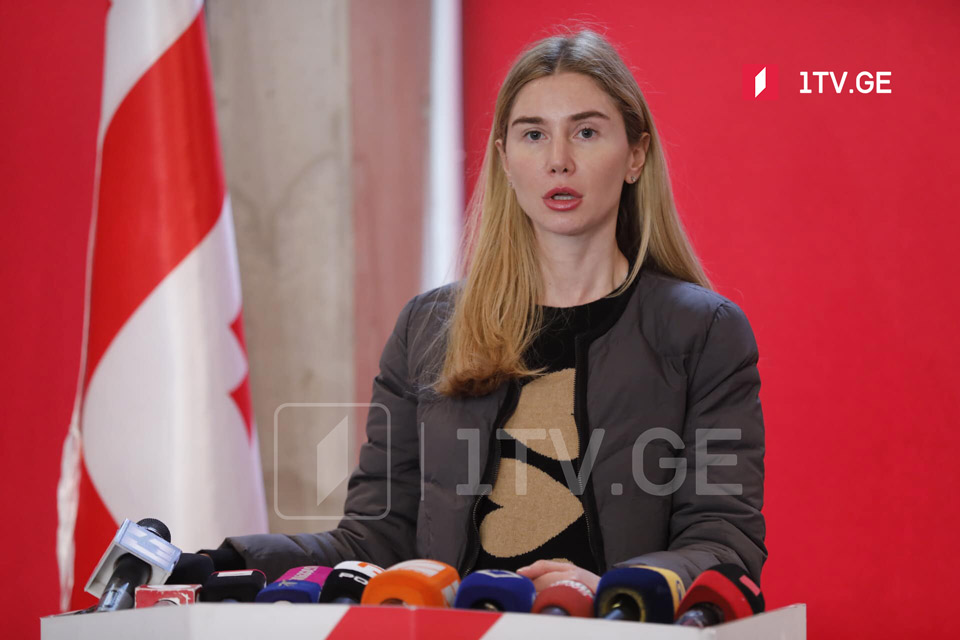
UNM Chair: Zourabichvili's March 31 speech lacked substance, prompting UNM's exit from Resistance Platform
Tina Bokuchava, the United National Movement chairperson, announced that her party would withdraw from the Resistance Platform following former President Salome Zourabicshvili’s lacklustre speech at the March 31 rally.
According to Bokuchava speaking live on Palitranews, Zourabichvili’s remarks failed to present anything new. Additionally, dissatisfaction arose over Zourabichvili’s refusal to pardon former President Mikheil Saakashvili.
“At the March 31 rally, an event of considerable historical significance, it became evident that Salome Zourabichvili’s comments did not bring anything fresh to the public discourse. Consequently, we decided not to participate in this platform,” Bokuchava said.
“The greatest rift lies between the United National Movement and Salome Zourabichvili. One pro-European president, who attempted to secure the European flag for Georgia while it was being taken away by the Russians, did not pardon another president. Zourabichvili offered no explanation for this decision—it was merely a matter of personal preference, an exclusive right that cannot be challenged,” she continued.
When asked if the United National Movement would align itself with any future statements made by Zourabichvili within the Resistance Platform framework, Bokuchava replied, “No, we do not belong to that group.”
Bokuchava also addressed the temporary parliamentary investigative commission and the appearance of Giorgi Gakharia, leader of the Gakharia for Georgia party. She noted that four opposition parties had reached a consensus that no opposition politician should appear before the commission, a pact Gakharia did not honour, highlighting a lack of coordination.
“For nearly five months, I participated in the format surrounding Salome Zourabichvili. The only agreement among political parties regarding internal politics was that no politician should attend Tsulukiani’s treason commission. By violating this agreement, Gakharia underscored the absence of real coordination,” Bokuchava stated.
She assessed Gakharia’s role and questioned the authenticity of his opposition credentials.
“It seems rather absurd to hear claims of being the main opposition party from someone who not long ago served the Russian regime and suppressed pro-democracy rallies. His actions, particularly his recent criticisms of the main opposition force, call his true intentions into question,” Bokuchava remarked.
Bokuchava further evaluated Gakharia’s statements at the commission, asserting that he failed to address the primary issue at hand.
“Some believe he appeared out of fear of arrest. The key question was, Who gave the order on June 20? Initially, he acknowledged giving an order, but later, during the parliamentary investigative commission, he hesitated, claiming he ordered water cannons and gas but not bullets. What kind of response is that? He contradicted the ‘super powerful’ minister image he cultivated for years,” Bokuchava concluded.