


Tbilisi Mayor partakes in international conference on urban development in Budapest
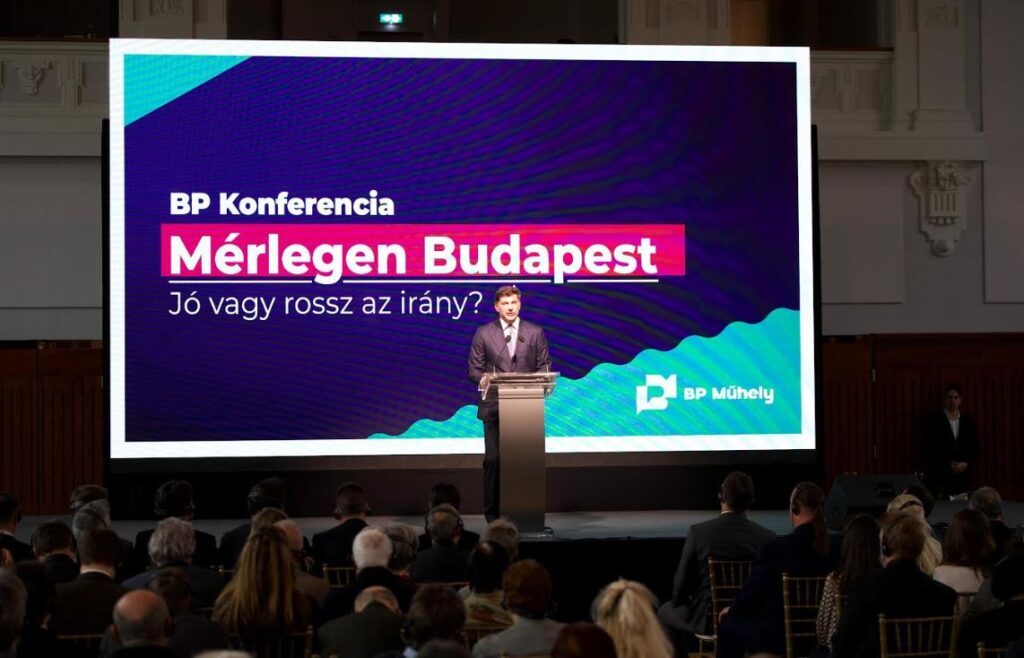
Tbilisi Mayor Kakha Kaladze, who is on an official visit to Budapest, took part in an international conference on urban development in European cities. The event was opened by Hungary’s Minister of the Prime Minister’s Office, Gergely Gulyás.
Kaladze greeted participants in Hungarian and, in his address, highlighted Tbilisi’s recent urban development projects as well as future plans.
“For me, as the Mayor of Tbilisi, it is essential to learn from the experience of European cities—how they balance growth and preservation, rapid development and protection of historical heritage, transport efficiency and a people-friendly environment. Tbilisi is following the same path, and I would like to share the priorities we have set in recent years,” Kaladze said.
He noted that one of the city’s major challenges is the condition of deteriorated buildings in the capital’s historical districts. According to the Mayor, Tbilisi is actively implementing a program to replace unsafe apartment buildings. Beginning in 2026, a new initiative will target aging structures in historic areas to ensure both safety and the preservation of cultural layers. In parallel, the city is purchasing land and facilities to expand recreational spaces, with the goal of strengthening the Tbilisi Green Network to support healthy living.
Kaladze also discussed ongoing efforts to eliminate illegal parking garages and modernize emergency elevators.
“The long-standing problem of illegal parking garages in Tbilisi is being resolved step by step—we are replacing them with parks and squares, making neighborhoods more comfortable for residents. We have also launched an elevator replacement program to ensure safe and decent housing conditions. Municipal transport, once one of Tbilisi’s biggest challenges, has now been fully upgraded, and we continue to make improvements. Next year, we will add 200 new buses, making transportation even more comfortable and reliable,” he noted.
Regarding the metro system, the Mayor announced that the renovation of metro cars is underway. A total of 111 new cars will enhance safety, comfort, and reduce travel intervals. Large-scale rehabilitation of two stations is planned, and new stations will be added to improve accessibility for tens of thousands of passengers.
“A new bridge designed for public transport will represent a new stage in road network development, creating the most efficient link between two districts. I am pleased that at least three new cable car lines will soon be added to Tbilisi—this will significantly ease traffic and connect currently hard-to-reach areas. Another major milestone will be the return of the tram to Tbilisi. The tram is not just a mode of transport—it represents a new philosophy for the city’s future: sustainable, peaceful, modern, and people-centered cities are built this way,” Kaladze said.
He added that Tbilisi, like Budapest, must reflect on the same key questions: whether the city is moving in the right direction and how to preserve historical heritage while embracing change. “These questions are relevant not only for cities, but today must also be asked in a broader political context, so that together we can find the right answers, protect our identity, and continue to develop,” he stated.
The conference was attended by Georgia’s Ambassador to Hungary, Nikoloz Laliashvili, the Head of the Tbilisi Transport and Urban Development Agency, Nino Bagashvili, members of the Georgian Parliament, as well as representatives from the city halls of Vienna and Bratislava.