


Tamar Ioseliani: Middle Corridor must operate as unified system to ensure its competitiveness
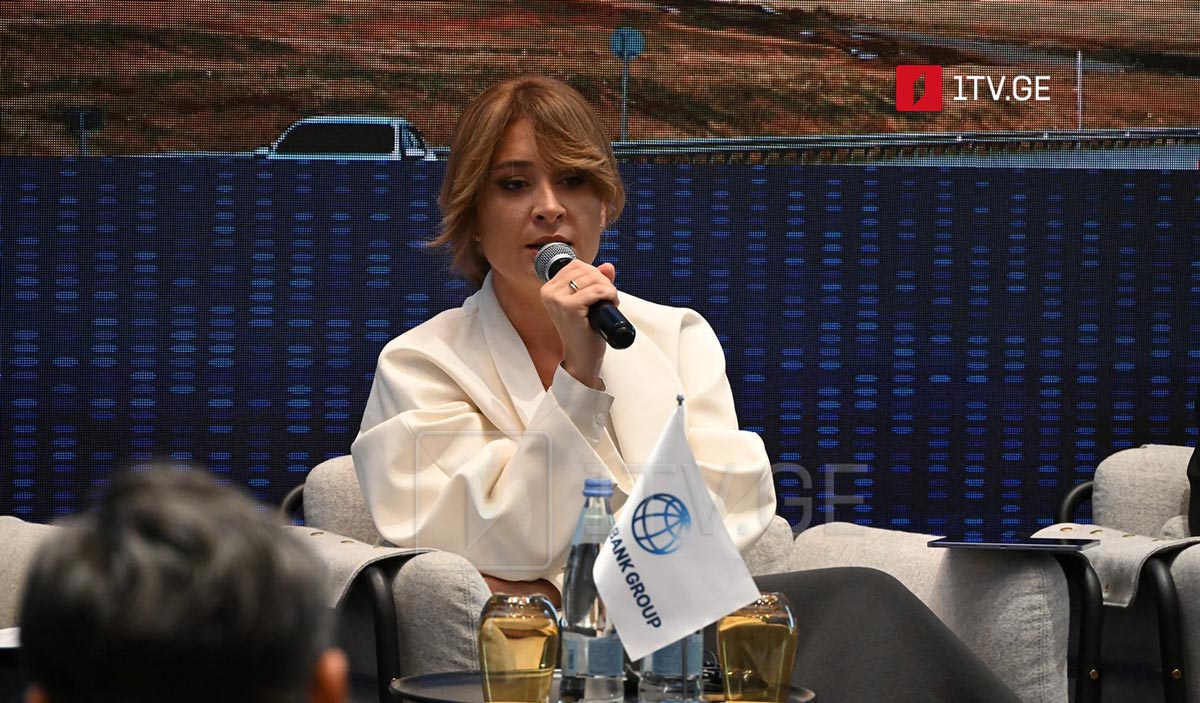
Georgia’s Deputy Minister of Economy and Sustainable Development Tamar Ioseliani said the World Bank has prepared an important and interesting study, adding that the opportunities presented by the Middle Corridor are being discussed at an event taking place in Tbilisi.
According to Ioseliani, the World Bank study indicates that the Middle Corridor is growing and therefore has significant economic potential.
“According to the study, cargo flows are expected to quadruple by 2040, while the time required to transport cargo is expected to decrease by approximately two-thirds. This will, of course, allow the economies of the countries hosting the Middle Corridor to develop. Regarding GDP growth, the study says that GDP will increase by approximately 3.3%, while in Georgia’s case, the increase is expected to reach 3.6%,” Ioseliani said.
She also highlighted the employment outlook, noting that the study projects the creation of approximately 2 million jobs.
“This is, of course, very important in terms of attracting investment, developing the economy and in many other respects,” she said.
According to Ioseliani, Georgia is prepared to capitalize on these opportunities.
“Georgia is approaching this direction fully prepared. At the end of 2025, we developed a 10-year transport development vision and plan. Accordingly, as you know, by 2032, the state plans to mobilize approximately $7 billion to develop key transport infrastructure,” she said.
Ioseliani also highlighted the importance of the Anaklia Deep Sea Port project.
“I would also highlight the importance of the Anaklia Deep Sea Port project and how it is developing. As you know, we have moved to the landlord model, which allows us to balance risks and, accordingly, attract operators with relevant experience,” she said.
She also pointed to the ongoing modernization of Georgia’s railway system.
“Of course, the historical modernization of the railway is also important. This process is already underway, and we already have tangible results,” Ioseliani said.
“Generally speaking, the Middle Corridor should operate as a single system, and we are actively cooperating with partner countries and strategic partners to make this system and the Middle Corridor competitive. Accordingly, it should be fast, reliable and, at the same time, efficient,” she said.
“We are in sync with Kazakhstan, Azerbaijan and all parties involved in the Middle Corridor regarding the investments we are making, in order to increase capacity and, accordingly, offer users a reliable route,” Ioseliani added.
A World Bank regional forum is being held in Georgia, where the Middle Corridor is among the issues under discussion.