


Systemic reforms underway at Georgia’s Municipal Development Fund and infrastructure sector
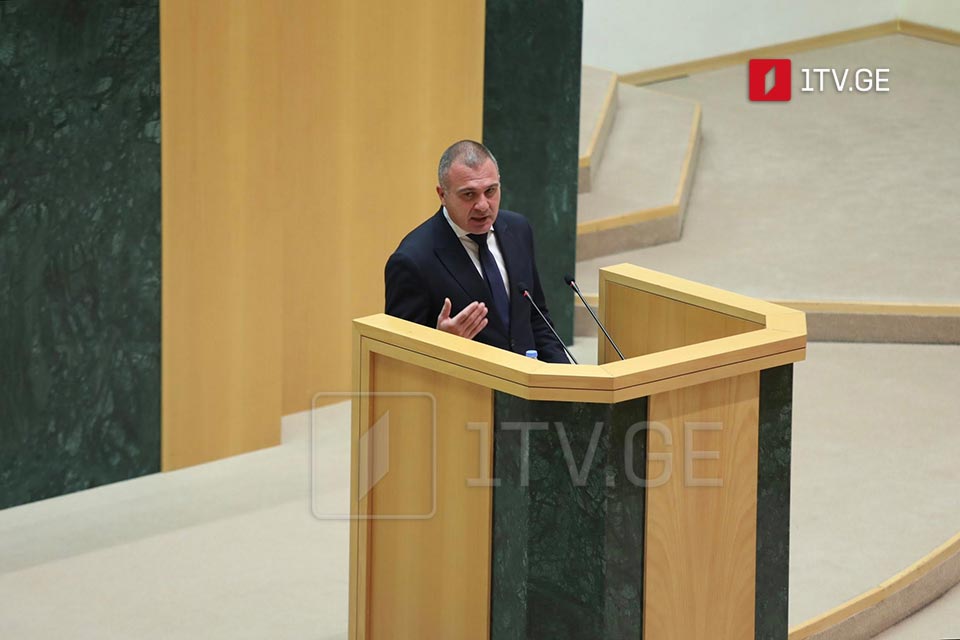
The Minister of Infrastructure, Revaz Sokhadze, addressed a range of issues during his interpellation speech in the Georgian Parliament, signalling the commencement of comprehensive reforms across the sector.
Reforming the Municipal Development Fund
In response to the challenges confronting the Municipal Development Fund, Minister Sokhadze announced that a thorough structural reorganisation and systemic reform of the Fund’s operations are now underway.
He highlighted several core issues identified within the fund: delayed projects, inadequate supervision, uneven workload distribution, and signs of conflicts of interest. The Ministry is initiating a complete reorganisation and institutional overhaul to address these issues. This includes streamlining the organisational structure, bolstering financial oversight, and implementing digital management systems.
“The aim is to establish the Fund as a modern, efficient, and transparent organisation capable of managing infrastructure and social projects with high quality,” the Minister stated.
According to Revaz Sokhadze, concrete steps have already been taken towards creating an institutional modernisation programme. This involves simplifying the organisational framework, enhancing supervision and financial controls, and adopting new standards for digital management and human resources development.
“We have also shifted away from the design-build contract model, except in exceptional circumstances. Instead, we now regard the design phase as a separate, independent process, selecting the most suitable architectural and engineering solutions through competitive procedures. While this approach may increase project preparation time, it ensures higher quality decisions and safeguards against deficiencies being corrected during construction,” the Minister explained.
Currently, the Fund is managing 12 tenders and 31 competitions, providing opportunities to implement projects valued at approximately GEL 1.5 billion.
Introducing new construction norms
In his parliamentary address, Sokhadze also highlighted the Ministry’s move towards adopting new construction standards, which aim to resolve a longstanding issue.
“The current pricing system has hindered infrastructure development for years. This 35-year-old problem is now on the path to resolution,” he stated.
He announced that, in collaboration with the Ministry of Economy, new European-standard construction norms are being developed, expected to be completed by the end of next year.
“Our aim is not to pay less than the market value, but to implement projects at an optimal price, ensuring high quality and timely completion. These reforms will align Georgia’s infrastructure development with international standards: transparent, efficient, and of the highest quality,” the Minister concluded.
Water Supply Company enters a new development phase
The water supply company is entering a new stage of development, with the Ministry of Infrastructure launching a reform.
According to the Ministry of Infrastructure, the reform encompasses strengthening organisational and operational capacity, aligning wage policies with the labour market, reinforcing regional branches, and involving international experts.
“To actively detect and eliminate illegal water consumption, provide technical support, and base decisions on data, we plan to implement the SCADA system extensively. Additionally, we will apply for a revision of water tariffs next year, with new tariffs set to be introduced from 2027,” the Minister stated.
Sokhadze emphasised that these changes will make the company’s activities more transparent, efficient, and focused on improving service quality.
Transition to a quality-focused governance model
Minister Sokhadze also outlined the Ministry’s ongoing transition towards a governance model rooted in quality. Following the restructuring and change in management, the Ministry aims to enhance operational efficiency, introduce new management systems, and strengthen quality control.
“Our goal is that, through comprehensive reorganisation and institutional reform, various agencies within the Ministry will evolve into modern, efficient, and transparent organisations committed to high-quality infrastructure project management,” he explained.
Further steps include streamlining organisational structures, reinforcing oversight and financial control, and adopting new standards for digital management and human resource development.
Revaz Sokhadze reported to the Parliament that new specialised units have been established in technical supervision, project management, and quality assurance. During the reform of pricing principles, the focus remains on delivering projects at optimal costs, with high standards, and within reasonable timeframes.