


Speaker: Some European officials resort to harmful practice of denying people’s will
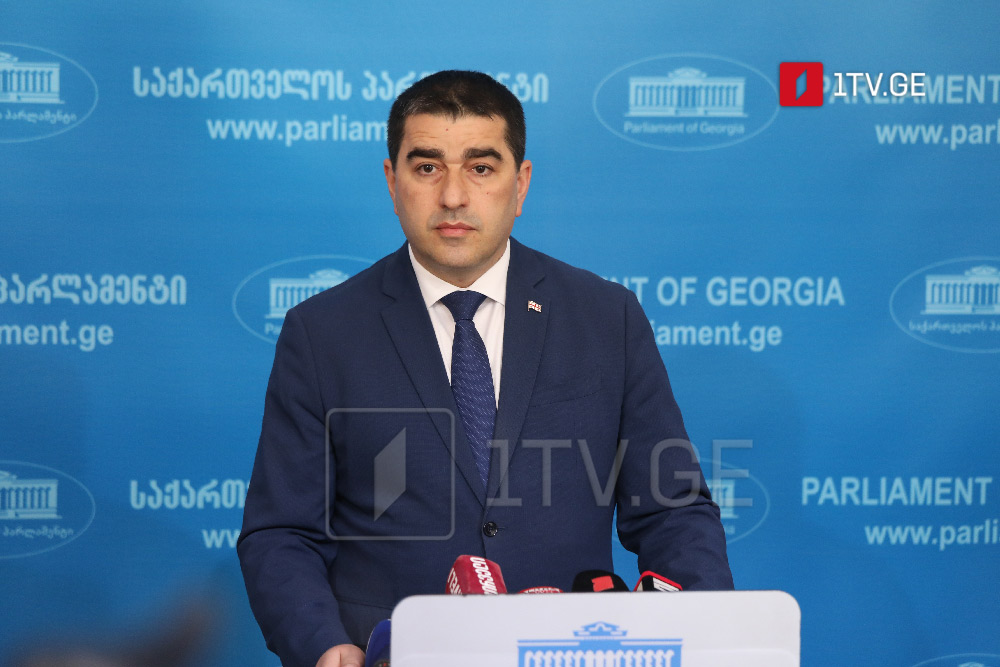
“If anyone wants to understand what the Georgian people want, one needs only look at the results of the October local elections, in which Georgian Dream replicated the results of the 2012 and 2024 elections. In 2012, we received 1,180,000 votes, in 2024—1,120,000 votes, and this year—1,107,000,” writes Parliament Speaker Shalva Papuashvili on social media.
According to him, all three elections were conceived as referendums: the first represented a choice between Mikheil Saakashvili’s dictatorship and democracy; the second, between foreign interests and national interests; and the third, between Georgia’s choice and those foreigners who refuse to listen to the voice of the Georgian people.
“All three elections were conceived as referendums. The first represented a choice between Saakashvili’s dictatorship and democracy; the second, between foreign interests and national interests; and the third, between Georgia’s choice and those foreigners who refuse to listen to the voice of the Georgian people.
Any other way and method of presenting the people’s will differently is, at best, an escape from reality and, at worst, unlawful interference in internal affairs.
This is precisely why the statements by European bureaucrats and officials from certain countries, in which they appeal to ‘the Georgian people’s will’, directly contradict the essence of popular democracy.
At the recent meeting of EU member states’ foreign ministers (FAC), when certain foreign ministers and the EU Commissioner for Enlargement mention ‘the will of the Georgian people’, they apparently do not have the majority of Georgians in mind at all. Apparently, they mean those few foreign-funded ‘NGO activists’, representatives of marginalised political parties and the propagandists who serve them, who have long been attacking Georgia’s government in the name of ‘Europe’, ‘democracy’ and ‘the West’.
At the same time, they use the most un-European, undemocratic and un-Western means for this attack: violence, overthrow, hatred and political polarisation. The entire cynicism lies in the fact that these people, whose political goals coincide with the goals of their funders (which is natural), have been designated as ‘the Georgian people’ by certain European officials and bureaucrats.
But for the Georgian people, they are what they actually represent: marginalised radical groups who incite polarisation and hatred in domestic politics.
National sovereignty is the cornerstone of the rules-based international order, and any attempt to undermine it is a violation of international norms, regardless of whether it comes from Russia or any European country. Rejection of the principle of sovereignty as a foundational pillar of international law is unacceptable.
Every nation has its sensitive points. For us Georgians, who won our independence from the Soviet Union with blood, any form of undermining our sovereignty is particularly painful. Therefore, we cannot tolerate from anyone a paternalistic attitude towards popular sovereignty. Paradoxically, such attempts are made by the post-Soviet Baltic republics and certain post-communist countries.
Such appropriation of the Georgian people’s will, through gross violation of Georgia’s sovereignty and in the name of Europe, is, at best, hypocrisy and, at worst, the abolition of statehood.
The fact that some European officials resort to the harmful practice of denying the people’s will and, instead, rely on a handful of foreign-funded politicians and activists tells us more about the alarming state of EU politics than about Georgia’s government,” wrote Shalva Papuashvili.