


Speaker: Post-2020 elections, mediators revealed to pursue own agenda to control independent institutions
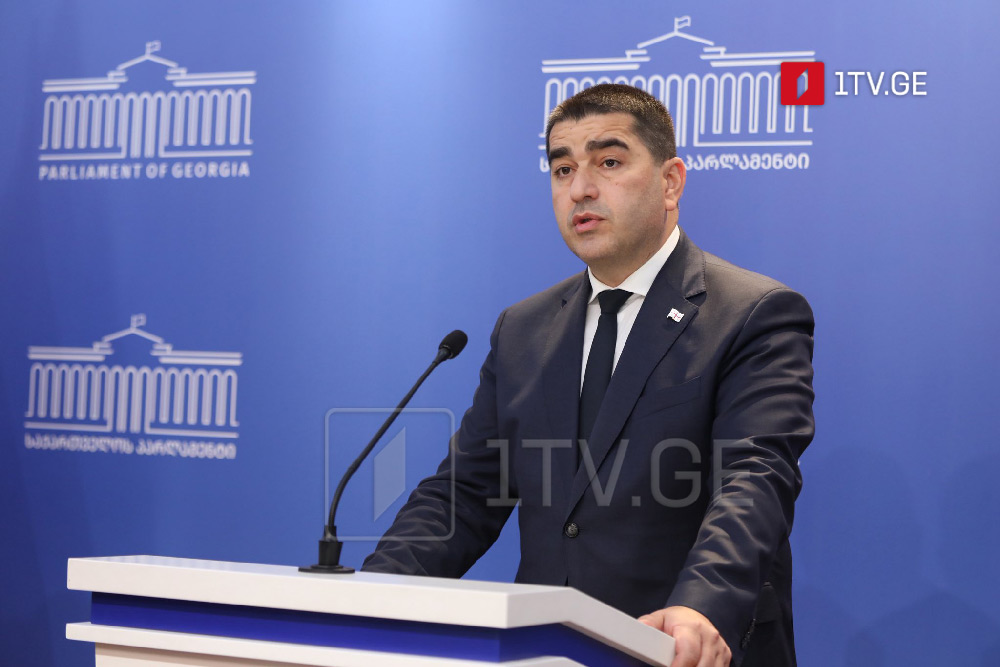
“After the 2020 elections, it was confirmed that the mediators between the opposition and the Georgian Dream were not impartial; they had their own agenda. They were interested in gaining control over independent institutions,” stated Shalva Papuashvili, the Speaker of the Georgian Parliament, addressing journalists.
According to the Speaker, vetting was one of the signs of this.
“It gradually became clear. All of this later connected, especially when we applied for membership. But I want to remind you of the process after the 2020 elections, the so-called facilitation, or whatever it was called at the time, involving the European Union as an intermediary between the opposition and the Georgian Dream.
I have repeatedly recalled this episode: the first draft of the agreement was brought in, with the EU ambassador, the U.S. ambassador, and the so-called negotiator present. The draft stipulated that a qualified majority should have elected the Prosecutor General, a proposal we were expected to accept. I immediately questioned its origins. Kelly Degnan was there, as well as Hartzell, the EU negotiator, and Danielson. I asked them where this requirement comes from. Why is the election of the Prosecutor General by a qualified majority being demanded?
Having prior experience in these matters, I knew that neither the opposition nor NGOs had ever raised such a demand. Suddenly, this significant political point appeared out of nowhere, and I questioned its legitimacy. There was silence in response; no explanation was given. I didn’t hesitate; later, when I met with the opposition, I asked them whose idea this was, why they wanted the Prosecutor General to be elected by a qualified majority, and where this demand originated. Everyone shrugged their shoulders. I then asked the NGOs about it during discussions on electoral reform, but again, no clear answer was given. This confirmed that the mediators and arbitrators inserted this clause.
This reveals two important things. First, it confirmed, both at the time and in hindsight, that these mediators were not neutral actors; they had their own agenda, which they sought to impose on the Georgian government. Second, it made clear what their true interests were: gaining control over independent institutions, namely, the prosecutor’s office and the judiciary,” concluded Shalva Papuashvili.