


Speaker Papuashvili urges EU Ambassador to question Laura Thornton over admitted black-market money flows into Georgia
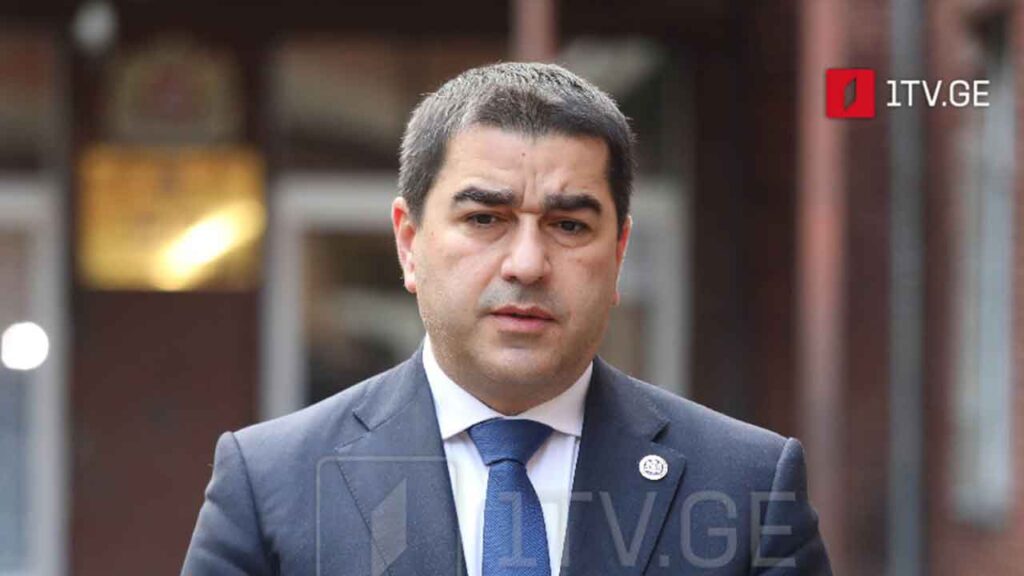
“Laura Thornton is the second person, after Marta Kos, to have openly admitted that irregular, shadow financing schemes exist for channelling money into Georgia,” said Georgia’s Parliament Speaker, Shalva Papuashvili.
Every one of these schemes is criminal in nature, he added, since their sole purpose is to circumvent Georgian law.
“The Helsinki Commission hearing was so inconsequential that even Joe Wilson didn’t attend, let alone other members of Congress. The fact that even Joe Wilson couldn’t be bothered to show up tells you everything about what we were dealing with. We witnessed Olesya Vartanian and Bakhtiyar Nishanov gossiping amongst themselves about Georgia. These individuals are seeking interference in Georgia’s internal affairs. The one American present at the hearing, as if by token gesture, was Laura Thornton, the second person, after Marta Kos, to have openly admitted that irregular shadow schemes exist for bringing money into Georgia. She stopped short of going into specifics, because doing so would have meant confessing to a criminal offence. Each of these schemes is criminal, as they aim to bypass Georgian law. And does this not justify precisely the legislative change about which the EU Ambassador expressed such alarm yesterday?” Papuashvili said.
The legislative amendments, he stressed, will seal every last one of the loopholes they are so desperately seeking.
“Herczyński should be directing his questions not at us, but at Marta Kos, his superior, who stated openly that they are actively looking for ways to get around Georgian law and funnel money to organisations in their employ, beneath the radar of the Georgian people. If Herczyński himself is not across the detail, let him ask his own boss what schemes are being cooked up to circumvent Georgian legislation. Let him also ask Thornton, who has admitted that these schemes exist.
Everyone knows everyone, and nothing is hidden. Instead of foreign foundations granting funds directly to an organisation, requiring approval, they stopped giving money outright and began hiring staff under contracts, directly charging funds to employees.
If people who arrived here two or three years ago think they can pull the wool over Georgians’ eyes, I suggest they read a little of our history and acquaint themselves with whom they are dealing. We are not fools. We adopted these changes precisely because the European Union is violating Georgian legislation. If there is to be no compliance with the rules that exist, then there will be legislative changes that seal every last loophole and back-channel they are so insistently searching for,” Papuashvili declared.
For context, Laura Thornton, Director of Global Democracy Programmes at the McCain Institute, stated at the Helsinki Commission hearing on Georgia that the laws will inevitably restrict the flow of funding into the country, but that donors have found creative workarounds, possible, she said, though risky. Before this, EU Commissioner for Enlargement Marta Kos had stated: “The Georgian Government is watching very carefully to whom we give money; we are looking for ways to transfer funds to civil society without causing them harm.”