


Speaker Papuashvili: EU governments must resist Baltic whims, restore Georgia-EU relations
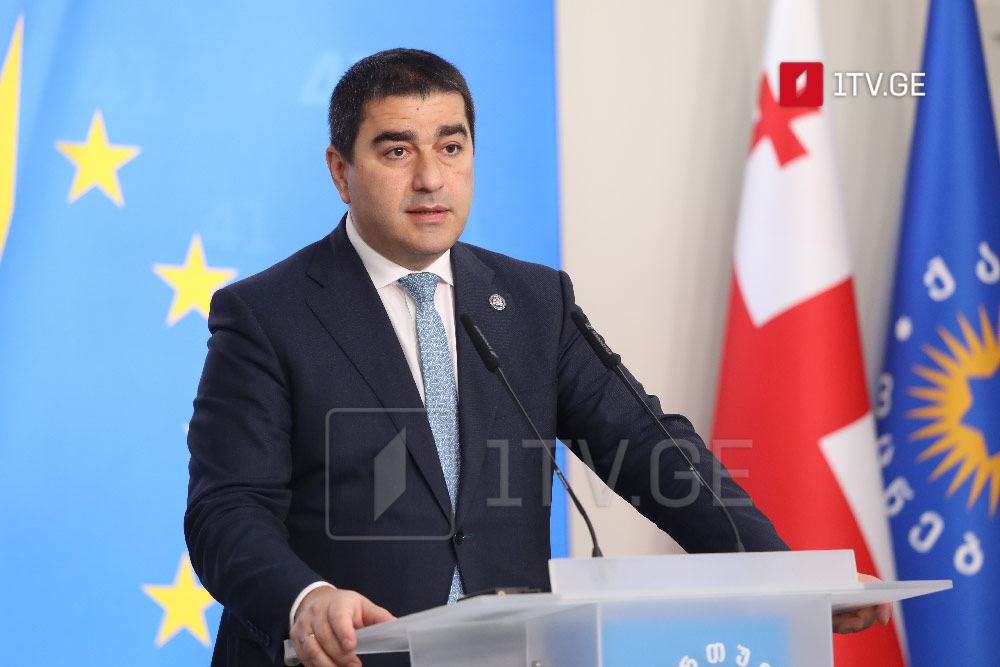
“It is crucial for the governments of EU member states to break free from the whims of the Baltics, dismantle this vicious cycle, and set Georgia-EU relations back on the right track,” Shalva Papuashvili, the Parliament Speaker, asserted in a post on social media.
Papuashvili conveys that he often heard “declarations from the Baltic states of their support for Georgia’s sovereignty and territorial integrity; however, in practice, it seems these principles lack serious significance for them.”
“The recent visit of former President Zourabichvili to the Baltic post-Soviet countries exposes the problematic attitudes of these states and the European bureaucracy toward Georgia. Three key aspects stand out: the denial of national sovereignty, the undermining of legitimate governance, and the fabrication of an imaginary parallel world. All three remind us of the foreign policy strategies employed by the Soviet Union.
First, while we repeatedly hear that the Baltic countries “support Georgia’s sovereignty and territorial integrity,” it appears these concepts hold little real-world weight for them. How can these nations genuinely endorse Georgia’s sovereignty when they disregard the majority’s right to choose their own government? How does recognizing an ex-president, whose term ended last December, as the “legitimate representative of Georgia” align with their claimed “support for Georgian sovereignty?” The essence of sovereignty does not fluctuate with recognition or threats; why should it matter to Georgian citizens whether such interference comes from the Soviet Union or Lithuania?
Second, the rhetorical separation of the people from the government is a timeworn tactic employed by the Soviet Union to meddle in the sovereign affairs of other nations. In recent months, we have witnessed attempts by high-ranking Baltic politicians, though fruitless, to create a divide between the Georgian government and its people. The current trip of ex-president Zourabichvili to all three Baltic states, along with her official reception, indicates that Baltic leaders are still resorting to outdated Soviet methods. They publicly denounce communist, Soviet and Russian ideologies yet seem ensnared by the very chains they profess to want to break.
Third, fabricating a distorted and chaotic narrative in which Georgia is portrayed as a brutal dictatorship under Russian control epitomizes the Baltic states’ politics devoid of reality. This misrepresentation bears no connection to a genuine concern for democracy, rather it is motivated by clear geopolitical interests. Estonia, Latvia, and Lithuania are struggling to enhance their own security by redirecting Russia’s attention elsewhere. Since the onset of the invasion of Ukraine, they have pressured Georgia to confront Moscow openly. By advocating for Georgia—an aspiring EU and NATO member—to impose sanctions on Russia, they hoped for a Georgian-Russian escalation, effectively sacrificing Georgia for their own interests. No other plausible rationale exists for their policy.
If the Baltics truly cared about Ukraine, they would deploy their own troops to assist at the frontlines; they do not require anyone’s permission to do so.
It is essential for the governments of EU member states to resist the whims of the Baltics, disrupt this vicious circle, and realign Georgia-EU relations,” concludes Shalva Papuashvili.