


Speaker: EU ‘accession negotiations’ are just enforcing arbitrary controls over Georgia’s sovereignty
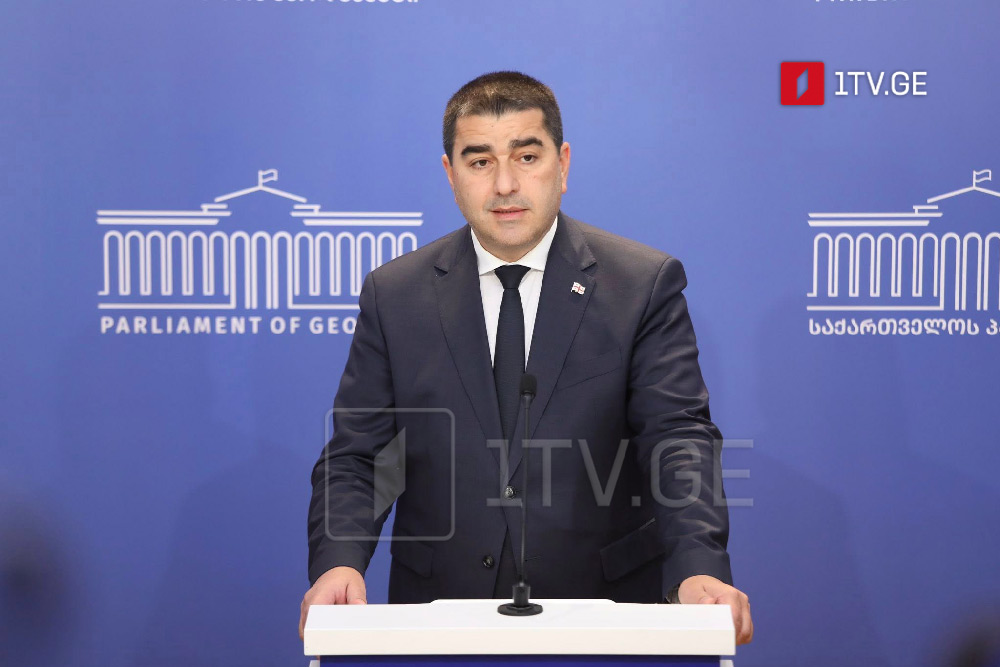
According to a statement by Shalva Papuashvili, Speaker of the Georgian Parliament, the so-called negotiation process regarding EU accession is, in reality, a process of implementing directives.
As Papuashvili told journalists, there are unilateral demands and fabricated, arbitrary directives driven by a desire to establish control over a sovereign country.
“Everyone should know the truth: in reality, no actual negotiation exists regarding accession. This is a process of fulfilling Brussels’ instructions, and Brussels itself occasionally admits as much. Calling this process ‘negotiations’ is a complete farce and a pretence, as if it were some kind of bilateral dialogue.
In reality, it is about unilaterally issuing instructions and executing those instructions to the taste of Brussels’ unelected bureaucrats. They don’t even leave you the freedom to have different options. The most that can happen is that the fulfilment of certain obligations can be postponed. This is understandable, on one level, in the sense that if you want membership of an organisation, if there are certain directives and norms that you must transpose into your legislation, then naturally you must fulfil them.
Let me remind you that half of EU legislation has already been transposed in Georgia through the Association Agreement action plan, which we are following. However, the problem is what represents a new trend from Brussels: the invention of additional requirements that are defined neither in the directives nor in other binding documents,” Papuashvili stated.
Shalva Papuashvili cited the “vetting” of judges as an example, which, according to Papuashvili’s explanation, “is the fruit of the absolute fantasy of unelected Euro-bureaucrats.”
“Not a single EU document, whether a directive or anything else, envisages any such thing. They don’t implement this in their own country, yet they ask other countries to do so for a simple reason: this is a procedure through which they attempt to acquire leverage over another country’s judiciary. We saw that in Moldova, this process is being carried out by Zurab Adeishvili’s former deputy, Nona Tsotsoria, during whose tenure a system of torture was established in Georgia. She was deputy prosecutor general at a time when there was state racketeering, the creation of a torture system, and murders that the state covered up, and this person is the chief member of the jury in the selection or re-selection of judges in Moldova.
We know who Zurab Adeishvili is; he is the Deputy Prosecutor General in Ukraine. We can also see whose patronage he is under. They have him in Ukraine as well, as someone imposed from outside; in reality, he is the shadow prosecutor general in Ukraine.
This is the line: individuals carrying out external instructions who must ensure that control over the judiciary is seized by external forces and groups, allowing these external actors to then govern the country through the judiciary and justice system. This happens in Moldova, and Ukraine employs the same procedures.
So, recently, Brussels has introduced fabricated criteria, such as ‘vetting’. Among other things, they included in our nine recommendations that foreign-funded NGOs should participate in decision-making at all levels of government. Essentially, this means granting veto power to organisations like Transparency International, registered in Estonia, in shaping our policies. You must grant foreign-funded organisations the power to sign and veto.
Why don’t they have all these people involved in every decision they make? This further confirms that the so-called negotiation process is, in reality, a matter of implementing directives. While it’s understandable to need to comply with certain criteria and regulations, it has become clear recently that there is an imposition of invented, arbitrary standards, instructions, and directives, revealing a desire to establish control over a sovereign country,” declared Shalva Papuashvili.