


Speaker: Democracy must defend itself against its enemies; when no enemies infiltrate, democratic processes strengthen
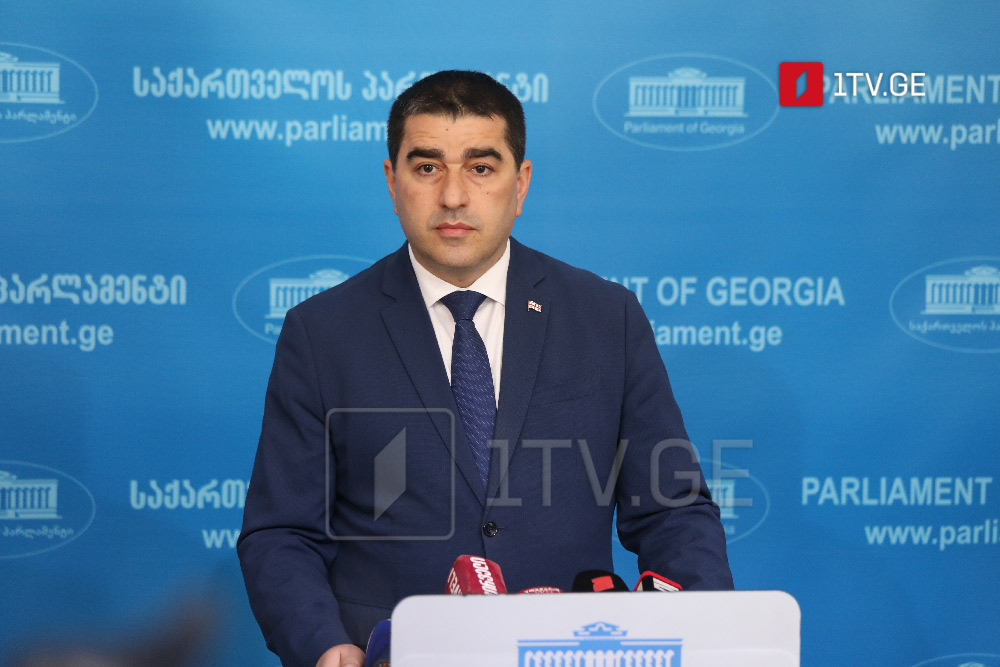
“There is abundant evidence to discuss the anti-constitutional activities of the United National Movement and various political organisations in alliance with it,” Shalva Papuashvili, Speaker of the Georgian Parliament, told GPB First Channel.
According to Papuashvili, no political party should exploit democratic instruments as cover for anti-democratic activity.
“This is not about what name this or that party has. It’s about the fundamental essence. No organisation, no political party in any democracy should exploit democratic instruments as cover for anti-democratic activity. The entire concept of defensive democracy is centred on ensuring that democratic institutions and processes do not become a cover for anti-constitutional activities. Accordingly, our petition is founded entirely on this principle. A parliamentary investigative commission undertook months of research, resulting in a 450-page report detailing the political crimes committed by various parties and individuals against our Constitution. Therefore, the petition is based on this evidence and these findings.
The United National Movement is inherently implicated in this petition, as citizens have witnessed the criminal acts it has committed both during its time in power and afterwards, including violations of Georgian law. This is not merely our conclusion; there is a Strasbourg Court ruling in the Ochigava case against Georgia that explicitly confirmed the establishment of a system of torture within penitentiary institutions during the United National Movement’s tenure.
There is abundant evidence to discuss the anti-constitutional activities of the United National Movement and various political organisations in alliance with it. Specifically, who we will address before the Constitutional Court will be determined following the submission of the petition. Naturally, a party does not function without its members. The legal framework within which individuals operate is simply a tool for them to pursue their political objectives. Therefore, when we speak of a party’s unconstitutionality, this implies that those individuals who had substantial influence over the party’s decision-making and were complicit in achieving anti-constitutional aims are understood to be participants in anti-constitutional acts.
Therefore, the logic is as follows: every individual who had substantial influence in these organisations’ decision-making regarding actions against the Constitution, and who had substantial connections, alliances with these organisations to deliberately pursue anti-constitutional aims, is contemplated amongst those persons who will be named in our petition. The final decision will be taken by the Constitutional Court,” Shalva Papuashvili stated.
As Papuashvili noted, Georgian Dream has a duty to its electorate to submit a petition to the Constitutional Court.
“In the parliamentary elections, 1,120,000 people gave us a mandate and imposed upon us an obligation to approach the Constitutional Court. We shall file this petition in the name of 1,120,000 citizens. Our objective is singular: democracy must defend itself against its enemies. This is the fundamental principle; without it, democracy cannot survive. It is precisely to uphold this goal that we are approaching the Constitutional Court. Any organisation that acts against the Constitution and the country’s territorial integrity, and whose aim is to promote war propaganda, all such entities are acting against the Constitution and should expect to face legal action,” declared Papuashvili.
Asked whether, “if the Constitutional Court bans the United National Movement, will opposition parties disappear from Georgian politics?”, Papuashvili noted:
“When the enemies of democracy are not infiltrated in democratic processes, it will only strengthen the democratic process and give the country the opportunity to breathe freely from the constant attempts to uproot the will of the Georgian people, their democracy, their sovereignty. These mechanisms exist precisely for this reason. The corresponding mechanism is not written into the Constitution merely to be studied theoretically at universities. This is a practical mechanism, an instrument and weapon in the hands of democracy, so that it may defend itself against the enemies of democracy.”