


Prosecutor General outlines 2025 justice reforms: Crackdowns on cybercrime, new specialised divisions, and targeted anti-fraud measures
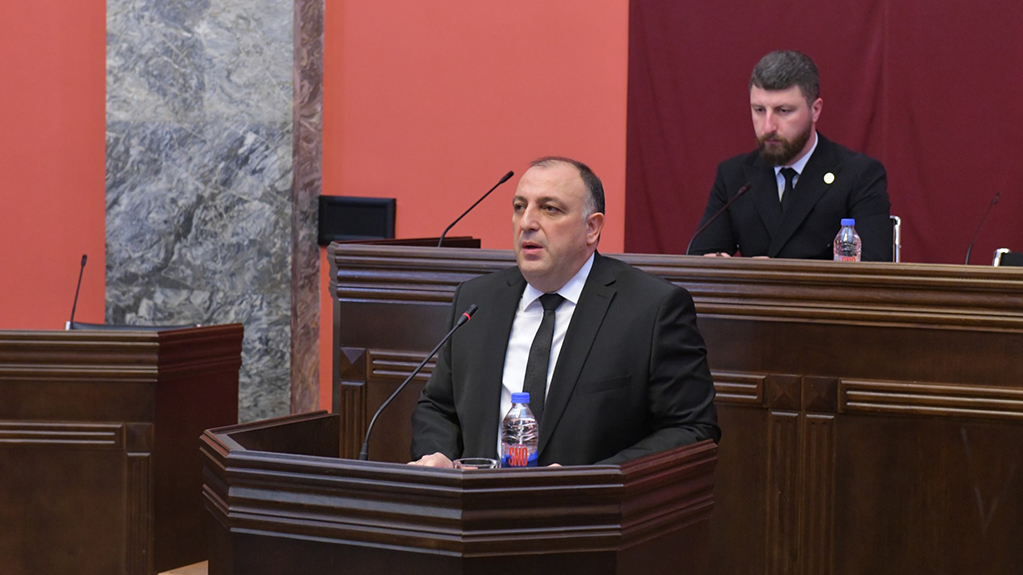
“In 2025, the identification of drug distributors and the investigation of their criminal networks increased, while a strict criminal justice policy was enforced against facilitators embedded within these rings. Particular attention was paid to transit visitors crossing the border and imported cargo,” Prosecutor General Giorgi Gvarakidze announced during the presentation of the Prosecutor Office’s 2025 performance report to the Parliament of Georgia.
According to Gvarakidze, within the framework of measures implemented to prevent the smuggling and transit of narcotics and other prohibited substances into Georgia, the country’s crime detection and response metrics improved compared to the previous year.
“Despite the rising numbers of drug users, the Prosecutor’s Office maintained a balanced policy toward them, utilising penalties that promote resocialisation and rehabilitation. This serves as a key mechanism to curb the spread of crime and help users overcome their dependency,” Giorgi Gvarakidze stated.
The Prosecutor General also focused on youth justice, revealing that a dedicated Juvenile Affairs Division was established within the Tbilisi Prosecutor’s Office in 2025 to improve the efficiency of efforts to combat crimes committed both by and against minors.
As Giorgi Gvarakidze noted, the division is fully staffed by specialised prosecutors who exclusively handle pre-trial supervision and lead the state’s prosecution in court for these specific cases.
He further explained that when minors met the legally established criteria, specialised prosecutors prioritised alternative diversion mechanisms, which were applied to 905 defendants.
“Alongside the public interest, the Prosecutor’s Office’s primary objective is to support the child in overcoming challenging behaviour, allowing them to continue their lives without a criminal record. In 2025, as in previous years, diversion was predominantly used for minors committing theft, accounting for 377 individuals (65%). In terms of remand and sentencing, custodial remand was requested in 31.8% of cases (dropping to 9.8% when including diverted individuals), with the court approving detention at a rate of 25.1%. Across the total number of cases, the cumulative rate for custodial sentences stood at 13.1%,” Gvarakidze stated.
During his address to Parliament, the Prosecutor General spoke extensively on fraud offences, noting that fraud is a complex crime that requires significant time and specialised skills to resolve.
According to his statement, the high rate of fraud in recent years has secured its position within the top ten crimes for criminal prosecutions. In 2025 alone, criminal proceedings were launched against 655 individuals.
“We expect that introducing a specialised focus on fraud cases and establishing a new structural unit will have a positive impact on delivering timely final resolutions for this category of crime,” Gvarakidze noted.
The Prosecutor General added that at the end of 2025, the Fraud Case Management Division was established within the Tbilisi Prosecutor’s Office. The unit’s competence covers pre-trial supervision and state prosecution for criminal cases handled by specialised divisions of the Ministry of Internal Affairs.
Gvarakidze also reported substantial progress in tackling cybercrime, stating that cash and virtual assets worth over three million GEL had been seized from convicted criminals for the benefit of the state.
In 2025, the number of prosecutions initiated for cybercrime offences hit its highest rate in five years, totalling 246 individuals.
“Cybercriminals are increasingly operating under the status of organised crime, and their methods for concealing illicit digital footprints grow more sophisticated by the day. In response to this challenge, the Prosecution Service of Georgia successfully collaborated with virtual asset service providers and international inter-agency networks to secure faster, more effective access to information critical to investigations,” the Prosecutor General noted.
“In 2025, we updated our methodological manual on ‘Procedures for the Seizure of Virtual Assets’ and are actively utilising specialised cryptocurrency tracking and analysis software. This equipment assists investigators in discovering and lawfully seizing virtual assets,” the Prosecutor General added during the report.
The Prosecutor General reaffirmed that the state’s policy on domestic offences remains unyielding, with criminal proceedings launched against 4,585 individuals in 2025.
Gvarakidze pointed out that women make up the vast majority of victims in domestic crime cases.
“The Prosecution Service maintained its strict policy, requesting the maximum penalty of remand in custody for 91% of domestic violence offenders. The courts granted these requests in 62% of cases,” Gvarakidze stated.
According to the Prosecutor General, managing this crime effectively is unimaginable without active prevention. Throughout the year, the service monitored domestic crime cases and analysed judicial practices and landmark rulings. This data will be used to evaluate trends, rectify systematic shortcomings, and establish uniform standards.
“In 2025, supporting and empowering victims of domestic violence remained a critical focus. Witness and victim coordinators were assigned to domestic crime cases as a matter of priority, specialised training for prosecutors continued, and work began on a public information brochure concerning domestic crime issues, which will soon be accessible to citizens,” Giorgi Gvarakidze concluded.