


Paweł Herczyński: Re-introduction of Transparency Law leads to consequences
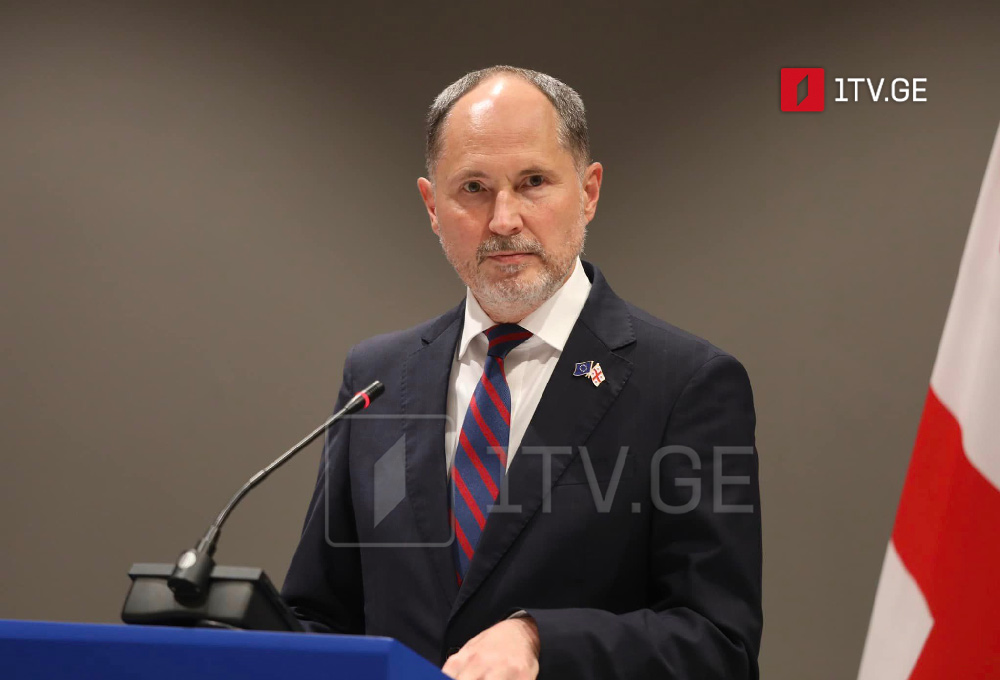
“Despite the promises that have been made that Transparency Law will not be tried again, it was introduced last year,” said Paweł Herczyński, EU Ambassador to Georgia.
According to the EU Ambassador, Georgia’s partners, EU institutions, representatives of EU member states, representatives of like-minded countries and representatives of all international organizations urged the Georgian Dream party not to re-introduce the Law on Transparency of Foreign Influence.
“This law, which is now called Transparency and used to be called Foreign Agents or Foreign Spy law, was attempted two years ago. The ruling party under pressure from Georgians here on the streets, as well as the international community, decided to withdraw this law two years ago.
Again, and despite the promises that have been made that this law will not be tried again, it was introduced last year. Again, you had a huge wave of protests on the streets of every major city in Georgia, you had practically every partner of Georgia, representatives of EU institutions, representatives of EU member states, representatives of like-minded countries, representatives of all international organizations, telling Georgian Dream, please don’t do it.
There was only one place where there was a voice of solidarity and understanding – Moscow. Despite of all us telling them not to do it, the Georgian parliament voted to introduce this law. International legal experts, the Venice Commission, provided an expertise – 30 pages of arguments on why this law would restrict freedom of assembly and freedom of speech, why this law would crush civil society, why this law would force people who are trying to improve Georgia, to make a better life for Georgians to go into exile. Unfortunately, this law has been introduced.
We have said from the very beginning, that there will be consequences. We cannot let it go and precisely this is what is happening now. And let me say the final word on this.
I think you had two main reasons for Georgia in the past to be a model to all other enlargement countries and to be a leader when it comes to the enlargement process. It was a vibrant civil society and professional administration. What is happening now is that the vibrant civil society is being destroyed by this law. And with many people, civil servants, the best the Georgian administration has, being dismissed, being kicked out of work or voluntarily resigning, the two main pillars of previous successes of Georgia, are being very seriously damaged,” he said.
On January 27, the Council of EU decided to suspend parts of the EU-Georgia visa facilitation agreement. “This may lead to Georgian diplomats and officials having to apply for visa when travelling to the EU,” EU Delegation to Georgia stated.
The EU delegation said visa-free travel suspension is a reaction to the Georgian government’s adoption of Transparency Law, legislative package on Family Values and Protection of Minors.