


Parliament Speaker questions: Were they demanding sanctions and escalation against Russia? Any escalation could lead to war
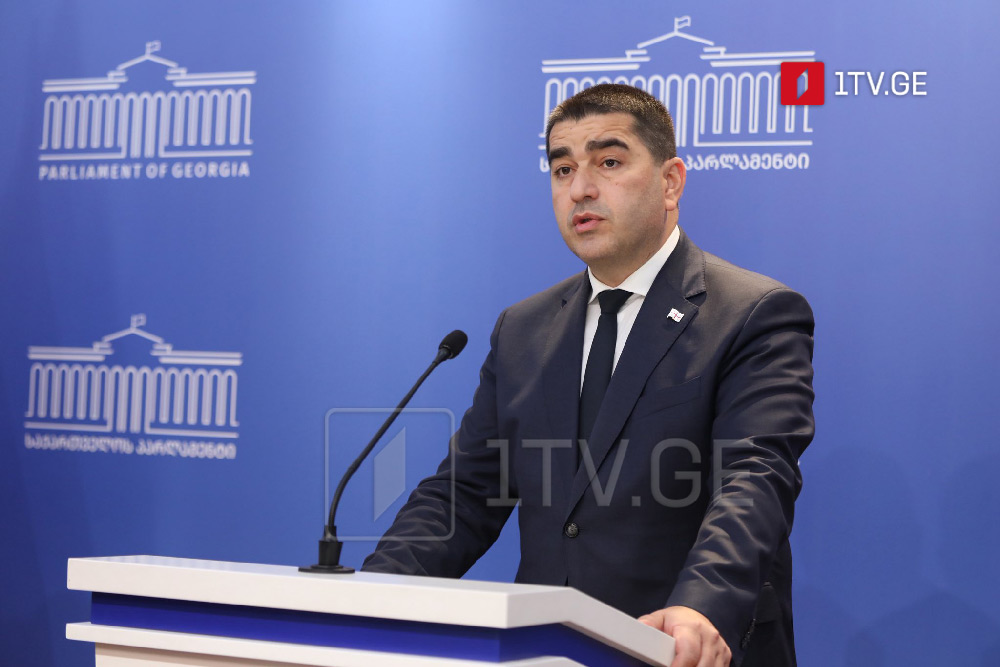
“For Georgia, national security is no abstract concept. It is a daily, tangible reality, a country divided by an occupation line, with a foreign military force stationed just a few dozen kilometres from its own capital,” Parliament Speaker Shalva Papuashvili wrote on social media, adding that the Georgian government’s duty is not to carry out someone else’s political agenda, but to ensure the survival of its own state.
In his view, the criticism emanating from Brussels speaks to a wilful disregard for this reality.
Papuashvili responded to a statement by the European Union’s Ambassador to Georgia.
“It requires quite a bit of cynicism to proclaim in the morning that no one asked Georgia to open a second front, and then publicly express disappointment in the afternoon over Georgia’s refusal to escalate against Russia.
From the EU Ambassador’s statement:
“We chose to halt all direct flights to Russia, restrict Russian citizens from entering the EU, and reduce trade with Russia at a high cost to our own economies. Against this backdrop, Georgia is rolling out the welcome mat for Russian tourists and businesses, while trade between the two countries continues to grow.”
Once again, for those who cannot see what is plainly before them: the only way Georgia could curtail all of this would be to impose reciprocal sanctions on Russia.
Are there still any doubts as to whether we were being asked to impose sanctions on Russia and to provoke escalation? Are there any lingering questions about the severe impact this would have had on our economy and on every individual citizen? Does anyone still doubt that, given our particular circumstances, any escalation amounts to a potential war, a war we would have had to fight entirely on our own?
And finally, are there still any questions about what truly lies behind Brussels’ relentless criticism of Georgia?
Had the Georgian government yielded to these demands four years ago, we would today be a nation sitting amongst the rubble of war, economically devastated, in mourning, a country about which a great many lofty statements would now be issued from various corners of the world.
For Georgia, national security is no abstract concept. It is a daily, tangible reality, a country divided by an occupation line, with a foreign military force stationed just a few dozen kilometres from its capital.
In these circumstances, the Georgian government’s obligation is not to fulfil someone else’s political agenda, but to ensure the survival of our state, to preserve stability, and to protect our people.
The criticism from Brussels highlights that this very reality is being overlooked. Georgia cannot shape its future based on the geopolitical calculations of others. We will not allow a new February 25 to happen,” Shalva Papuashvili wrote.