


Nika Melia: Those considering governing should rethink their approach: ten visits to Zugdidi against one to Brussels
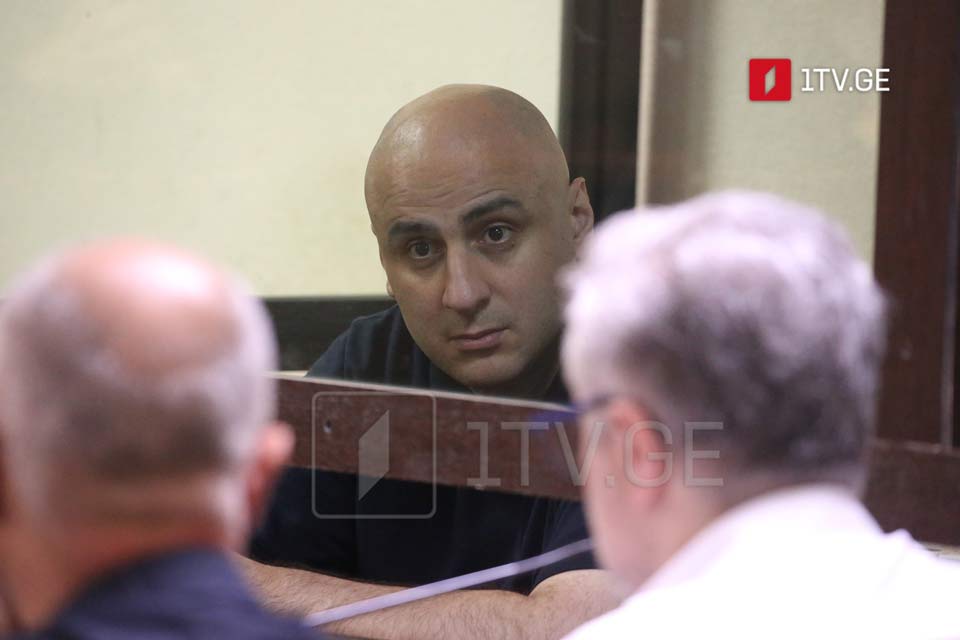
“Every government in this country’s history that has tried to present itself as superior to its own people has ended up estranged from them and at loggerheads with them. Ivanishvili’s regime is no exception; indeed, it has surpassed all its predecessors by a considerable margin in its contempt for the people, and that will inevitably bring about its downfall. Ivanishvili has entered into confrontation with the people on a point of no return; he has left himself no room to manoeuvre. His increasingly dire situation, and that of his government, is drawing the country closer to change,” writes Nika Melia, one of the leaders of Ahali party, in a post published on his Facebook page.
As Melia notes, change cannot come through the same thinking that made change necessary in the first place.
“To be more specific: a problem cannot be solved with the same mindset that created it.
Before I continue, let me remind you: in 2024, the winner of the election was declared the loser, and the loser was declared the winner. Ivanishvili seized power. We seem to forget this sometimes.
To recover what has been seized, there must be a significant increase in the number of people willing to embrace change, coupled with a sharp decline in Ivanishvili’s support base, regardless of the reasons. And that requires a revolution in thinking.
The direction in which we channel our future efforts will determine how we live.
I believe that in making important decisions, we must no longer be guided by formulaic approaches.
Over the past several months, and this gives me hope, a process has been underway both within protest society and beyond it, within the silent majority too: a process representing the painful but necessary transformation of the outlook that has guided years of political struggle. It demands agonising effort, accompanied by the pangs of labour.
Once that revolution in thinking has taken place, each person must then find their proper role in the struggle itself.
The process must not be drained of rational elements, of clear-headedness. If it is, then the current generation of political and public figures will end up stewing in their own raw emotions, boiling in their own juice.
If the goal is merely to leave behind a legend of a noble fight, that goal has already been achieved; nothing can threaten it now. Decades will preserve the stories of so many people’s selfless struggle.
But victory, freedom, the restoration of political rights, and a prosperous and secure Georgian state require results. And before we get there, we need a fundamental transformation of the outlook from which victory must grow.
Some may be surprised, but I want to share this view: today, within the opposition, civil society, and critical media alike, much may not appear encouraging, yet for tomorrow’s success, the process currently underway is enormously valuable.
A crystallisation is happening, a kind of cleansing: personal, methodological, ideological. As a result, the broader society will find it far easier to separate the wheat from the chaff.
I believe a clear understanding will eventually emerge of the new, shadowed environment in which we are both living and struggling.
Yes, our life and our struggle may resemble ploughing uphill, but that was true of every fighting patriot in the past. From childhood, their lives were a relentless uphill struggle, yet they found the resolve and ultimately achieved their goal.
I believe we will respond to the current situation successfully and adapt nimbly to changing conditions. Those who do not will drop out of the fight, and that cannot be the answer.
For years, the necessity of working directly with people, by countless politicians, NGOs, and other public figures, was overshadowed by the illusion that decisive help would come from abroad.
It is utterly beyond my comprehension how ambitious politicians, genuinely ambitious NGOs, and public figures in civil society, who rightly think about taking responsibility for governing this country, manage to visit Brussels ten times a year and Zugdidi not once. That entire approach must change. The right way is ten times to Zugdidi. Once to Brussels is quite enough,” Nika Melia wrote.
Melia also writes that an alienated politician is the greatest danger a country can face, and that Georgian Dream proves this every single day.
“A politician estranged from the people is left with nothing but rehearsed phrases and careerism, and those have never done anyone any good.
That is why not a single original thought enters their heads. Behind the words lie only slogans drilled during training, not ideas born of genuine personal conviction. This is today’s governmental reality, and it calls for a diametrically opposite approach. In this case, like cannot cure like.
There is much I want to say in this letter, but it is already running long, and I do not want to leave unanswered the envy-driven attacks of certain individuals in recent days.
My habitual silence and forbearance in the face of slander gave certain people the opportunity to pour out their filth. They apparently concluded I had gone to the next world and would never answer, but I am in Rustavi, not the hereafter.
For two weeks, I have been hearing direct and veiled slander, very dirty slander at that, and to this has been added, from a particular quarter, from entirely the wrong place, personal attacks.
The most recent vile accusation I heard on Friday at 9 pm, directed at the Coalition for Change, which I take personally and for which I respond to this now unbridled and filthy campaign.
A political leader from the United National Movement dared to say on air that in 2024, Bidzina Ivanishvili personally arranged for list number four to receive a high percentage at the United National Movement’s expense.
He spouted this nonsense live on a critical television channel, unleashing a flood of poison that went unchallenged. The journalist sat there breathless, eyes wide, barely concealing his satisfaction as though his own talking points had just been repeated back to him by the guest.
This politician is from Zugdidi, a city I hold dear, in which I lived for a month during the 2024 campaign. In the city of Zugdidi itself, we recorded 27%; his party got 10%. The regime considered the Coalition the main rival in its own city, and we were spared neither violence nor serious falsification in Zugdidi.
In the city of Zugdidi, I was expecting 34–35%; in the wider Zugdidi municipality, 27–28%. The most recent polling confirmed this. Instead, we took only 27% in the city and 20% in the municipality. The slanderer knows all of this and said it anyway. Bidzina arranged it for them, he claimed.
Bidzina took 7–8 percentage points from the Coalition in Zugdidi, almost exactly as much as his entire party won in total.
While I am at it, let me say what happened at the overseas polling stations; I need the slanderers to hear this. Number four took 33%, exactly the percentage we had been expecting in Zugdidi too, but which was falsified there, while abroad it could not be. Georgian Dream took 10% abroad.
In Tbilisi, the opposition as a whole enjoyed enormous support, and the regime could not claw its way out of the background through falsification alone. Number four came first among the opposition parties; the slanderers came fifth. I will not even mention the American exit polls.
I was compelled to respond to their disgrace. I will give no further examples. I am astounded at how they manage so many lies, so much poison, so much slander.
From childhood, I have been marked by sharp extremes; perhaps that is one of my failings.
Sometimes I am very active, sometimes the opposite. Sometimes I work enormously hard, sometimes I put no heart into work at all. Sometimes I read voraciously, sometimes I can’t be bothered to lift my head. Sometimes I weigh 150 kilograms, sometimes 100. Sometimes I am in prison, sometimes outside.
In short, I have practically no neutral middle gear, regrettably.
So I will say this to certain people: if the filth continues, I will begin publishing Facebook posts every single day against this rotting campaign, and it will be done in bulldozer fashion.
If anyone considers slander and dirty accusations to be the norm, and believes I should pay them no mind and regard them as insignificant, if they expect me to see this vile campaign as a single drop of spray cut off from the wave, no. That is not a promise I would make.
So, my long-missed comrades, supporters, and friends, I hope you understand the spirit of this letter.
A prison spell can no longer be treated as an indulgence, least of all when the rest of us are not in Kislovodsk either, strolling through the Narzan Gallery with a glass in hand.
Today or tomorrow, this position of mine will not be hidden, so let me say this too: for opposition politicians at liberty, for active members of civil society, for journalists in critical media, being outside today is harder than being in even this coffin-narrow solitary cell from which I am writing to you now.
For the leaders who remain outside and the people holding the line, do you know why their lives are harder than those of prisoners? Because those outside bear far greater responsibility and weight upon their shoulders today.
What is more, being arrested four, five, or more times, or living under the constant threat of arrest, is far more stressful than being arrested once and serving even a long sentence.
Each new arrest, and the unrelenting awareness of that risk, is psychologically far heavier to bear, and not only for the potential detainees themselves, but above all for their families. Regrettably, certain people do not understand this.
I understand that conditions in prison are harder than at home or in a hospital ward. Here, there is solitary confinement, a slop bucket, and so forth, but we are all enduring it. Children are enduring it in other prisons; women are enduring it in the women’s prison. Nobody is stooping to what is unworthy; nobody is subjecting us to an endless torrent of me, me, me, me, me. So certain people must endure too, and must not become an allegory for slander.
Close friends and fellow fighters know that I have a great deal more to say and write. I am trying to act with a sense of historical responsibility. So far, I am managing, though certain people seem to be testing fate.
Conflicting waves of feeling wash over me towards the slanderers: shame, pity, and at the same time joy: the joy of knowing that nothing connects you to them any longer.
See you…” Nika Melia wrote in a letter.