


Healthcare system set for major transformation with doubled primary care funding, new speciality centres
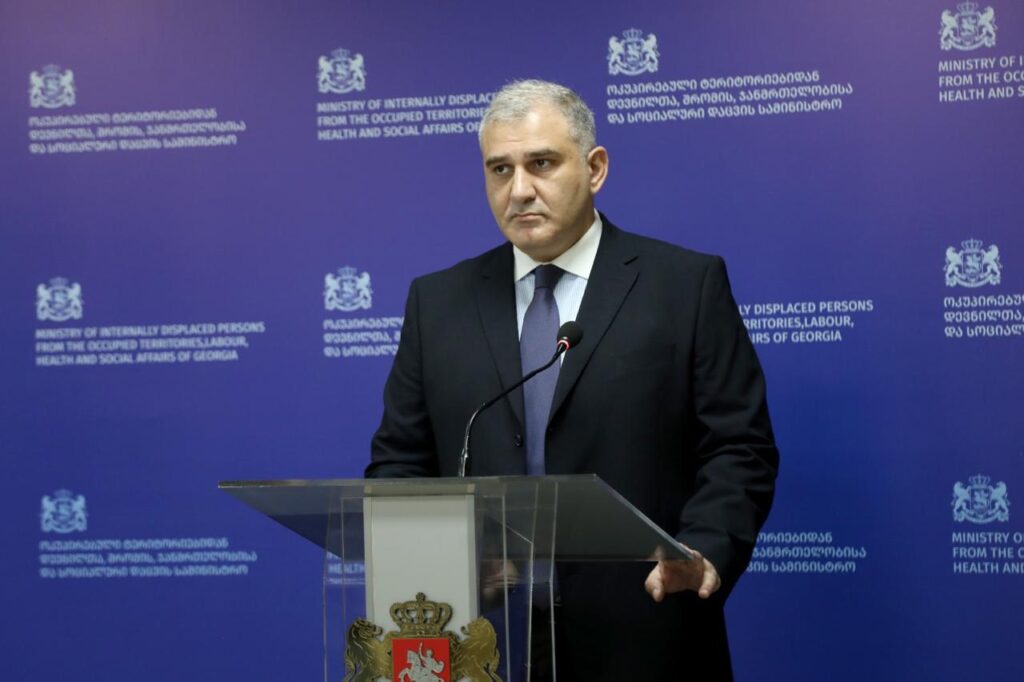
Minister of Health Mikheil Sarjveladze, in an interview with the Georgian Public Broadcaster First Channel’s program Actual Topic with Maka Tsintsadze, outlined ambitious plans to transform Georgia’s healthcare infrastructure, announcing significant funding increases for primary care, expansion of psychiatric services, and development of world-class pediatric oncology facilities.
Primary Healthcare Funding to Double with Results-Based Model
“It is crucial to say that for the first time, the volume of funding in healthcare is increasing overall,” stated Health Minister Mikheil Sarjveladze. The minister revealed plans to nearly double the financial resources allocated to primary healthcare, implementing a revolutionary patient-centred approach.
The new funding model represents a paradigm shift, moving away from uniform payment structures to a more nuanced system accounting for patient needs.
“Certain calculations were made with the involvement of international specialists, and it was determined that, for example, a child from zero to 5 years or an elderly patient requires care of a completely different intensity, different medical advice, and this differs from what a man of my age might need,” Sarjveladze explained.
Rather than generalizing funding across all patient categories, the ministry will allocate resources based on care intensity requirements. This personalized approach acknowledges that different demographic groups and health conditions demand varying levels of medical attention and resources.
The new model introduces results-based financing, directly linking physician compensation to health outcomes.
“The healthier the society is, the more compensation the doctor responsible for this specific group of patients will receive,” the minister emphasized, highlighting the shift toward outcome-oriented healthcare delivery.
The payment structure aims to incentivize preventive care and healthcare quality rather than simply service volume.
“We began thinking about this not simply as an increase in funding, but in response, we should demand specific performance from family doctors, primary healthcare physicians, and clinics,” Sarjveladze stated, noting that the reform would encourage medical professionals to focus on “increasing public health indicators as much as possible.”
Under this performance-based system, physicians helping patients avoid complications through preventive measures, providing accurate guidance, and improving vaccination rates will receive higher compensation.
“The primary healthcare sector should help more people avoid possible health complications, give correct advice, increase vaccination rates… and the volume of funding will depend on this,” the minister confirmed.
Mental Health Services Expansion
Addressing the critical shortage of psychiatric care facilities, Minister Sarjveladze announced plans to substantially increase the nation’s psychiatric bed capacity before year’s end.
“By the end of the year, we will have the opportunity to add several hundred psychiatric beds that will be fully compatible with modern standards,” he declared.
The ministry’s strategic plan involves launching several new psychiatric facilities in the coming months, representing a coordinated approach to tackle existing service gaps.
“I think by the end of the year, we will make a breakthrough regarding the needs that exist in the sector today,” the minister predicted.
Beyond physical infrastructure, the health ministry is also developing strategies to address the acute shortage of psychiatric specialists.
“One of the problematic issues is the shortage of psychiatrists, but we also have certain plans on how to collaborate and distribute the resources that are in deficit,” Sarjveladze noted, emphasizing that while staffing challenges persist, resolving infrastructure limitations remains the immediate priority.
Pediatric Oncology Services
Minister Sarjveladze acknowledged both the exceptional talent of Georgian pediatric oncologists and the trust deficit affecting the sector.
“There are brilliant doctors in Georgia, including in pediatric oncology, and their work primarily needs to be appreciated,” he affirmed, while candidly addressing reputation challenges.
“We must face the problem and say that today, the Georgian healthcare system undeservedly does not have the reputation that would give, for example, the parent of a pediatric oncology patient the opportunity to feel at ease,” the minister admitted, calling for “necessary self-criticism” among healthcare institutions.
While the country has successfully implemented a program funding overseas treatment for pediatric cancer patients, the ministry is now focused on developing comparable domestic capabilities.
“For those who will have this ordeal, absolutely the highest standard services available in Georgia will be ready to offer,” Sarjveladze promised.
Work is already underway on a comprehensive concept to transform pediatric oncology services within Georgia, though the minister acknowledged the complexity of this undertaking.
“This is not a simple plan. It is quite complex, requiring serious forecasts regarding financial aspects, and specific clinical directions that need to be improved,” he explained, indicating implementation could begin within months.
The ministry’s strategic approach includes training a new generation of oncology specialists, ensuring sustainable domestic capacity. This professional development initiative will complement major infrastructure developments, including the groundbreaking Hadron Therapy Centre under construction in Kutaisi.
“This is a project that will make Georgia an exceptionally successful country,” Sarjveladze emphasized, highlighting that the centre—funded through philanthropist Bidzina Ivanishvili’s charity—will provide treatment capabilities that even many wealthier nations cannot offer.
“This is a generational, very great deed, and the result of this deed will benefit the country,” he added, noting the facility will operate in conjunction with Kutaisi International University.
Commitment to Hepatitis C Elimination Program
Addressing recent concerns, Minister Sarjveladze firmly denied rumours about the discontinuation of Georgia’s internationally recognized Hepatitis C elimination program.
“There is not a sign that this program might be discontinued. The state is the guarantor that this program will go all the way,” he declared.
The minister characterized claims about the program’s termination as “pure falsehood” and criticized opposition representatives for spreading misinformation deliberately.
“Unfortunately, many opposition-minded people have made it a habit to play the role of fire-starters and very often try to sow artificial panic by spreading false information,” Sarjveladze stated, suggesting such actions are intended to undermine national stability.
“No matter how critically you are disposed towards the government or anyone, such action against your country and damaging your country to warm your hands on it and then write off political dividends, of course, is not justified in any case,” he concluded.
Comprehensive Vision for Healthcare Transformation
With several major projects slated to begin implementation within months, Minister Sarjveladze’s announcements represent an ambitious healthcare reform agenda, the initiatives aim to improve domestic healthcare quality, potentially establishing new regional standards for both general and speciality medical services.