


Health Minister delivers speech on primary healthcare at UNGA
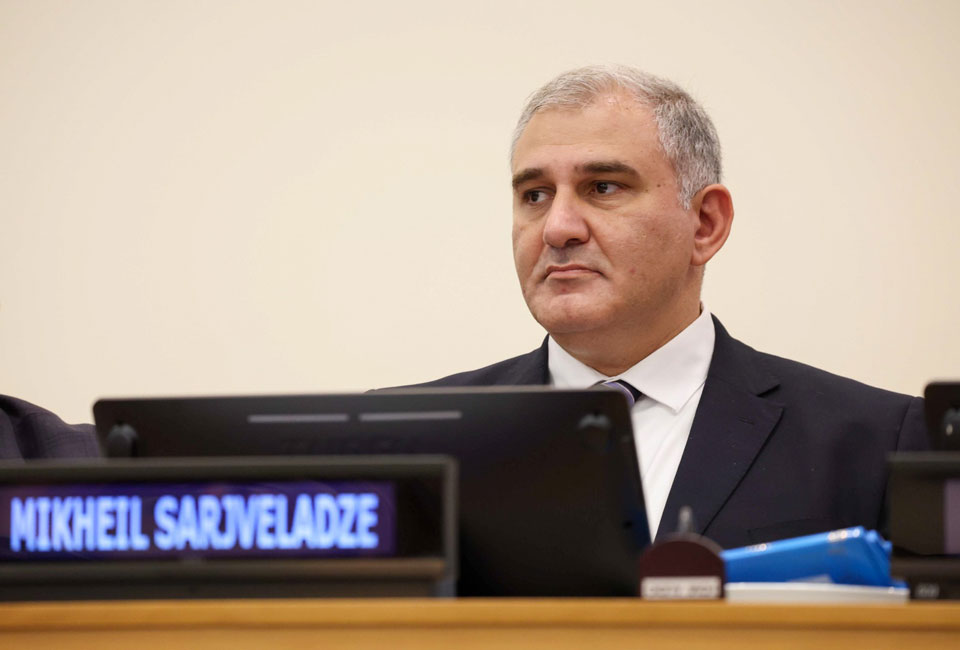
Georgian Minister of Health, Mikheil Sarjveladze, is in the United States attending the 80th session of the UN General Assembly.
During his visit, Sarjveladze met with WHO Director-General Tedros Adhanom Ghebreyesus, Regional Director for Europe Hans Kluge, as well as the Ministers of Health of Armenia, Kazakhstan, and Turkiye.
At the event, Minister Sarjveladze delivered a speech titled “The Political Economy of Primary Healthcare Implementation: Key Policy Changes” and took part in a panel discussion.
In his address, the Minister highlighted ongoing reforms in Georgia aimed at strengthening primary healthcare. Sarjveladze emphasised that these changes seek to enhance the healthcare system, increase access to primary care, and develop medical services tailored to the population’s needs. The Minister underscored that equality must remain the guiding principle, ensuring that rural communities, children, the elderly, and citizens with chronic conditions receive continuous, accessible, and high-quality services.
“Resilient primary healthcare is the foundation not only for individual health and wellbeing but also for the sustainability of national health systems. At the macro level, the United Nations and the World Health Organisation have repeatedly emphasised that primary healthcare is the cornerstone of universal health coverage and of achieving the sustainable development goals.
PHC is the most equitable and cost-effective path to improve health and well-being. Reduced premature mortality from non-communicable diseases and protected people from financial hardship.
Georgia has embraced this vision guided by these principles. We have introduced several pivotal interventions to rehabilitate and strengthen our PHC system, among them.
The Universal Healthcare Program stands out, having significantly increased access to primary health services and essential medicines for chronic conditions. This year, we launched a comprehensive PHC reform, strengthening the role of family physicians, expanding NCD screening and management, and investing in digital health platforms. An age-adjusted result-based capitation system will be introduced with an additional USD 120 million allocated from the state budget over the next four years.
At the same time, pharmaceutical reforms such as reference pricing and direct procurement are improving access to medicines and ensuring financial protection. Ideas and deliberations of recent years are already being translated into practice.
For example, we set a goal to introduce modern technologies in primary healthcare and bring services closer to where people live. Today, this vision is becoming a reality. Georgia is embarking on a major digital health reform, implementing new telemedicine tools and building digital capacity in rural areas,” Mikheil Sarjveladze has stated.
Georgia’s Minister of Health, Mikheil Sarjveladze, is currently undertaking an official visit to the United States. As part of the UN General Assembly programme, he will deliver a report on the prevention, management, and promotion of non-communicable diseases and mental health.
During the visit, Mikheil Sarjveladze held bilateral meetings with the Ministers of Health of Spain and Bulgaria.