


Georgian Parliament Speaker: CoE office faces serious allegations of covertly financing a radical political project in circumvention of Georgian law
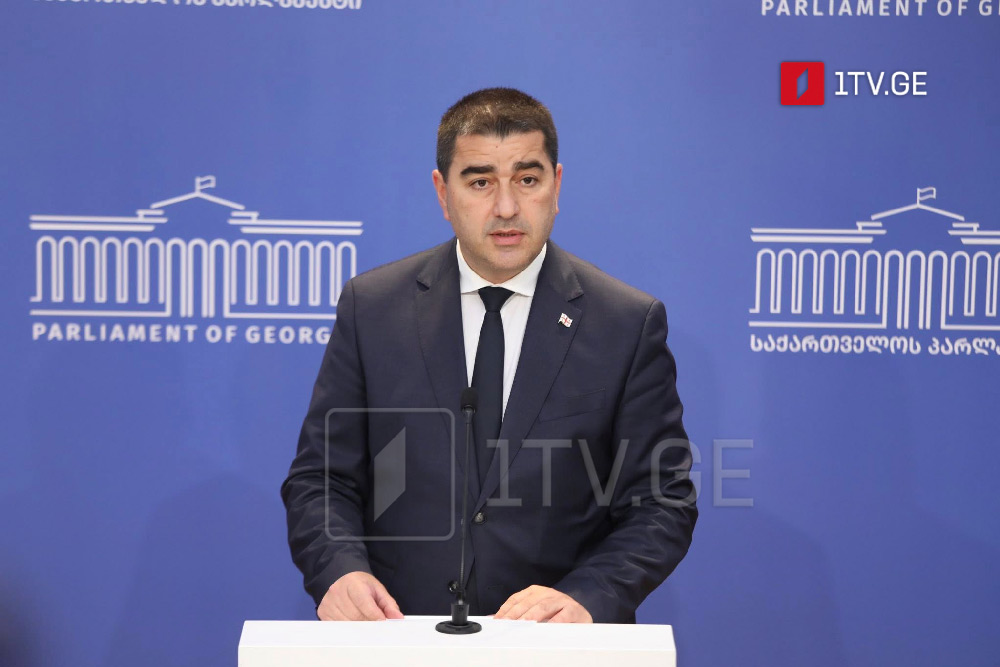
“Armaz Akhvlediani leads a political project that appears to be funded by the Council of Europe. If they are providing funding, statutory executive approval is mandatory,” stated Shalva Papuashvili, Speaker of the Parliament of Georgia, in response to journalists’ questions regarding an educational seminar organised by opposition politician Armaz Akhvlediani.
The Speaker commented on reports surrounding an educational seminar organised by Armaz Akhvlediani. The event, which was reportedly funded by the Council of Europe, was also attended by EU Ambassador Paweł Herczyński. It is still unconfirmed whether this financial support received official approval under the Law on Grants.
According to Papuashvili, serious suspicions have arisen that a political project is being funded in circumvention of the Georgian electorate and its legal framework, leaving the Council of Europe Representation with serious allegations to answer.
“This seminar and project are completely political in nature. Actually, years ago, probably around 18 or 20 years back, I attended one of these seminars myself. This is obviously a political project, and when the funding issue came up, it turned out to be funded by the Council of Europe. Whether they are doing it alone or with others, I don’t know. But if they are financing it, they need government consent. This is a straightforward, everyday political project run by Armaz Akhvlediani, who sat in the last parliament under the National Movement ticket. He is a politician, a radical politician, and they are backing a radical politician’s project just to brainwash people later with their ideological and political agenda.
Nineteen years ago, the context was entirely different. Today, the circumstances have changed. Armaz Akhvlediani was elected via the list of the UNM, which is now an unconstitutional party given its objectives and its repeated attempts to seize power through anti-democratic means. Directly funding a political project led by such a politician constitutes direct political financing.
What needs to be established now is whether they had approval. There are likely two options here: first, the grant was awarded to Akhvlediani’s organisation, which needed consent but doesn’t have it, meaning the law has been broken. Second, and this would be highly interesting, it could be a workaround scheme designed to circumvent the law and evade sanctions, which would also be illegal. Consequently, the Council of Europe Representation now has to answer to these very serious accusations, given the suspicion that a political project is being funded in total circumvention of the Georgian people and their laws,” Shalva Papuashvili said.
Reflecting on his past attendance, Papuashvili recalled his own experience with the programme during the 2007 political crisis.
“If you are interested in my own story, everyone who took part in the seminar that year knows it very well, including Armaz Akhvlediani. I was attending an event for this project in 2007 when the events of 7 November took place. Everyone remembers very well what I told the experts Mr Akhvlediani had brought in, some of whom are in NGOs today, lecturing us on right and wrong, and how they defended the United National Movement and Mikheil Saakashvili’s government after 7 November. So, even back then, it was ideological. The stances of the so-called speakers on 7 November were perfectly obvious. This is a political project, and funding it requires approval,” Papuashvili stated.