


Georgian Parliament moves to criminalise “extremism against constitutional order”
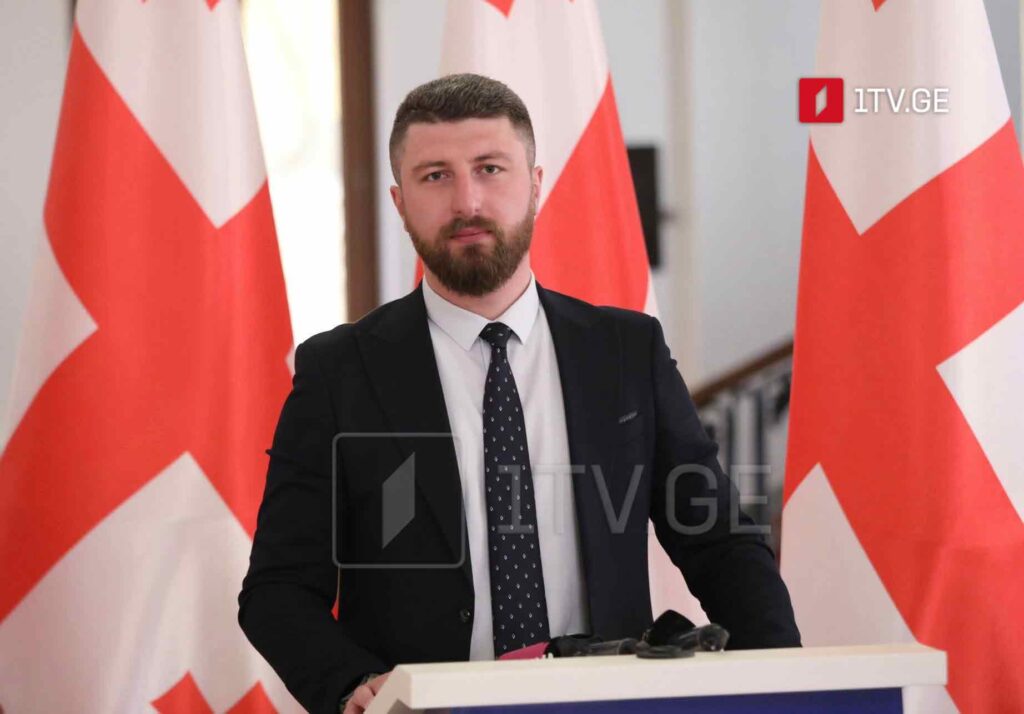
According to MP Archil Gorduladze, Chair of the Parliamentary Committee on Legal Affairs, a new Article 316-prime is to be added to the Criminal Code — extremism against the constitutional order.
In Gorduladze’s explanation, this would cover: incitement to the mass violation of Georgian legislation; incitement to mass disobedience towards organs of government, including systematic public calls for the creation of alternative institutions in place of Georgia’s state organs; and other acts directed at entrenching the perception that constitutional organs are illegitimate, where such acts damage or create a genuine threat of damage to Georgia’s interests.
Gorduladze further stated that the commission of a criminal offence motivated by non-recognition of Georgia’s constitutional order or its constitutional organs will be treated as an aggravating circumstance at the point of sentencing.
He also confirmed that a clear line will be drawn between freedom of speech and expression on the one hand, and criminal conduct on the other.
“We propose that Article 53 be supplemented with a third-bis and prime subsection, which would establish and define as an aggravating circumstance the commission of a criminal offence motivated by non-recognition of Georgia’s constitutional order or its constitutional organs. In such cases, where a custodial sentence is imposed, the term to be served must exceed by at least one year the minimum sentence prescribed for the offence in question under the relevant article or subsection of this Code. For example, where it is established that an offence was committed on this motivation, the sentence imposed will be set at a minimum of one year above the statutory minimum.
We further propose that the Code itself be supplemented with Article 316-prime, extremism against the constitutional order, which shall encompass the following: the systematic and public incitement, by a Georgian citizen or a stateless person holding status in Georgia, to the mass violation of Georgian legislation, to mass disobedience towards Georgia’s organs of government, or to the creation of alternative organs in place of Georgia’s governmental bodies; the arbitrary, public, and systematic presentation by the same person of themselves or another as a representative of Georgia’s government; or other systematic acts committed by the same person, provided that any such act listed in this subsection is directed at entrenching the perception that Georgia’s constitutional order or its constitutional organs are illegitimate, and/or damages Georgia’s interests or creates a genuine threat of such damage.
Regarding the applicable penalty, we propose a fine, community service ranging from 400 to 600 hours, or a custodial sentence of up to three years. In the case of a legal entity, an organisation found liable under this article shall be punished by a fine, or by dissolution and a fine. The crucial elements are systematic conduct, repeated behaviour, and public commission. A single individual giving expression to their own views will, of course, not be considered a criminal offence. A clear line will be drawn between freedom of speech and expression on the one side, and criminal conduct on the other,” Archil Gorduladze declared.
In Gorduladze’s further elaboration, the key determining factor will be whether individuals are systematically and repeatedly making public calls for citizens to engage in mass disobedience towards organs of government or to create alternative institutions, and whether they are systematically presenting themselves or others in public as representatives of a given governmental authority, and whether all of this, taken in combination, is directed at entrenching the perception that Georgia’s constitutional order or its constitutional organs are illegitimate, and whether it damages or poses a genuine threat of damage to Georgia’s interests.