


Georgian MFA: EP report increases polarization and fuels radical sentiments in Georgia
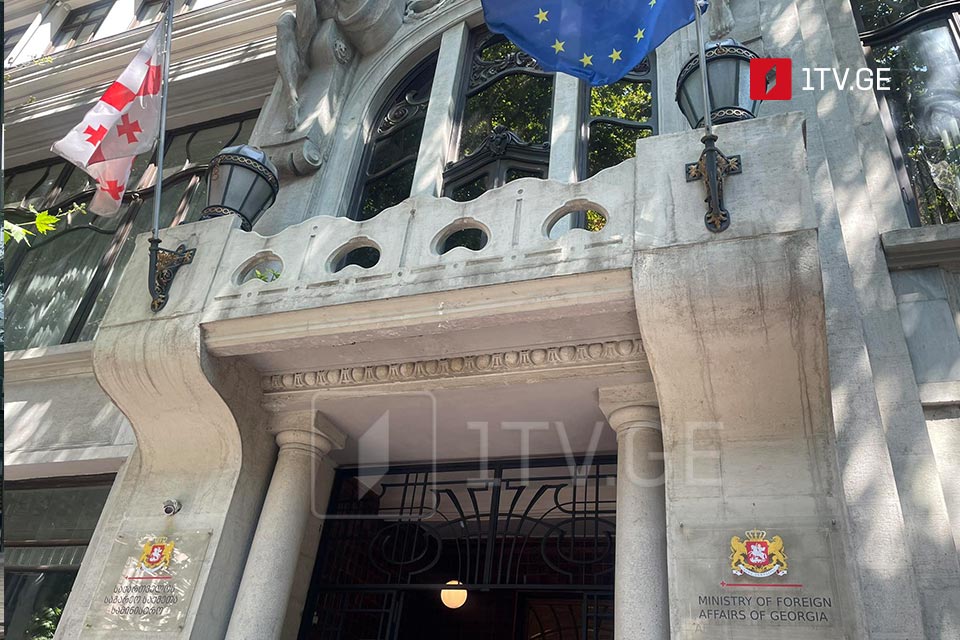
The Ministry of Foreign Affairs of Georgia has issued a press release responding to a report on Georgia adopted by the European Parliament’s Foreign Affairs Committee.
According to the ministry, the report is “completely out of touch with reality,” claiming that it contains deliberate distortion of facts, absurd accusations, and disinformation that undermines trust between Georgian society and EU institutions.
“Today, on May 5, the European Parliament’s Foreign Affairs Committee voted on a report concerning Georgia as part of the European Commission’s 2025 assessment of the country, prepared by the rapporteur for Georgia, Lithuanian MEP Rasa Juknevičienė.
The report is completely disconnected from reality. It deliberately distorts facts, makes extreme accusations, and uses manipulative tactics to spread misinformation. Such an approach damages the reputation of the European Parliament and undermines trust in the European Union and its institutions among Georgian society, a sentiment is also reflected in public opinion and political reactions within the country,” the statement reads.
The Ministry also expressed concern that EU institutions are being used to target Georgian state institutions, democratic structures, society, and values, including the Georgian Orthodox Church, which it said “grossly offends the religious sensibilities of the nation.”
“The report represents another attempt to polarize Georgian society, separate the democratically elected government from the people, and encourage anti-democratic processes and radical sentiments. Blackmail and threats against Georgian society are unacceptable, which constitute interference in the country’s internal politics and cause legitimate concern for any sovereign state.
The instrumentalization of Georgia’s foreign policy priorities and geopolitical issues, the use of the European integration process as a political weapon, and attempts to impose preconditions in the EU accession process that are directly related to the country’s national security and create additional risks of escalation in the region are unacceptable,” the statement notes.