


FM Botchorishvili: Brussels continues to choose pressure over dialogue in dealing with Georgia; that is strategic blunder
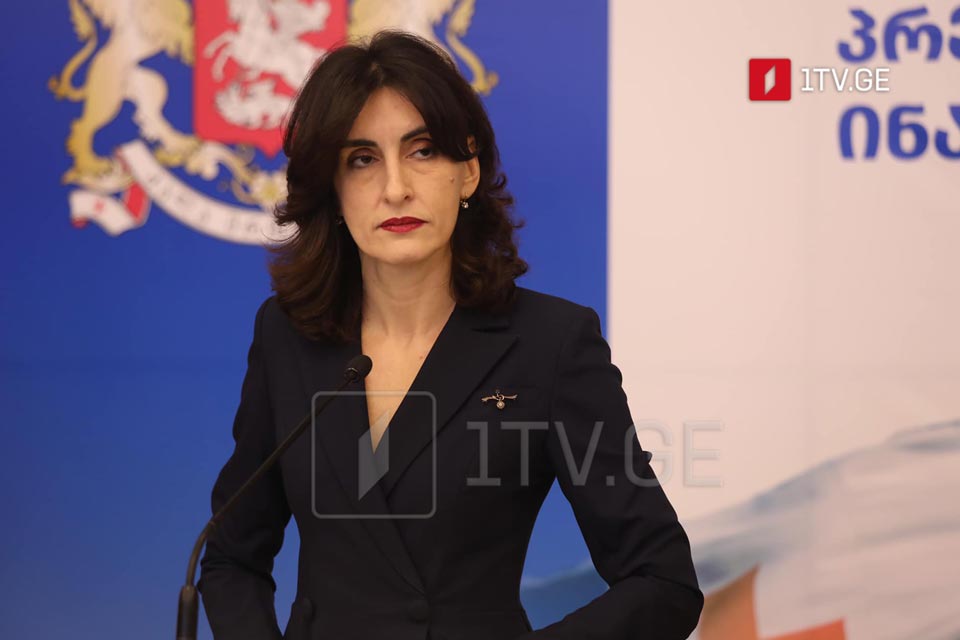
“I have the distinct impression that Brussels today has very limited capacity to perceive and assess objective reality accurately, and that this is not a problem confined to Georgia alone, but reflects a broader failure of analysis within Brussels,” Georgia’s Foreign Affairs Minister, Maka Botchorishvili, said on the television programme Imedi LIVE.
She added that Brussels is suffering from a marked absence of strategic vision.
“Against this backdrop, it is hardly surprising that the Brussels bureaucracy fails entirely to grasp the importance of its relationship with Georgia. Brussels lacks strategic vision. This has been pointed out on more than one occasion by the U.S. Secretary of State, Marco Rubio, himself, including in the context of the Munich Security Conference,” the Minister noted.
Botchorishvili drew particular attention to the significance of the Middle Corridor in the context of the European Union’s security and economic interests.
“The European Union today needs the development of the Middle Corridor for its own economic security, and Georgia’s participation in that is an absolutely essential component. In these circumstances, when Brussels continues to choose not dialogue but the language of pressure in its dealings with Georgia, this is, of course, a strategic blunder, one being committed by the bureaucracy currently in place in Brussels. Member states are demonstrating a growing awareness of, and sensitivity to, the strategic necessity that Georgia represents. However, we know all too well what Brussels itself thinks, we know the composition of the current European Commission, and I harbour no great expectations there,” the Minister stated.
She went on to say that Kaja Kallas exerts considerable influence over the EU’s foreign policy positions.
“It matters greatly that it is largely Kaja Kallas who determines what foreign policy position the European Union should adopt, rather than the EU’s own member states. When, on the one hand, there is much talk of the necessity of sovereignty and the need to place it front and centre, whilst on the other hand, it is Kaja Kallas who defines relations with third countries, that too is a certain anomaly we are witnessing today in Brussels’s approach to foreign policy.
I have visited several capitals recently, and particularly noteworthy is the forthright stance of Budapest and Slovakia on precisely these principles. The Slovak government speaks about sovereignty with considerable frequency, and this represents an important foothold from which one might yet find a starting point, if there remains any prospect of pragmatic politics prevailing in Brussels today,” Botchorishvili declared.